
Thursday, November 12, 2026Nov 12

In Greek seaside resort, refugees see dreams put on hold

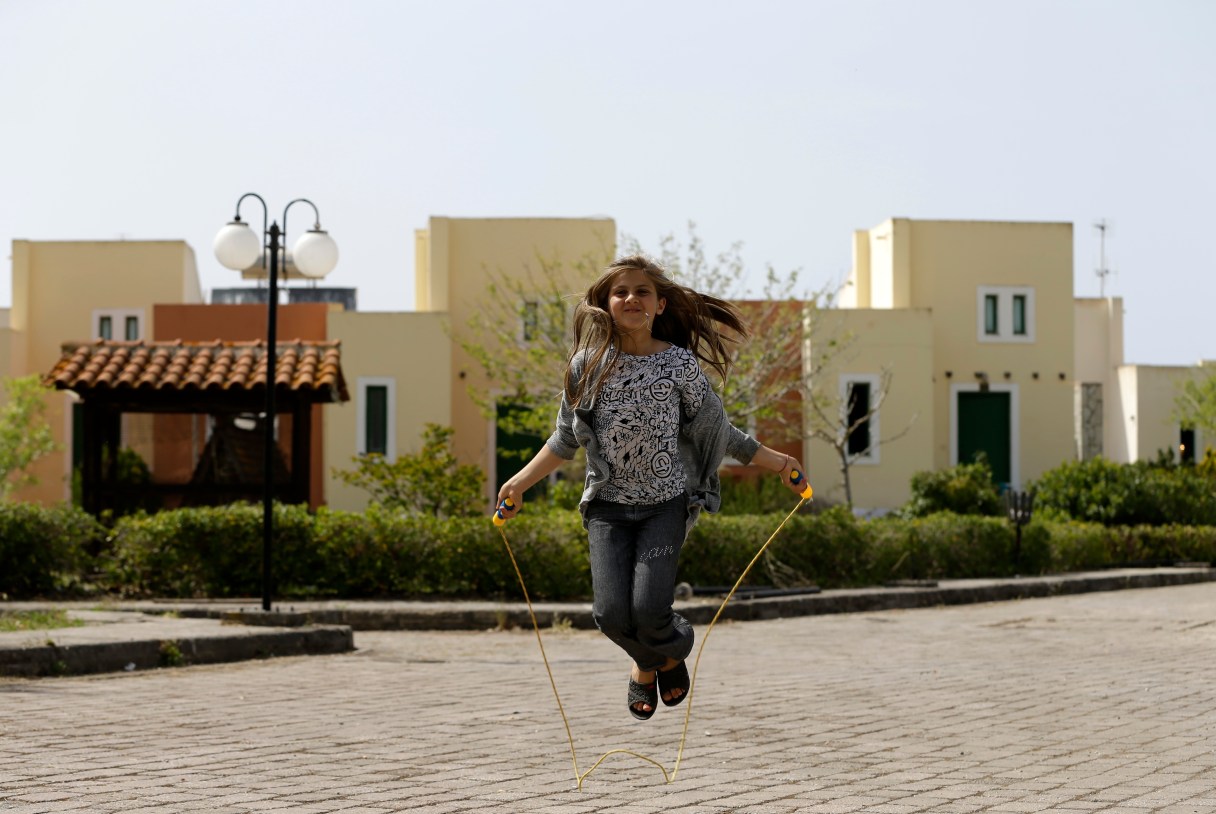
In this photo taken on Tuesday, April 19, 2016, a Syrian girl plays at a former bungalow resort, in the village of Myrsini, about 276 kilometers (172 miles) west of Athens. Between the southern Greek village of Myrsini and the Ionian Sea sits a refugee shelter that could have popped out of a travel brochure. The 338 Syrians and Iraqis who have been living there since March say they’re grateful to be safe in seaside bungalows, but getting restless, eager to continue journeys they hope will take them to the more prosperous nations of western Europe. (AP Photo/Thanassis Stavrakis)
In this photo taken on Tuesday, April 19, 2016, a Syrian girl plays at a former bungalow resort, in the village of Myrsini, about 276 kilometers (172 miles) west of Athens. Between the southern Greek village of Myrsini and the Ionian Sea sits a refugee shelter that could have popped out of a travel brochure. The 338 Syrians and Iraqis who have been living there since March say they’re grateful to be safe in seaside bungalows, but getting restless, eager to continue journeys they hope will take them to the more prosperous nations of western Europe. (AP Photo/Thanassis Stavrakis) In this photo taken on Tuesday, April 19, 2016, a Syrian girl plays at a former bungalow resort, in the village of Myrsini, about 276 kilometers (172 miles) west of Athens. Between the southern Greek village of Myrsini and the Ionian Sea sits a refugee shelter that could have popped out of a travel brochure. The 338 Syrians and Iraqis who have been living there since March say they’re grateful to be safe in seaside bungalows, but getting restless, eager to continue journeys they hope will take them to the more prosperous nations of western Europe. (AP Photo/Thanassis Stavrakis)

MYRSINI, Greece (AP) – At the end of a long, straight road on the coastal flats between the southern Greek village of Myrsini and the Ionian Sea sits a refugee shelter that could have popped out of a travel brochure.

The 338 Syrians and Iraqis who have been living there since March say they’re grateful to be safe in seaside bungalows, but getting restless, eager to continue journeys they hope will take them to the more prosperous nations of western Europe.

Local authorities volunteered the resort, which had been abandoned for years, to a Greek government that encountered strong opposition from some other communities as it quickly tried to build camps for tens of thousands of stranded refugees.

About a million people fleeing war or poverty in the Middle East and Africa arrived in Greece from neighboring Turkey between January 2015 and March 2016, when a series of countries further north closed their borders. New arrivals have since dropped to a few thousand, mainly because of a new European Union deal for Turkey to host people who otherwise would have arrived by boat, but about 54,000 remain stranded in dozens of official camps – and two makeshift tent cities – across Greece, awaiting asylum in the financially broken country or relocation elsewhere on the continent.

Most of the organized camps consist of boxy prefabricated units or canvas tents, set up hurriedly by the military. About 1,300 people live in the former arrivals area of the old Athens airport, and another 2,100 in defunct sports venues built for the 2004 Olympics.