
Monday, November 16, 2026Nov 16

Crimean Tatars celebrate Eurovision win, Russians cry foul

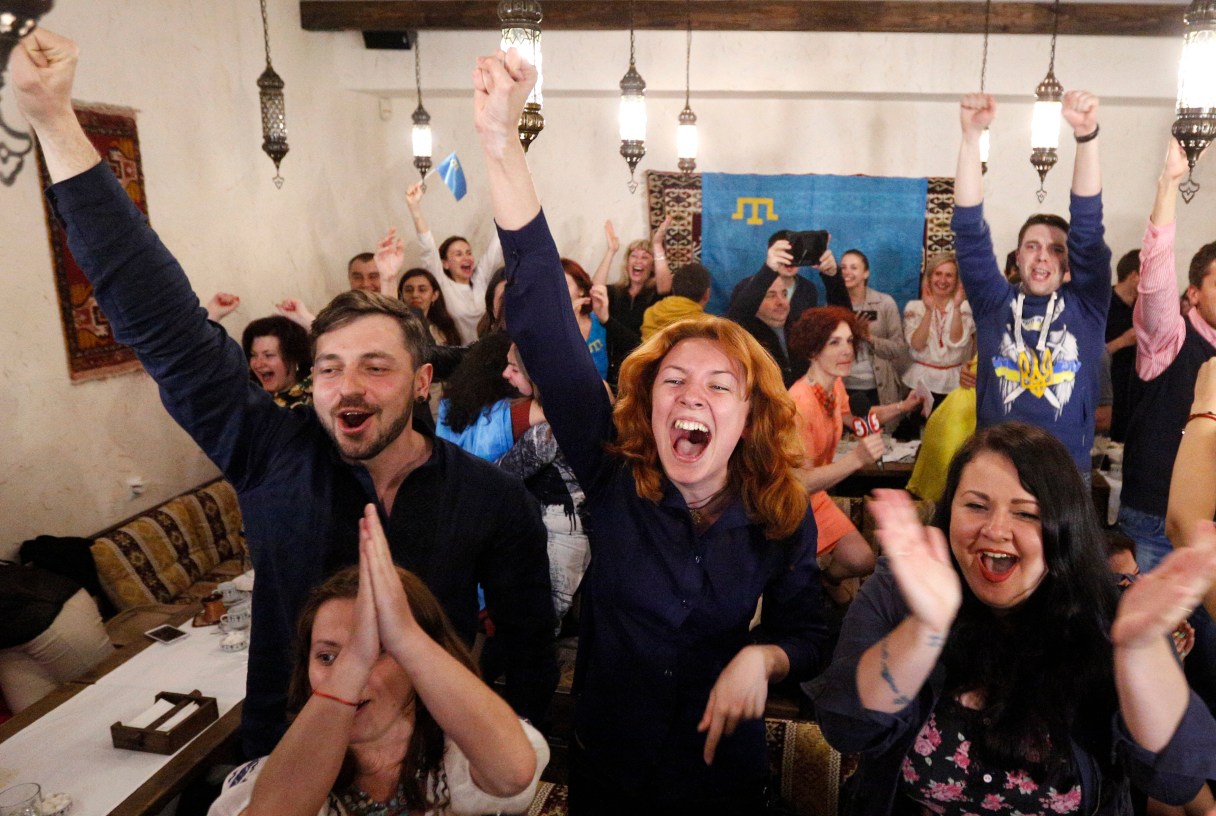
People celebrate while watching TV as Jamala of Ukraine wins the final of the Eurovision Song Contest in Stockholm, in a restaurant in Kiev, Ukraine, Sunday, May 15, 2016. Susana Jamaladinova, using the stage name Jamala, has won the 2016 Eurovision Song Contest and received the highest score for her song "1944," a melancholic tune about the 1944 deportation of Crimean Tatars by Soviet authorities. in a vote from juries and TV viewers across Europe after the 26 finalists performed at Stockholm's Globe arena. (AP Photo/Sergei Chuzavkov)

KIEV, Ukraine (AP) – Crimean Tatars are celebrating Ukrainian singer Jamala’s win at Eurovision with a song that sheds light on their horrific deportations to Central Asia under Soviet dictator Josef Stalin but also hints at their recent treatment under Russian President Vladimir Putin.

Many Russians, whose Eurovision Song Contest entry won the popular vote but finished third when the judges’ votes were added, accused the judges of political bias.

Russia’s annexation of Crimea in 2014 was condemned by the West and strongly opposed by Crimea’s Tatar minority, which now faces persecution in the Moscow-ruled Black Sea peninsula.

Emine Ziyatdinova, a 27-year-old Crimean Tatar who lives in Kiev, was among those celebrating early Sunday in a Tatar restaurant. She said Jamala’s song “is about our tragedy … and I hope that people heard this.”