
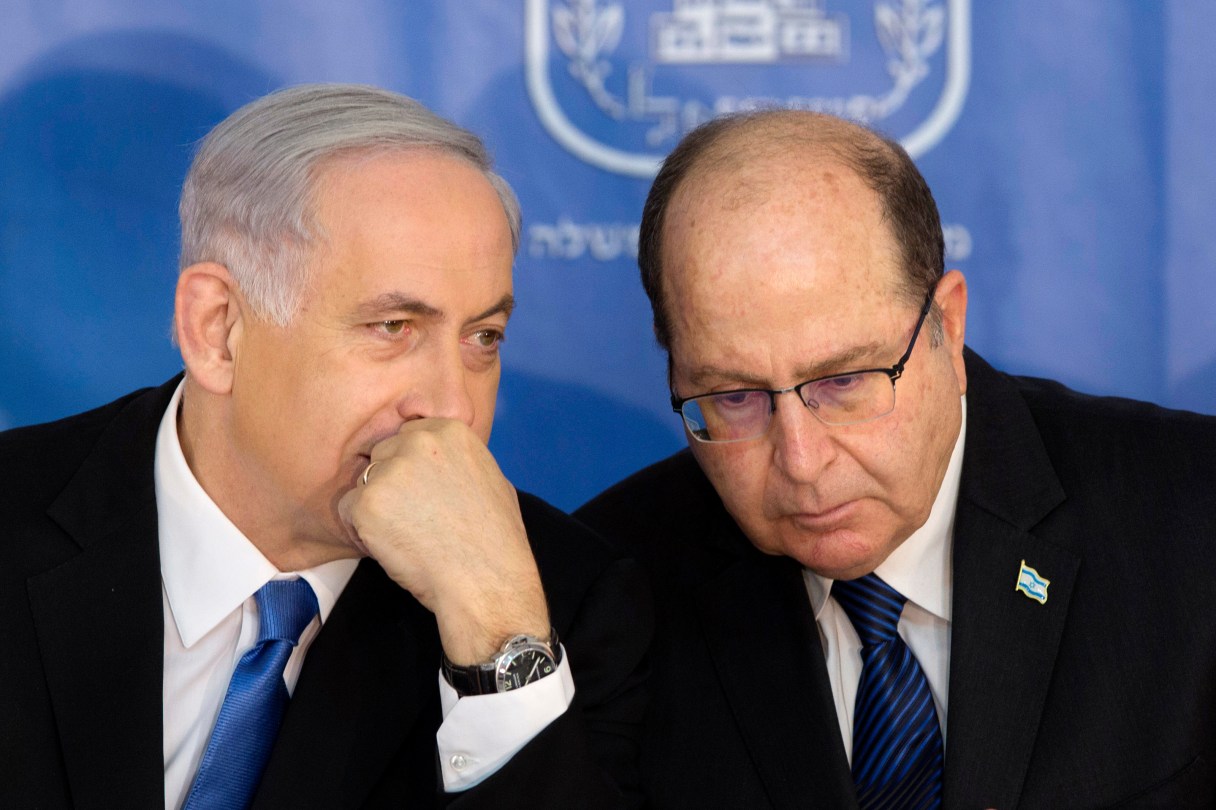
JERUSALEM (AP) – A public spat between Prime Minister Benjamin Netanyahu and his defense minister has exposed a simmering rift between Israel’s security establishment and its hard-line government, pitting the Israeli leader in a risky showdown.
The dispute has spotlighted the sensitive debate over the military’s role in public discourse in Israel, where security figures have occasionally served as a moderating element to nationalist governments. The surprising and normally discreet dynamic has burst into the public sphere at a time when Israelis are wrestling with a sense of being at loggerheads with much of the world.
After a series of public disagreements with security figures in recent months, Netanyahu urgently summoned his defense minister Monday to rebuke him for encouraging top military generals to continue speaking their mind in public, even if their comments contradict government sentiments.
The controversy was prompted by comments this month by Israel’s deputy military chief, Maj. Gen. Yair Golan, who compared recent trends in Israeli society to the atmosphere in Nazi-era Germany. Netanyahu called Golan’s statement, made in a speech marking Holocaust memorial day, as “outrageous” – while Defense Minister Moshe Yaalon supported the general’s right to speak.
In Israel, top officers are respected household names who often transition smoothly into politics after shedding their uniforms. Because the army is generally the country’s most admired institution, top brass have been forgiven the occasional inclination to discuss history, education and troubling trends in society.