
Monday, November 9, 2026Nov 9

Supreme Court, down by one, finds it can be hard to decide

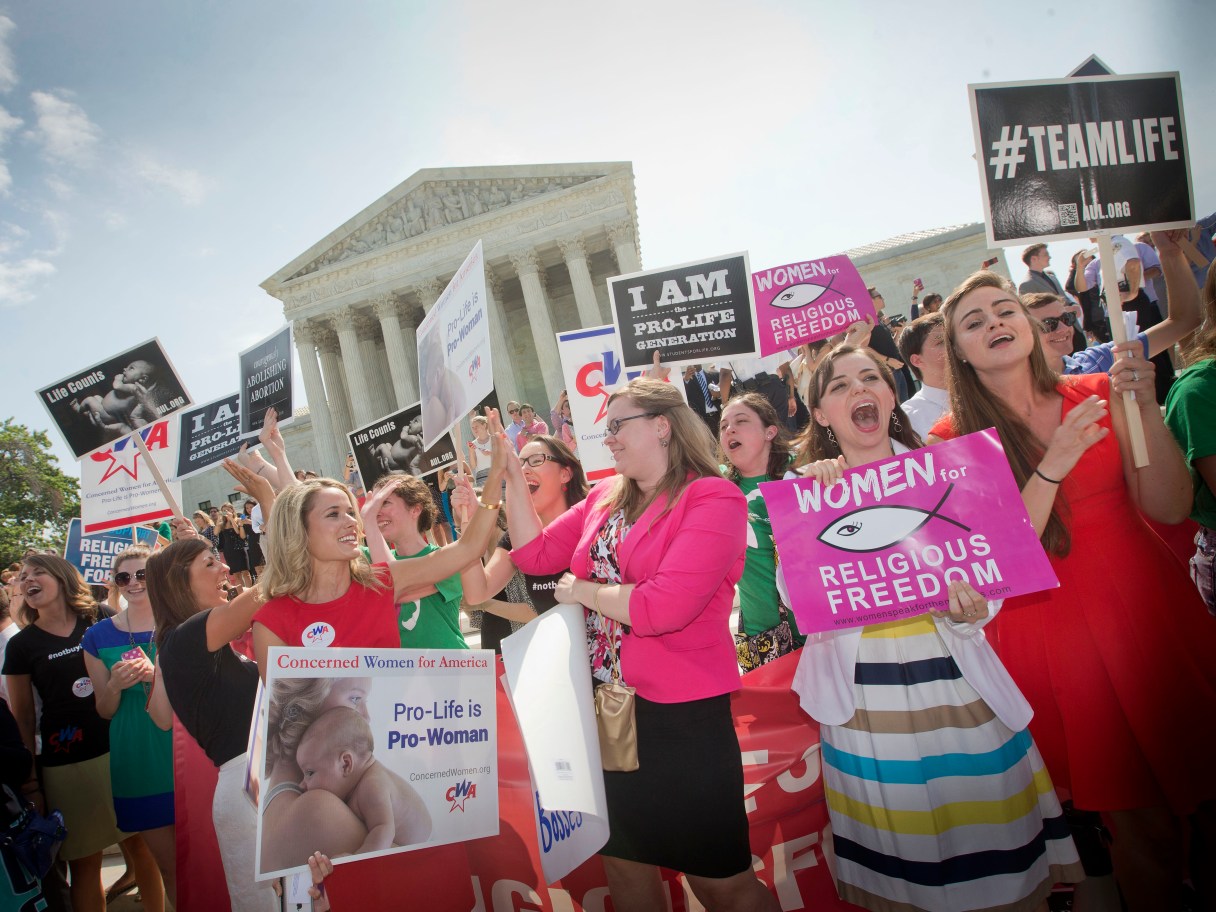
FILE - In this June 30, 2014 file photo, demonstrators react to hearing the Supreme Court's decision on the Hobby Lobby birth control case outside the Supreme Court in Washington. The Supreme Court rid itself Monday, May 16, 2016, of a knotty dispute between faith-based groups and the Obama administration over birth control. The court asked lower courts to take another look at the issue in a search for a compromise. (AP Photo/Pablo Martinez Monsivais, File)
FILE - In this June 30, 2014 file photo, demonstrators react to hearing the Supreme Court's decision on the Hobby Lobby birth control case outside the Supreme Court in Washington. The Supreme Court rid itself Monday, May 16, 2016, of a knotty dispute between faith-based groups and the Obama administration over birth control. The court asked lower courts to take another look at the issue in a search for a compromise. (AP Photo/Pablo Martinez Monsivais, File) FILE - In this June 30, 2014 file photo, demonstrators react to hearing the Supreme Court's decision on the Hobby Lobby birth control case outside the Supreme Court in Washington. The Supreme Court rid itself Monday, May 16, 2016, of a knotty dispute between faith-based groups and the Obama administration over birth control. The court asked lower courts to take another look at the issue in a search for a compromise. (AP Photo/Pablo Martinez Monsivais, File)

WASHINGTON (AP) – The eight Supreme Court justices say they’ll take care of business until a new ninth justice joins them. Their actions say otherwise.

Monday’s unsigned, unanimous decision returning a high-profile dispute over access to birth control to lower courts is the latest example of the ideologically split court’s struggle to get its work done with an even number of justices since Justice Antonin Scalia’s death in February.

The decision averts a 4-4 tie that would have left different rules in place around the country concerning the availability of cost-free birth control for women who work for faith-affiliated groups. But the outcome is itself inconclusive and suggests that the justices could not form a majority to issue a ruling that would have settled the issue the court took the case to resolve.