
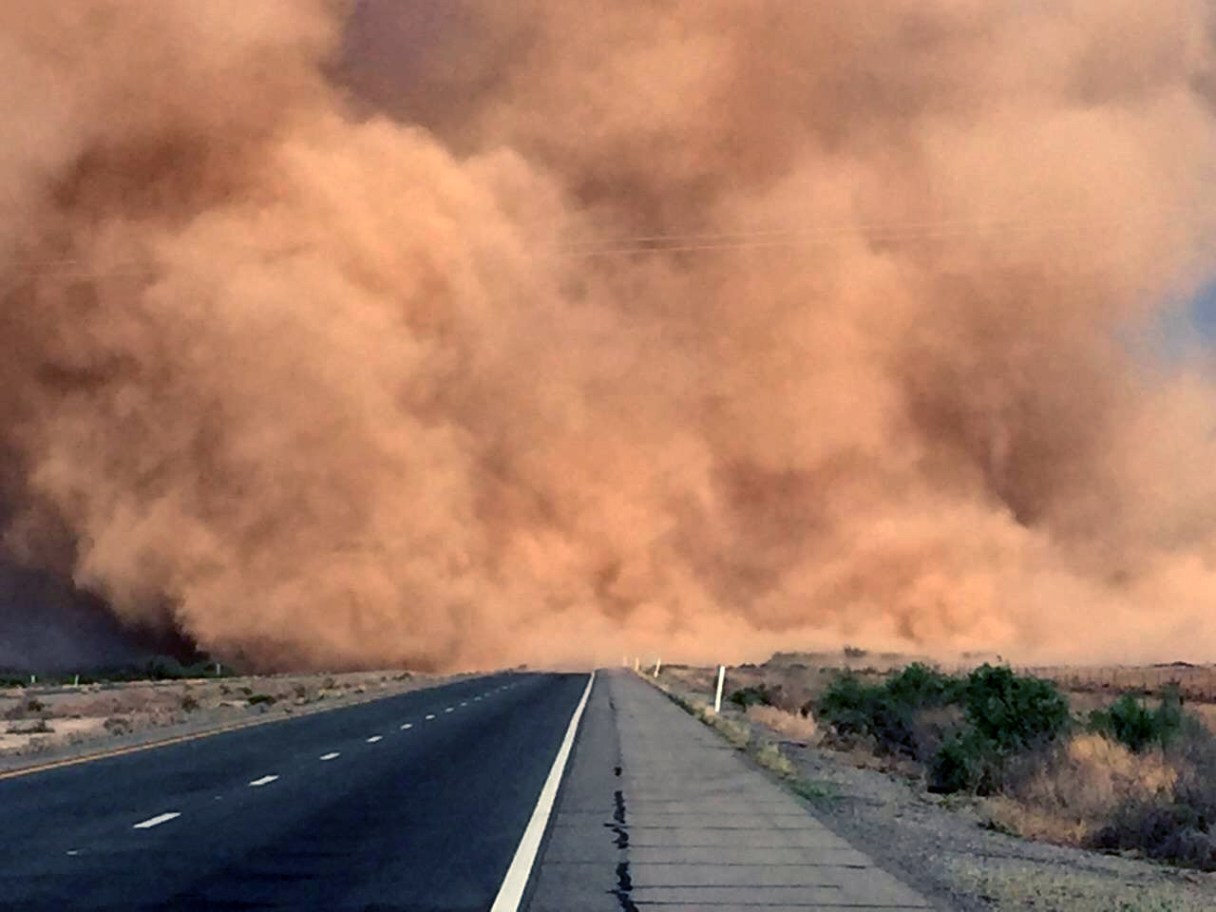
TUCSON, Ariz. (AP) – It’s that time of year in the Southwest – and as far as Alaska – when dust storms take shape, raising health and safety risks as plumes of dirt take to the sky.
A dry winter means the Southwest is seeing a greater number of dust storms. Experts say the infamous haboobs, as they’re known in the Phoenix area, will likely be active this summer when monsoon season begins.
In southern Arizona, a series of dust blasts on Interstate 10 near the New Mexico border have shut down the highway at least seven times in the past few weeks, sending drivers on a 60-mile detour. The dust is coming from a farm near San Simon, Arizona, that was readied for planting but never seeded, leaving loose soil that is easily picked up by winds.
That’s caused zero-visibility storms that resulted in car accidents. Arizona State troopers now preemptively close the highway every time a storm approaches in an effort to keep drivers safe.
State officials say they’re seeking fines against the farm’s owner because he hasn’t cooperated fast enough. The Arizona Department of Environmental Quality has watered the land to the tune of $20,000 a day for several days and is now using a biodegradable liquid designed to control dust erosion. The state plans to bill the landowner.