
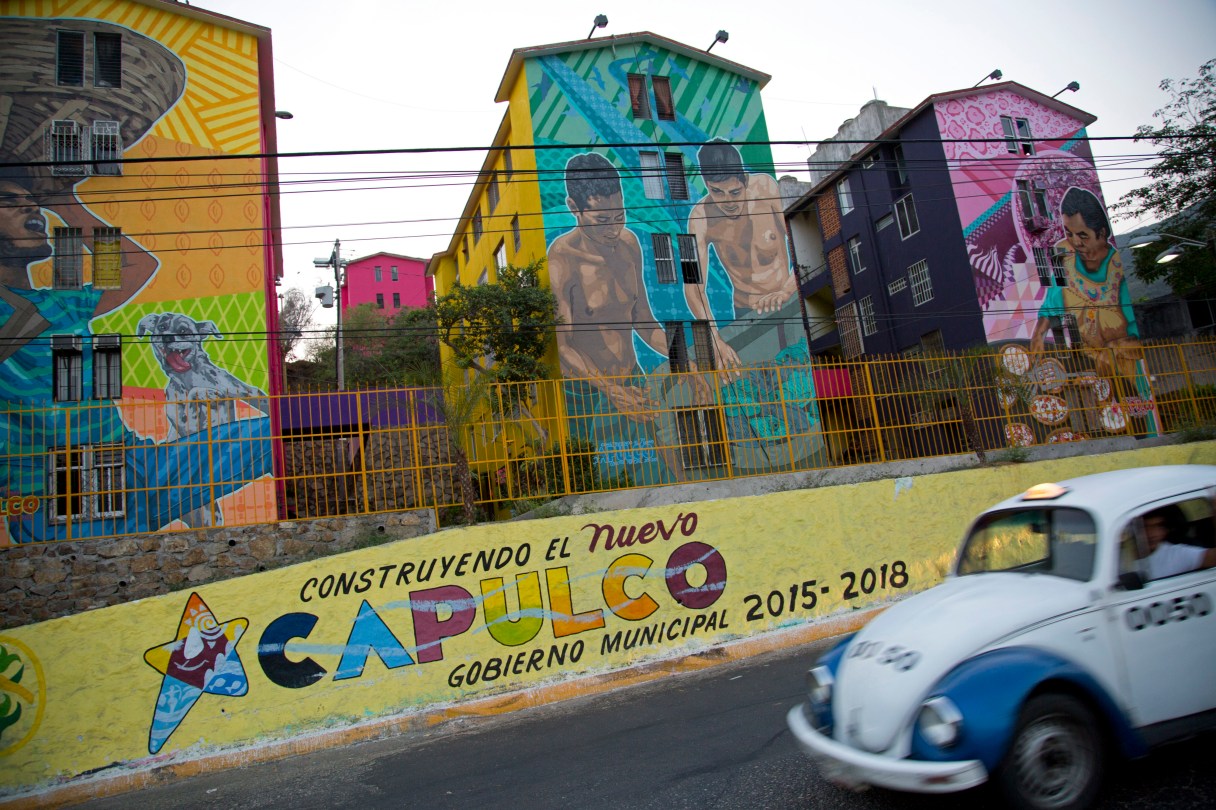
ACAPULCO, Mexico (AP) – Along with beach towels or sandals, there’s a new popular beach accessory that says a lot about the violence gripping this once-glamorous resort: a small black leather tote hanging from the neck or shoulders of some men. It’s not a man-bag, exactly; it holds a small pistol.
“When I saw you guys standing outside my office, I almost went for my bag,” said one businessman who lives in terror after getting death threats and extortion demands by criminal gangs at his office four blocks from the water. “I’m in fear for my life.”
Death can strike anywhere in Acapulco these days: A sarong vendor was slain on the beach in January by a gunman who escaped on a Jet Ski. Another man was gunned down while enjoying a beer at a seaside restaurant. In the hillside slums that ring the city, a 15-year-old girl’s body was found chopped into pieces and wrapped in a blanket, her severed head in a bucket nearby with a hand-lettered sign from a drug gang.
The upsurge in killings has made Acapulco one of Mexico’s most violent places, scaring away what international tourism remained and recently prompting the U.S. government to bar its employees from traveling here for any reason.
In response, Mexico has lined the city’s coastal boulevard with heavily armed police and soldiers, turning Acapulco into a high-profile test case for a security strategy that the government has used elsewhere: When homicides spike, flood the area with troops.