
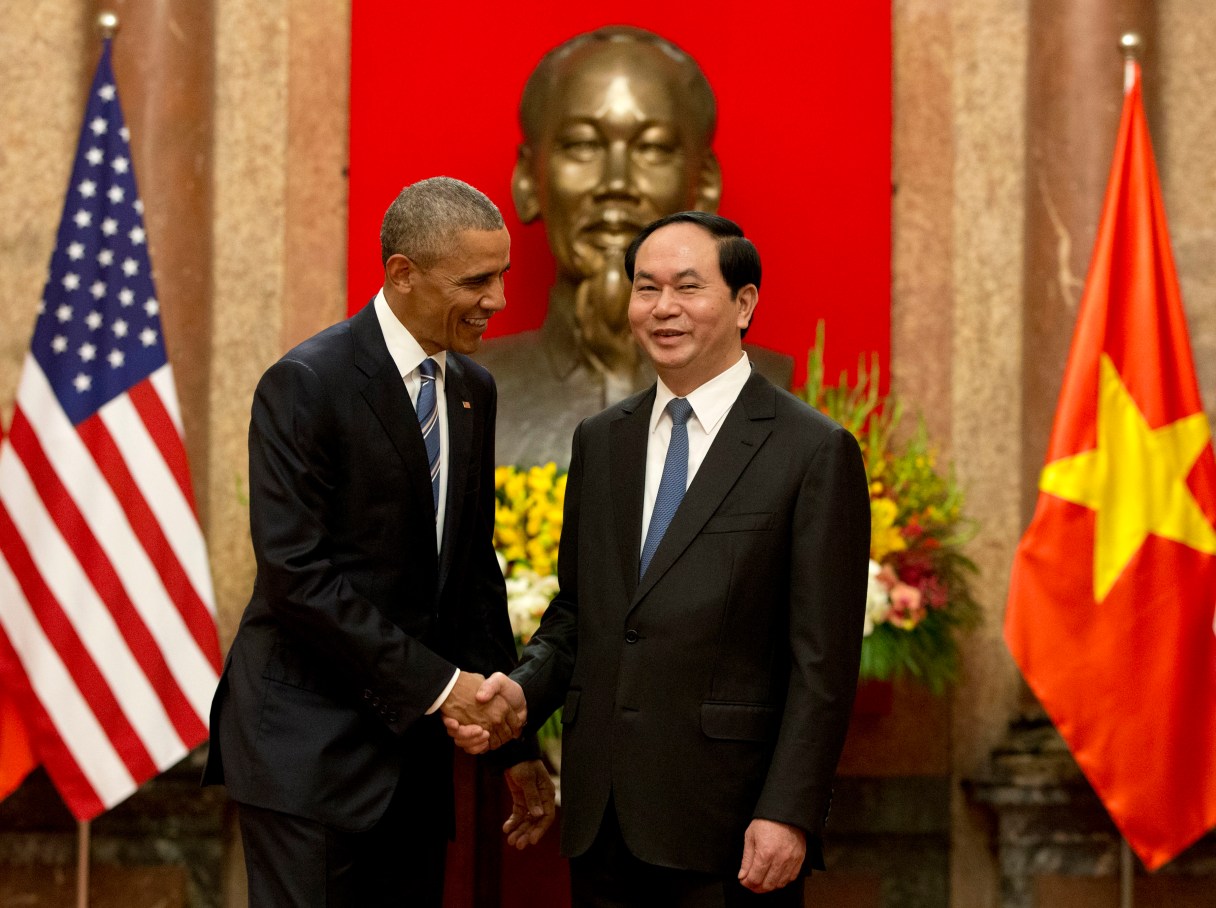
HANOI, Vietnam (AP) – U.S. President Barack Obama on Monday lifted a half-century-old ban on selling arms to Vietnam during his first visit to the communist country, looking to bolster a government seen as a crucial, though flawed partner in a region he’s tried to place at the center of his foreign policy legacy.
Obama announced the full removal of the embargo at a news conference where he signaled a desire to leave behind the troubled history between the former war enemies and reward what he described as modest progress on human rights in the one-party state.
“At this stage, both sides have established a level of trust and cooperation, including between our militaries, that is reflective of common interests and mutual respect,” Obama said, adding that every U.S. arms sale would be reviewed case by case. “This change will ensure that Vietnam has access to the equipment it needs to defend itself and removes a lingering vestige of the Cold War.”
Obama is seeking to strike a balance with Vietnam, which he called a vital country in one of the world’s most vital regions, amid Chinese efforts to strengthen claims to disputed territory in the South China Sea, one of the world’s most important waterways.
Obama said the United States and Vietnam had mutual concerns about maritime issues and the importance of maintaining freedom of navigation in the South China Sea. He said that although Washington doesn’t take sides on the territorial disputes, it does support a diplomatic resolution based on “international norms” and “not based on who’s the bigger party and can throw around their weight a little bit more,” a reference to China.