
 Robin Smith
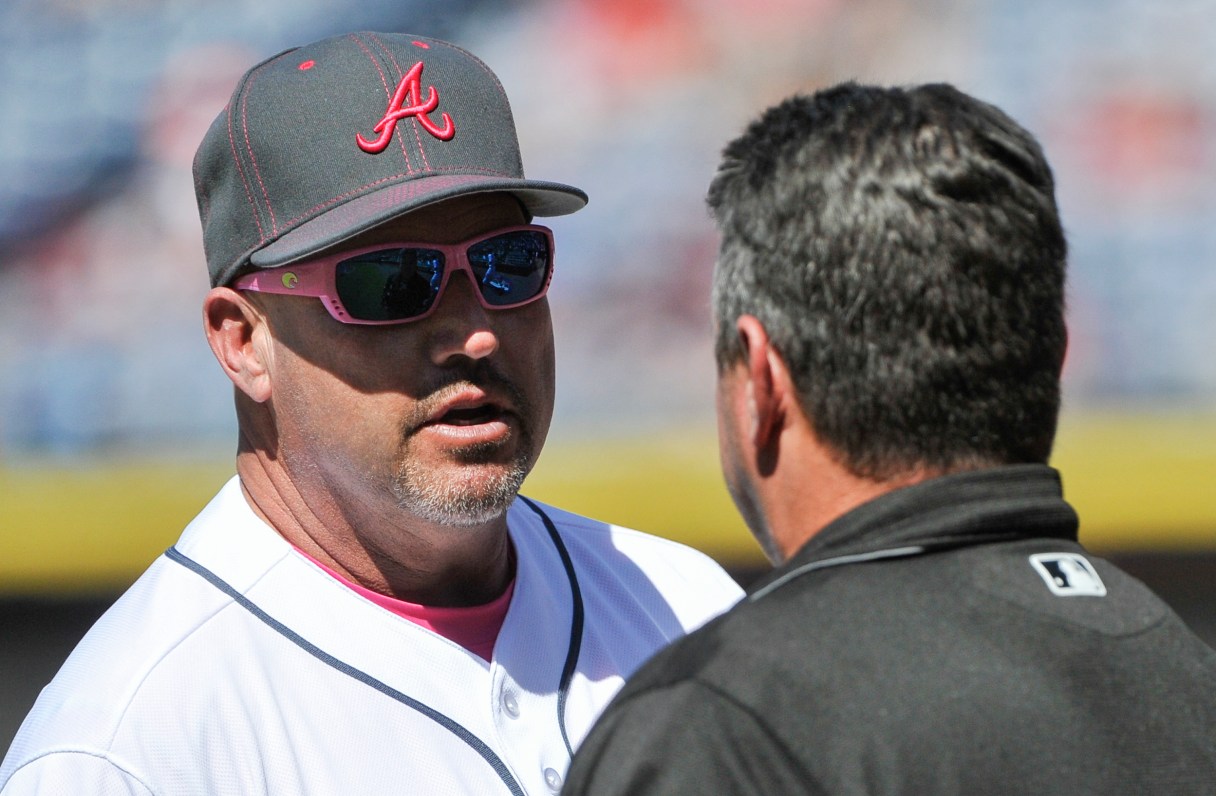
Last week, the Atlanta Braves, once called “America’s Team,” fired Manager Fredi Gonzales as the major league team attempts to deal with the worst record in baseball.
With the Braves playing their last season at Turner Field and the team’s new stadium underway, being dead last in the National League East doesn’t capture the magnitude of how poor their performance has been. As the team attempts to rebuild with young prospects, many still in the minor leagues, it is currently stocked with players past their prime and others with marginal talent whose combined efforts have often seemed pitiable.
In the division, the next-to-worst team is the Miami Marlins, who had a 22-21 record Sunday. But the last-place Braves were 12-31 – not just last but embarrassingly last.
Should the approach to sports, in this case the flailing Braves, inform the need to change our approach to education?
The Atlanta team originated in Boston in 1871. It moved to Milwaukee in 1953 and to Atlanta in 1966. Media mogul Ted Turner bought the Braves in 1976 and featured the team on his cable network, WTBS, which gave the Braves an instant national audience and following. Over the years, the team has featured all-star talent, including Hank Aaron, Phil Niekro, Dale Murphy, Tom Glavine, John Smoltz, Greg Maddux and Chipper Jones, among others.
The Braves, according to Forbes, brought in $49 million in gate receipts, $266 million in total revenue and had operating income of $27.9 million in 2015.
So, with ample funds and a nice profit, plenty of support, a regular fan base and, in a matter of months, a swanky new stadium, the Atlanta Braves have the worst record in their division and all of Major League Baseball. So what happens?
The manager is fired, though he was given players designated by the Atlanta Journal-Constitution’s sports page as “a team entirely underequipped to compete at this level.” But baseball, like sports at any appreciable level of play, is results driven.
If a sports organization doesn’t use its resources of money and human talent to produce a winning product, the consequences are swift. This also applies to business. If a business does not consistently produce a reasonably priced service or good that is desired by customers, the business closes.
Which brings us to Hamilton County Schools, its budget and another request to the Hamilton County Commission last week for more taxpayer funding to produce students who should read at grade level and be able to progress to the next grade properly prepared.
The request for more was met, however, with questions by Hamilton County commissioners such as: “What have you done with the millions you currently have budgeted?” or “What are you going to do differently with your resources now than you have in years past with failing results?”
According to data provided by the countywide effort to reimagine how schools might perform – Chattanooga 2.0 – nearly six in 10 children do not read at grade level by the third grade of school. (Reading at grade level by third grade is a key metric used nationally for reading mastery and future performance.) Further, the same data shows that “only 24 percent of Chattanooga State students and 51 percent of UTC students graduate with a degree within six years of first enrollment.”
Forget a four-year degree; even after six years, relatively few graduate. Evidently, students are not leaving high schools prepared.
The Braves may try to reinvent their brand, but without eventual winning results, the successful status quo of the franchise will be disrupted – guaranteed. Our local education efforts may have been rebranded Chattanooga 2.0, but it will take more than a rebranding to change the status quo of poor results.
So, when will the local education status quo truly be disrupted?
Robin Smith, a former chairwoman of the Tennessee Republican Party, is owner of Rivers Edge Alliance.