
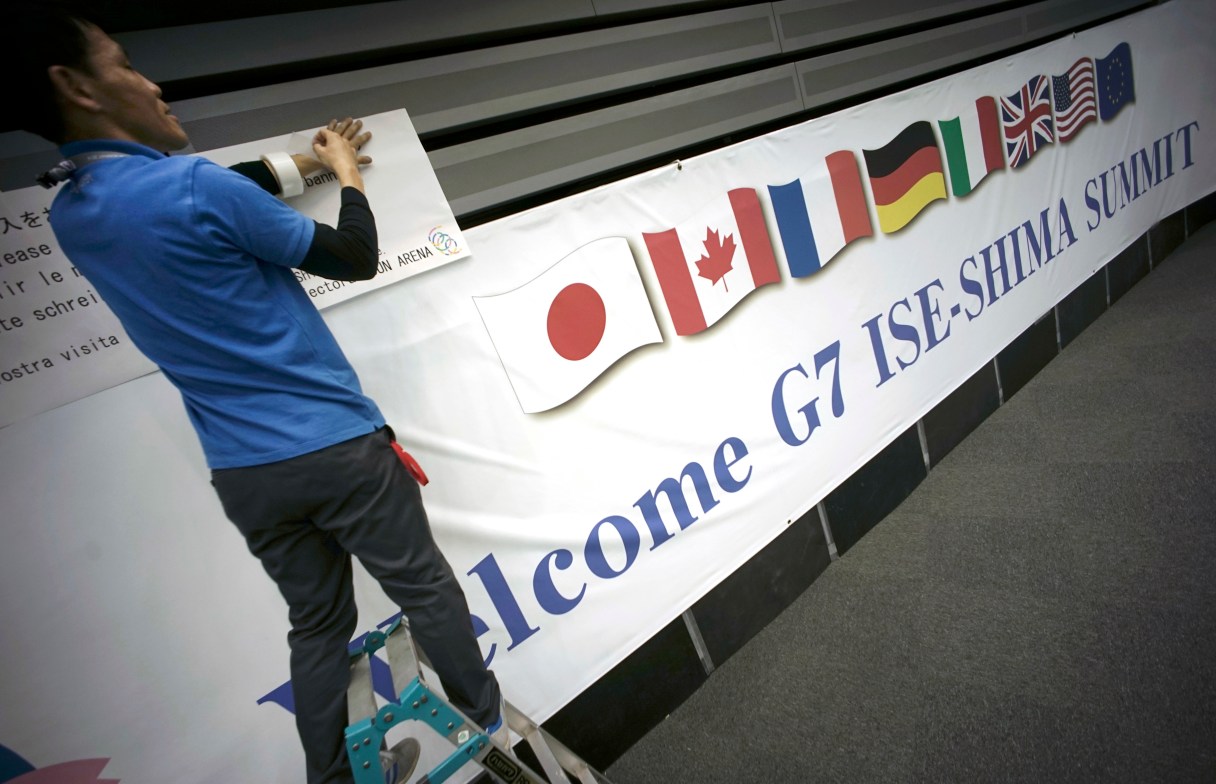
TOKYO (AP) – Leaders of the Group of Seven rich nations will undoubtedly voice unity over fighting terrorism, pandemics and tax evasion at their summit in Japan this week. Finding a consensus on how to breathe life into their sluggish economies is proving more elusive.
Aging workforces, sagging productivity and lingering damage from the 2008 financial crisis are complicating efforts to spur growth while the effects of the slowdown in China and the other big developing economies ripple across the globe.
At a pre-summit meeting in northern Japan’s Sendai, finance ministers and central bank governors of the G7 failed to concur on a coordinated approach to fighting what Nobel prize-winning economist Joseph E. Stiglitz calls the “Great Malaise.”
They did agree the world’s growth engine is running on fumes: “We as the G7 believe the biggest economic problem is demand. Demand – there is no demand – and that is the biggest problem around the world,” said Japan’s finance minister, Taro Aso.
The reluctance of consumers to buy and businesses to invest, despite rock-bottom interest rates, has caught economists by surprise and policymakers flatfooted, as the IMF, World Bank and governments repeatedly have had to downgrade overly rosy forecasts.