
Community weighs in on education
Several hundred people attended Chattanooga 2.0’s first community forum last Monday night at the Bessie Smith Cultural Center to talk about ways the public can be involved in the initiative’s work to improve public education and the county’s workforce development.Chattanooga 2.0 Director Jared Bigham said he plans to take the opportunity to provide feedback to people living in all parts of the county, and not just those downtown.Since the group released a sobering report about the state of education in Hamilton County late last year, groups have been working to develop bold strategies to problems plaguing early-childhood education, K-12 schools, and the link between graduation and entering the workforce.In mid-June, each group will release strategies, which leaders say will be strongly influenced by the comments and suggestions of people across the communityAt last week’s meeting, people were invited to write their feedback on the problems and solutions on neon sticky-notes and place them on the large pieces of paper. Chattanooga 2.0 leaders said all the sticky-notes will be compiled and the comments given to the work groups.
County Mayor Jim Coppinger said last week that he’s yet to decide whether he will include in his fiscal year 2017 budget the additional $24 million requested by the school system, which school leaders say will help improve literacy, expand vocational programs and improve the district’s lowest-performing schools.
But a majority of Hamilton County commissioners said they will not vote next month in favor of a tax increase for Hamilton County public schools.
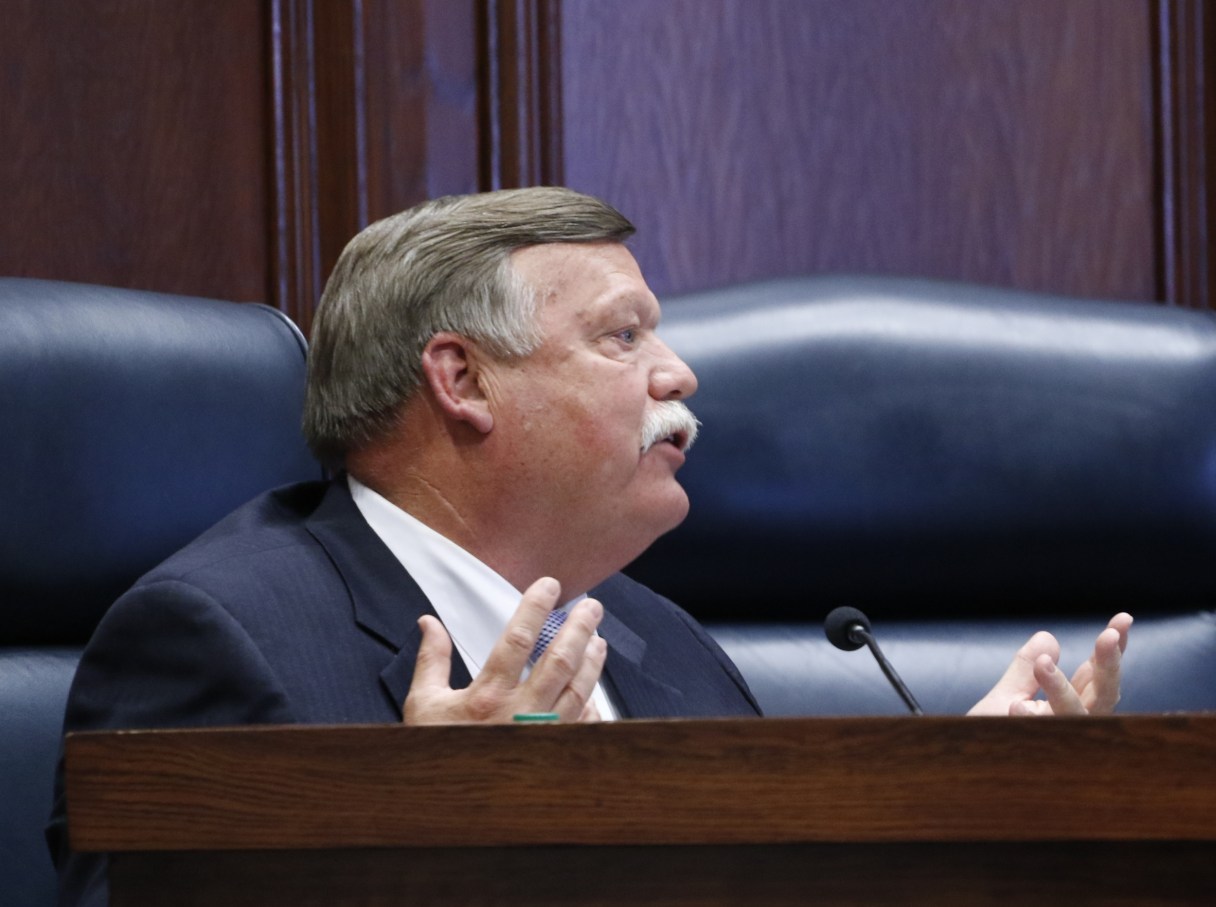
“I want to see some results before agreeing to give more money,” said Commissioner Sabrena Smedley, chairwoman of the education committee.
The conversation was the result of the commission’s meeting last Tuesday, when Hamilton County Schools Interim Superintendent Kirk Kelly presented the school system’s proposed budget for next year. After the meeting, Smedley and Commissioners Randy Fairbanks, Chester Bankston, Marty Haynes and Tim Boyd told the Times Free Press they won’t support the property tax increase required to boost school funding.
Fully funding the school system’s request of $385 million would require a property tax increase of about $71 a year for a home valued at $100,000.
The last tax increase for the school system was in 2005 when a 26-cent property-tax increase was approved. Sixteen cents of that went to schools and 10 cents to general government. In 2007, another 26-cent increase was passed and all the money went to the general government, but included targeted revenue to replace Red Bank Middle and East Ridge Elementary School.
Kelly told the commission the additional funding will help the school system meet achievement goals.
“The success of our county is going to be dependent on the students we produce,” he said.
Following the presentation, Kelly said he thought it went well.
“I was encouraged by what the commissioners said about supporting the mayor’s budget,” Kelly said, referencing comments made by Commissioners Greg Beck and Joe Graham.
Both Beck and Graham said from the dais that they intend to support whatever funding Coppinger puts toward education in the proposed budget.
But when questioned by the Times Free Press after the meeting, both said they would reconsider their support of the budget if it included a tax increase.
Commissioner Warren Mackey said after the meeting that he intends to support Coppinger’s proposed education budget – regardless.
Mackey added that there are many things the school system can be doing with the money it has, such as rezoning students to fill the district’s empty classrooms and reassigning top-performing principals.
When asked about supporting the tax increase, Haynes said he will not be in favor of increased funding for schools until a permanent superintendent is selected.
Commissioner Jim Fields did not return phone calls requesting comment.
Smedley noted that last year, then-Superintendent Rick Smith requested an additional $34 million to bring things like art and foreign language into the district’s elementary schools. She asked if the district’s new focus was a result of the Chattanooga 2.0 initiative to improve public education and workforce development.
Kelly answered that the proposed budget is reflective of what community members have said they want.
Concluding the meeting, Coppinger applauded Kelly and the school system for setting “aggressive timelines” for progress in the proposed budget.
Coppinger acknowledged obstacles facing the school system like the high number of students living in poverty and the increasing number of English language learners, and said the county has to keep fighting to offer all students the best education.
“Those are not people we give up on,” he said, adding that community support of education is vital to success.
Graham said the commission obviously values education, as 60 percent of the county’s budget goes to schools, adding that each year the school system receives increased funding from revenue growth and test scores continue to decline.
“I think we have proven that money is not the problem,” he said.
Staff writer Paul Leach contributed to this story.