
Saturday, November 14, 2026Nov 14

Louisiana adds police protections to hate-crime laws

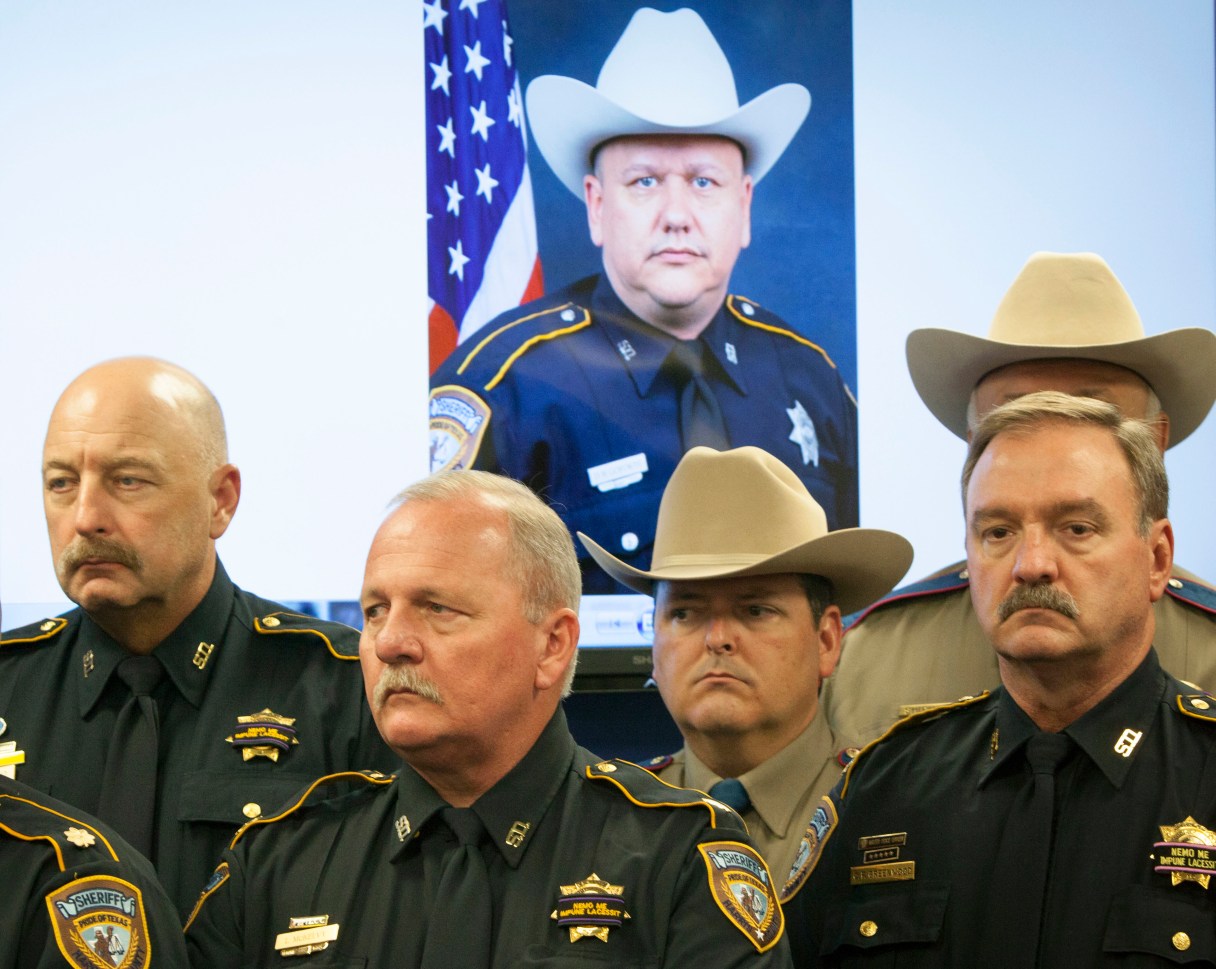
FILE - In this Saturday, Aug. 29, 2015 file photo, law enforcement officers attend a news conference in Houston on the shooting death of Harris County Sheriff's Deputy Darren Goforth, pictured in the background. In May 2016, Louisiana is poised to become the first state in the nation to expand its hate-crime laws to protect police, firefighters and emergency medical crews — a move that could stir the national debate over the relationship between law enforcement and minorities. State Rep. Lance Harris of Alexandria says the legislation was prompted by a number of high-profile attacks on police, including the killing of Goforth who was shot 15 times in an ambush. (Marie D. De Jesus/Houston Chronicle via AP) MANDATORY CREDIT

BATON ROUGE, La. (AP) – Louisiana has become the first state in the nation to expand its hate-crime laws to protect police, firefighters and emergency medical crews.

Democratic Gov. John Bel Edwards, whose family includes four generations of sheriffs, signed the law on Thursday. He said it protects “men and women who put their lives on the line every day.”

“Coming from a family of law enforcement officers, I have great respect for the work that they do and the risks they take to ensure our safety,” Edwards said.

Prosecutors can now seek stronger penalties when first responders are intentionally targeted because of their professions. That’s a departure from the other more essential characteristics hate crime laws protect, such as a victim’s race, religion or gender.

People convicted of felony hate crimes in Louisiana face an additional five years in prison and up to a $5,000 fine. Penalties increase by $500 or up to six months in prison in misdemeanor cases.