
Tallying our war dead
› 4,435 died in the Revolutionary War› 2,260 died in the War of 1812› 13,283 died in the Mexican War› 620,000 died in the Civil War› 2,446 died in the Spanish-American War› 116,516 died in World War I› 405,399 died in World War II› 36,574 died in the Korean War› 58,220 died in the Vietnam War› 1,948 died in the Persian Gulf War› 2,381 died in Operation Enduring Freedom/Afghanistan› 4,501 died in Operation Iraqi FreedomSource: Congressional Research Service
Memorial Day and the occasional honors we give our fallen soldiers throughout the rest of the year are seemingly the only honorable things about war.
War is, after all, the end result of our inability to live peacefully and fairly with each other.
As Archibald MacLeish puts it: The young dead soldiers “have a silence that speaks for them at night They say, Our deaths are not ours: They are yours. “
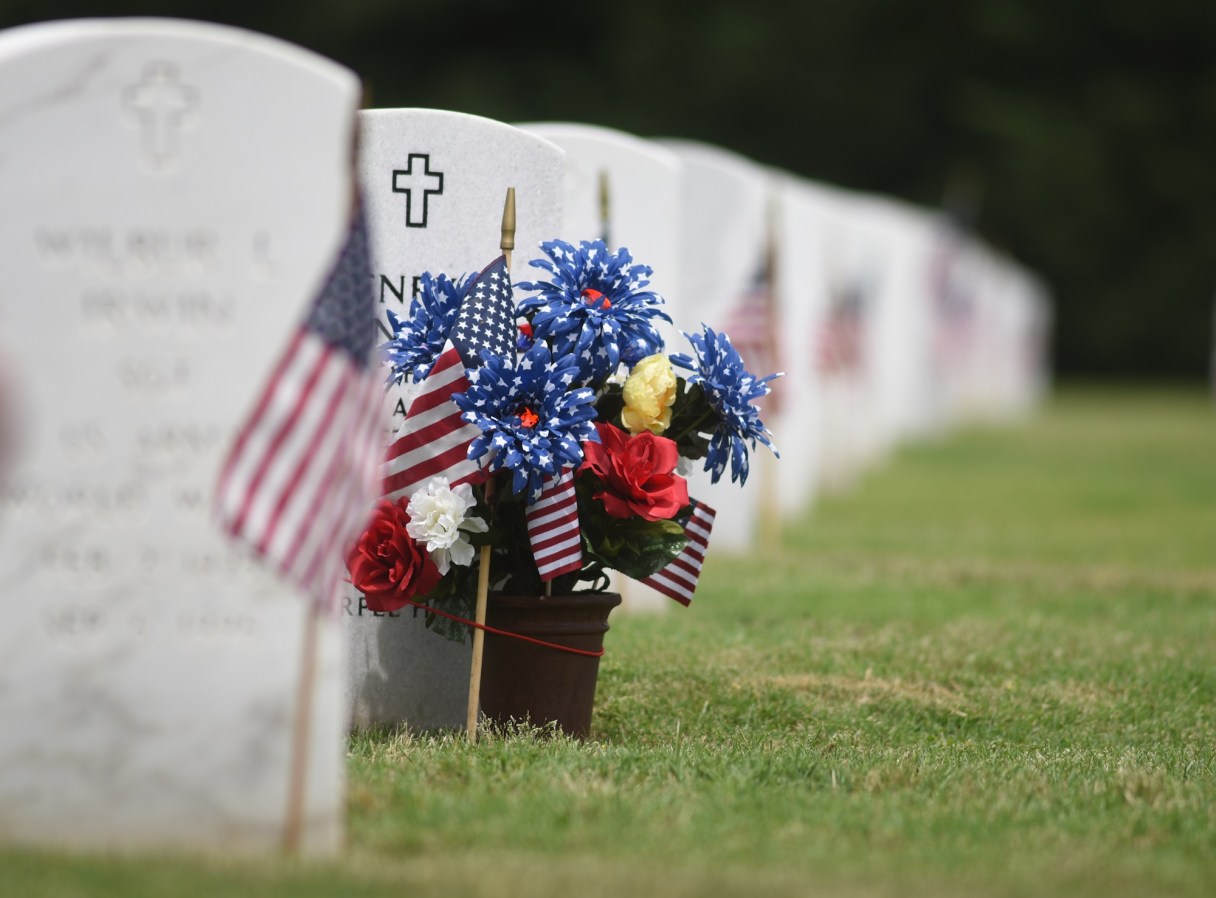
That silence speaks at all hours at Chattanooga National Cemetery where the death curls row after row and knee-deep across gentle hillsides stabbed with about 45,000 tombstones. Not all there died in battles, but all carried to their eventual deaths the scars of wars stretching across two and a half centuries.
The silence also speaks at a stone monument on Lee Highway near the Armed Forces Career Center where the July 16, 2015, home-grown terrorist-inspired attack began, only to end shortly after in the deaths of five servicemen at the U.S. Navy and Marine Operational Support Center on Amnicola Highway.
We elevate all of our fallen soldiers’ sacrifices by saying they helped safeguard our freedoms.
But we owe it to them to safeguard peace as well – by doing our best to stay out of war.
We’re not keeping our end of the bargain. Today, the United States remains at war, and our sons and daughters, brothers and sisters, fathers and mothers remain in harm’s way at various locations in the Middle East.
Part of that bargain also is to take care of the 21.6 million living U.S. veterans. They continue, along with the rest of us, to watch and wait for continued improvement in the Veterans Administration.
We all know someone who has served our country – after all, more than 42 million Americans of all race, gender, ethnicity and religion have served. Many of us know someone serving now.
And all of us know that reserving just one day a year to be appreciative of them is 364 days too few.
Today’s message to veterans, however insufficient, is nonetheless, heartfelt.
Thank you all for your service.