

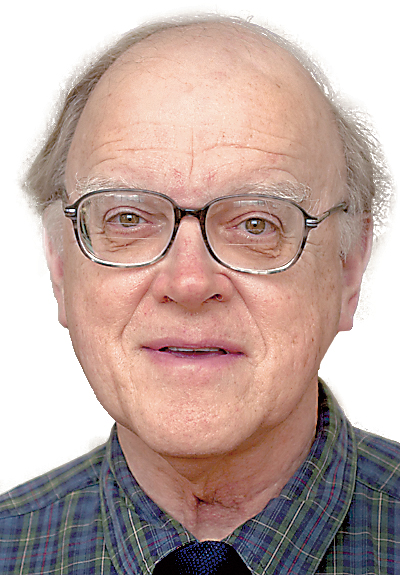
 Dr. Clif Cleaveland
“The Doctor,” a large oil painting by Sir Luke Fildes, was unveiled at the opening of London’s Tate Gallery in 1891. The work immediately assumed the status of an icon for physicians and other providers of health care. It may be viewed at www.tate.org.uk/art/artworks/fildes-the-doctor-n01522.
The setting is a room in a modest home. An oil lantern illuminates the doctor and his patient, an exhausted, pale, possibly-comatose child who rests upon pillows atop adjacent chairs. The father stands in the dim background, his hand resting on the shoulder of his wife, whose head rests on her folded arms. A thin line of light pierces drawn curtains and suggests dawn.
The doctor ponders, sitting forward at the child’s side, his chin resting on a flexed arm. A cup, medicine bottle, bowl and pitcher are nearby. The viewer senses uncertainty. All available treatments have obviously been given. The child may be dying. She may be on the verge of a turning point toward recovered health. Possibly she suffers from diphtheria, pneumonia or typhoid fever in an era where infectious diseases took high tolls of children. Obviously, the doctor has not given up hope.
The artist was inspired by the care rendered years earlier by a doctor to his dying son.
During the first half of the 20th century, most health care occurred at the hands of a single doctor who managed the diagnosis and treatment of a patient’s illness or injury. Specialists were limited to urban or teaching hospitals.
My boyhood care was largely under the guidance of a general practitioner, who was also my great uncle. He delivered babies, saw patients of all ages and performed straight-forward surgeries such as appendectomies and care of various wounds. He practiced into his 90s.
If care was obtained at a clinic, a patient typically encountered the same caregivers with multiple capabilities during each visit.
In the years of my own practice of adult medicine beginning in 1971, some older patients with complex illnesses longed for the days when a revered, personal physician could take complete charge of whatever befell them.
The explosive growth of medical knowledge, along with complex, new diagnostic and treatment devices, has led to progressive specialization among health-care providers. An outpatient may need the services of his internist, a cardiologist to care for his heart rhythm abnormality, an oncologist for a bone marrow issue and a urologist to monitor an enlarged prostate gland. A hospital patient may need a line-up card similar to that of a baseball team to keep track of the various specialists who visit her bedside or perform procedures as she is moved about the facility on a gurney.
Hospital rounds on a teaching service may include physicians, a pharmacist, nurse, nutritionist and social worker. Some members of the team may push a cart bearing a computer for access and entries into an electronic medical record.
Artist Fildes might find his view of the patient obscured by the surrounding care team.
Today’s caregivers work under increasing demands to adhere to countless regulations while updating entries into each patient’s electronic medical record, a procedure that can be demanding of both time and patience. Hospital patients are sicker, yet often have drastically shorter stays which leads to backlogs of admission, discharge, referral and transfer notes. Time to pause and ponder a patient and her diagnosis becomes increasingly scarce.
Such a complex system of specialized care risks depersonalization of the sick and injured. A patient may feel akin to a beef carcass winding its way through a packing plant.
The keys to avoiding such an outcome are eye contact and personal engagement. Full attention of the physician is embodied in “The Doctor.” The little girl is not an anonymous bearer of a disease but an individual human being whose symptoms may be intensified by fear and uncertainty.
Despite increasing stress and demands on finite time, the caregivers I’ve witnessed in recent years sustain an intense, personal focus on each patient, shutting out, for the moment, distractions and extraneous demands.
The essence of medical care in 1891, when “The Doctor” was first exhibited, and in 2016 remains the same.
Contact Clif Cleaveland at ccleaveland@timesfreepress.com.