
Monday, November 16, 2026Nov 16

Study: Obama tax hikes on rich didn’t hurt economy, or rich

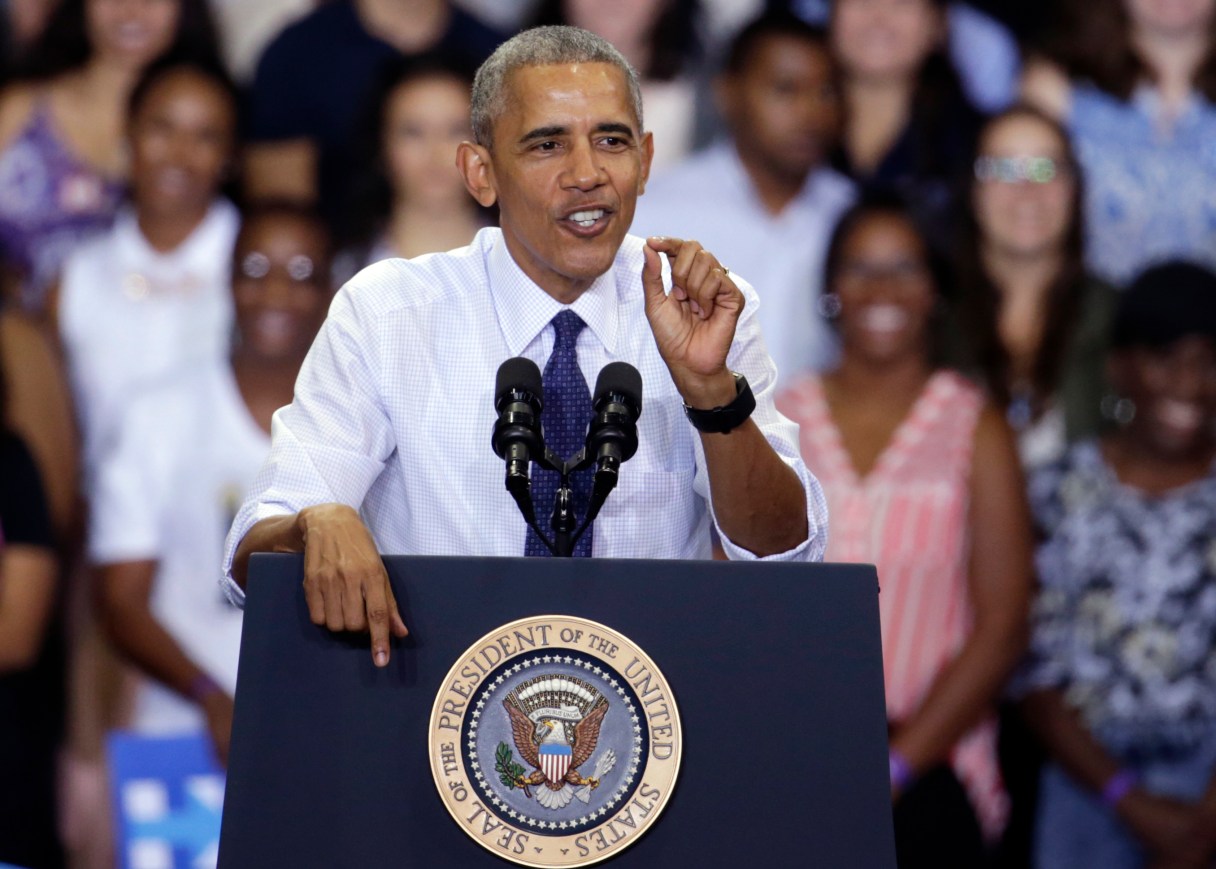
FILE - In this Thursday, Nov. 3, 2016 photo, President Barack Obama speaks at campaign rally for Democratic presidential candidate Hillary Clinton, at Florida International University in Miami.   Obama’s 2013 tax increases for wealthy Americans neither slowed their income growth nor hurt the economy, according to a study that taps into a key debate in the current presidential race. The top 1 percent of earners managed to increase their share of the nation’s income at about the same pace after their taxes were raised as they had before, according to the study, released Thursday,   by Emmanuel Saez, an economics professor at University of California, Berkeley. (AP Photo/Lynne Sladky)
FILE - In this Thursday, Nov. 3, 2016 photo, President Barack Obama speaks at campaign rally for Democratic presidential candidate Hillary Clinton, at Florida International University in Miami. Obama’s 2013 tax increases for wealthy Americans neither slowed their income growth nor hurt the economy, according to a study that taps into a key debate in the current presidential race. The top 1 percent of earners managed to increase their share of the nation’s income at about the same pace after their taxes were raised as they had before, according to the study, released Thursday, by Emmanuel Saez, an economics professor at University of California, Berkeley. (AP Photo/Lynne Sladky)

WASHINGTON (AP) – President Barack Obama’s 2013 tax increases for wealthy Americans neither slowed their income growth nor hurt the economy, according to a study that taps into a key debate in the current presidential race.

The top 1 percent of earners managed to increase their share of the nation’s income at about the same pace after their taxes were raised as they had before, according to the study, released Thursday by Emmanuel Saez, an economics professor at University of California, Berkeley.

That outcome suggests that wealthier Americans did not respond to the higher taxes by either working less or saving less, as many economists often say will happen.

Saez and his frequent collaborator, Thomas Piketty, have helped fuel a contentious debate over income inequality with their research into income gains by the wealthiest Americans. Like their previous work, the new study uses recently released tax data from the IRS.

The findings are relevant to the presidential campaign, in which the two major nominees have put forth radically different ideas for taxing wealthier households. Donald Trump has proposed steep tax cuts that would benefit primarily the richest 1 percent. He maintains that his plan would accelerate economic growth by spurring more spending and investment.