
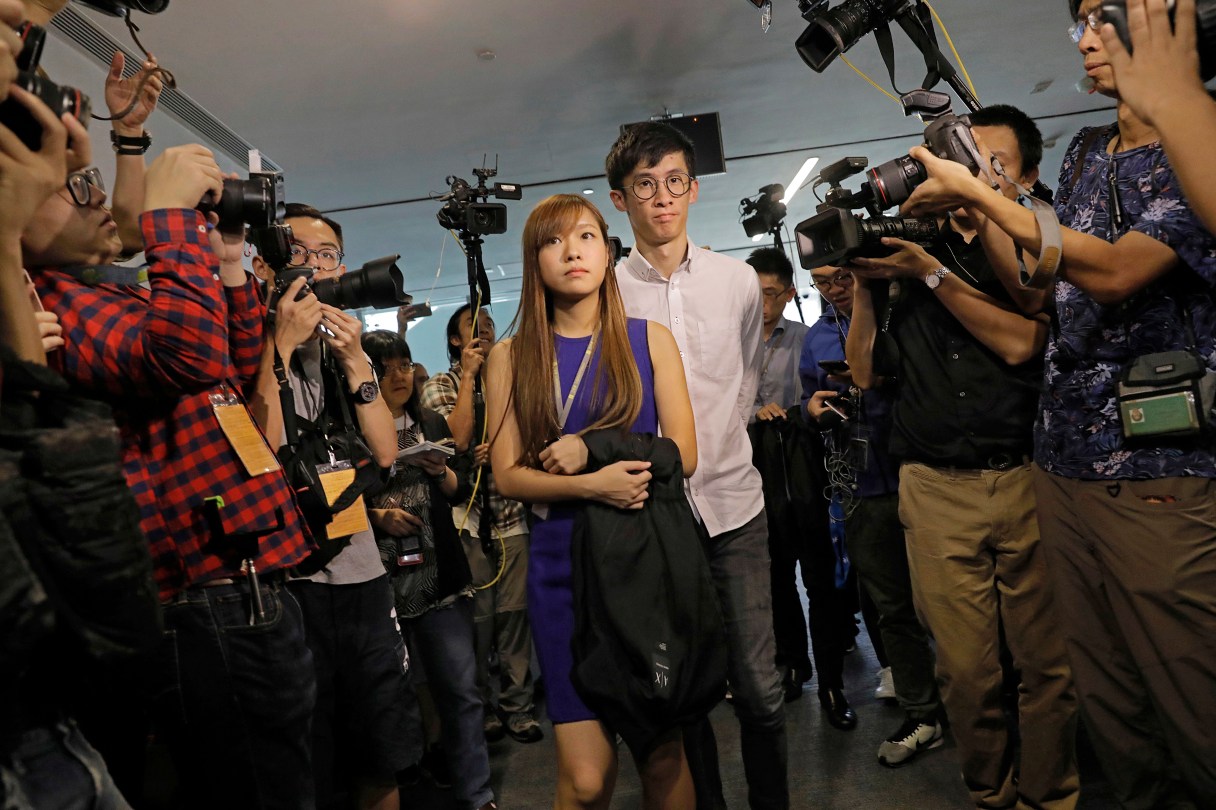
HONG KONG (AP) – Beijing plans to intervene in a Hong Kong political dispute over two young, newly elected separatist lawmakers being fought in the city’s courts, in a rare move that is stoking fears the Chinese-ruled city’s considerable autonomy and independent judiciary are under threat.
Hong Kong’s government said Friday that it was informed by China’s central government in Beijing that members of the country’s top legislative panel, the Standing Committee of the National People’s Congress, will discuss interpreting an article in the city’s Basic Law constitution covering oaths taken by officials.
The move comes in response to a provocative display of anti-China sentiment by the two lawmakers, Sixtus Leung and Yau Wai-ching, at their swearing-in ceremony last month.
Beijing’s heavy-handed response could lead to the democratically elected Leung and Yau being disqualified from taking office. Such an outcome would be favorable to China’s Communist leaders, who are alarmed by the former British colony’s burgeoning independence movement, but is also likely to plunge their troubled relationship into fresh turmoil.
Beijing has stepped in with its interpretation of the Basic Law on only four previous occasions, most recently in 2005. The National People’s Congress did not immediately respond to a faxed request for comment.