
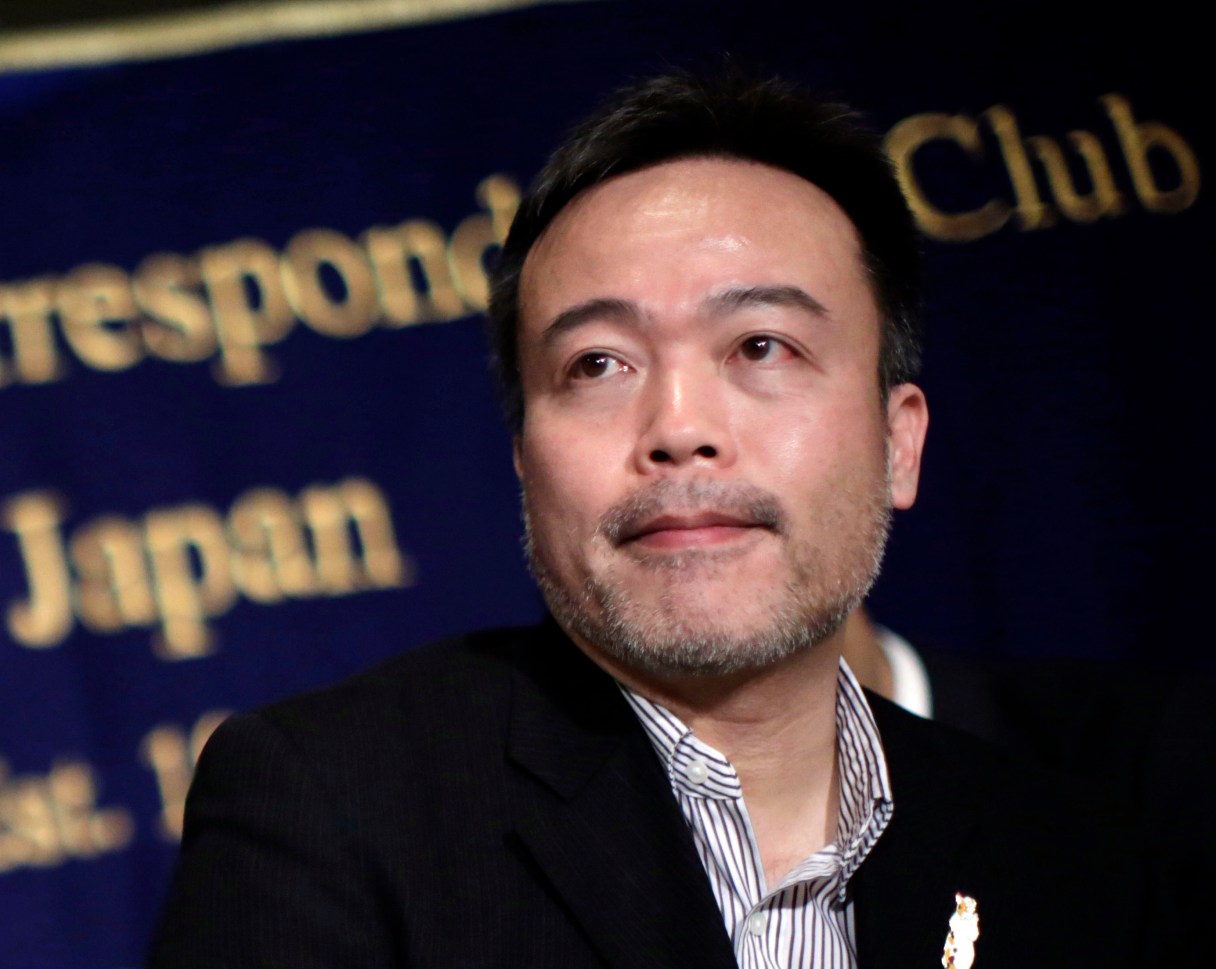
BAGHDAD (AP) – Kurdish officials deported a Japanese journalist on Monday whose work on fundamentalist movements and close relationship with extremists has often aggravated authorities.
The Kurdistan Region Security Council accused Kosuke Tsuneoka of having a militant nom de guerre, Shamil, and said he was detained over alleged links to the Islamic State group. Iraqi and Kurdish troops are currently fighting to expel IS from the city of Mosul.
Tsuneoka was picked up near Mount Zerdk, east of Mosul – the final IS stronghold in Iraq – on Oct. 27, the council said in a statement. They later handed him over to Japanese authorities.
A Middle East specialist and war zone veteran, Tsuneoka has been detained in several countries because of his proximity to Islamic militants. Photos of him posing with fighters and even holding a weapon in front of the black flag often carried by IS and al-Qaida are abundant on social media.
He has been in contact with the Islamic State group in the past, traveling through territory they hold in Syria and meeting several commanders, including in Raqqa, the capital of their self-styled caliphate. He also covered the war in Chechnya and maintains contact with jihadi fighters from the former Soviet satellite state.