
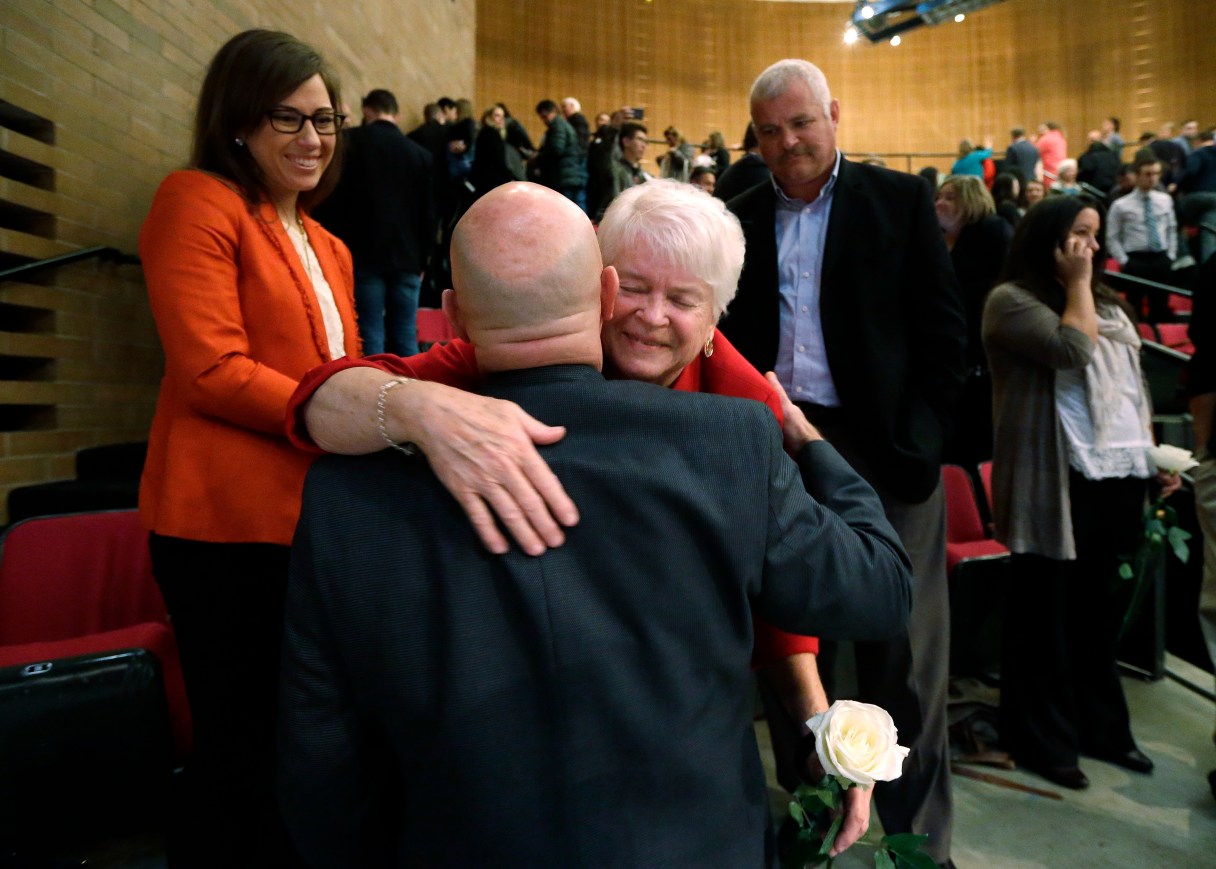
BELLEVUE, Wash. (AP) – A florist who was sued for refusing to provide services for a same sex-wedding says she was exercising her First Amendment rights, but Washington state Supreme Court justices repeatedly questioned Tuesday whether ruling in her favor would mean other businesses could turn away customers based on racial or other grounds.
The court heard arguments in the closely watched case against Barronelle Stutzman, a 71-year-old florist in Richland, Washington, who was fined by a lower court for denying service to a gay couple in 2013.
Stutzman had previously sold the couple flowers and knew they were gay, but told them she couldn’t provide flowers for their wedding because same-sex marriage was incompatible with her Christian beliefs.
Washington Attorney General Bob Ferguson and the couple sued her, saying she broke state anti-discrimination and consumer protection laws, and the lower court agreed.
It’s one of several lawsuits around the country – including some involving bakers and wedding photographers – about whether businesses can refuse to provide services involving causes they disagree with, or whether they must serve everyone equally.