
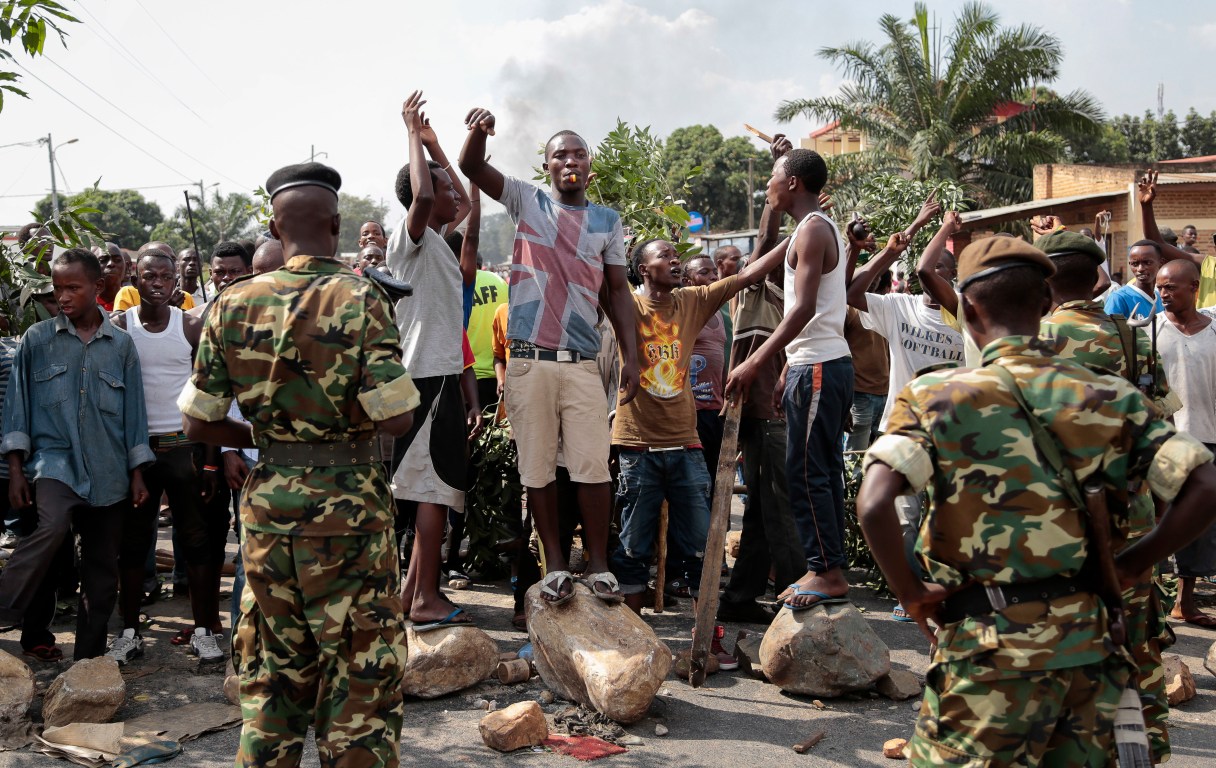
UNITED NATIONS (AP) – A global human rights umbrella organization is urging Africa, Europe and the United Nations to send a civilian protection force to Burundi to prevent a possible civil war and genocide.
The International Federation for Human Rights, known as FIDH, and Burundian Human Rights League ITEKA said in a report Tuesday that the government’s recent break with the international community “heralds a new intensification of repression and crimes against citizens who are considered hostile to the regime.”
The 200-page report, entitled “Repression and Genocidal Dynamics in Burundi,” cited several “dramatic actions” by Burundi’s government in October.
They include the government’s denunciation of a U.N. human rights report “quite damning of the regime,” its expulsion of the African Union and three U.N. experts, its withdrawal from the International Criminal Court, and its suspension of five Burundi organizations defending human rights, including ITEKA.
War in Burundi – which is overwhelmingly Hutu – started in 1993 when Tutsi paratroopers assassinated the country’s first democratically elected president, a Hutu. Fighting mainly between Hutu rebels and the Tutsi-dominated army resulted in the deaths of 300,000 people. A cease-fire was declared in 2006 but took several years for fighting to end.