
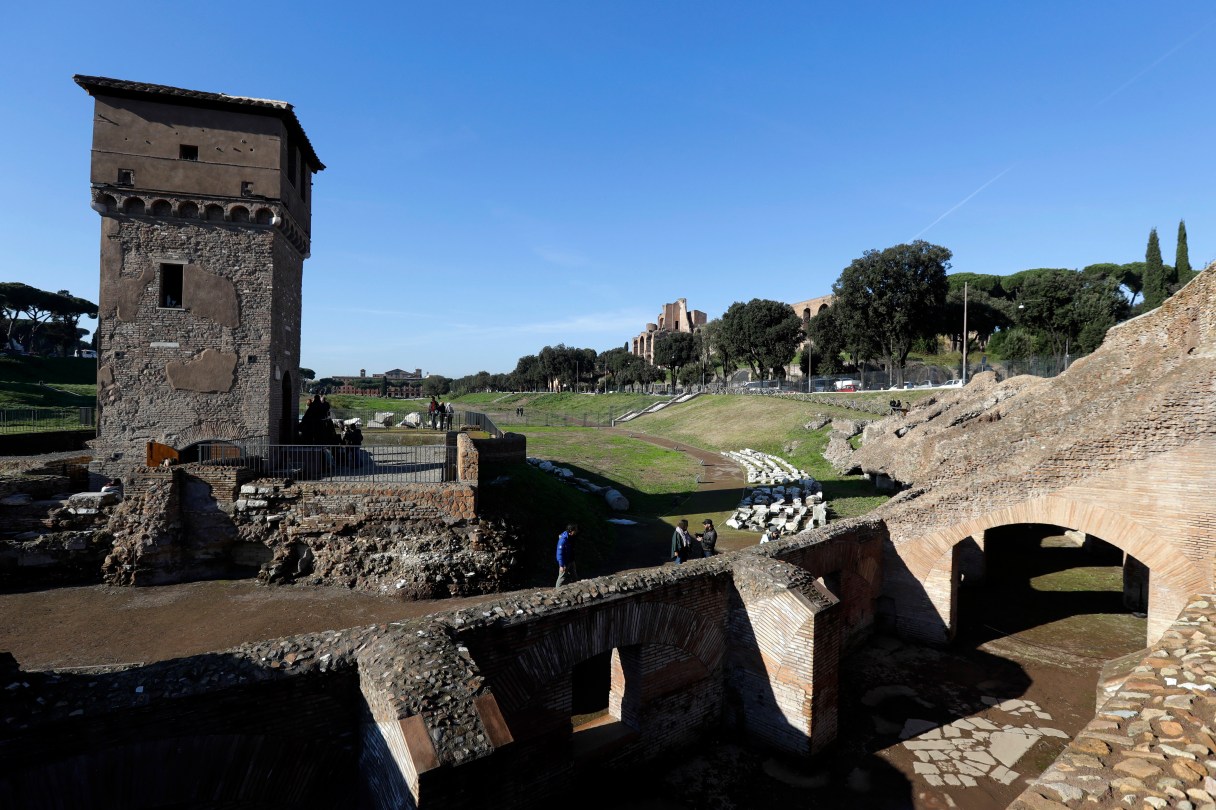
ROME (AP) – Six years of excavations have given Rome a new tourist attraction in Circus Maximus.
The archaeological ruin has for centuries been a vast muddy field, lately used largely by dog-walkers. Now, starting Thursday, the public can see ancient latrines, chunks of what was a triumphal arch honoring Emperor Titus, plus learn about a winning horse named Numitor, which ran the track about 2,000 years ago.
Decorating the bottom of an excavated glass goblet is the figure of a proudly prancing horse, with a palm branch symbolizing victory in its mouth and the name Numitor emblazoned.
Archaeologist Marialetizia Buonfiglio says the image is the only documentation of horses involved in the ancient entertainment, which included popular chariot races.
Visitors can climb inside a restored medieval tower for a commanding view.