
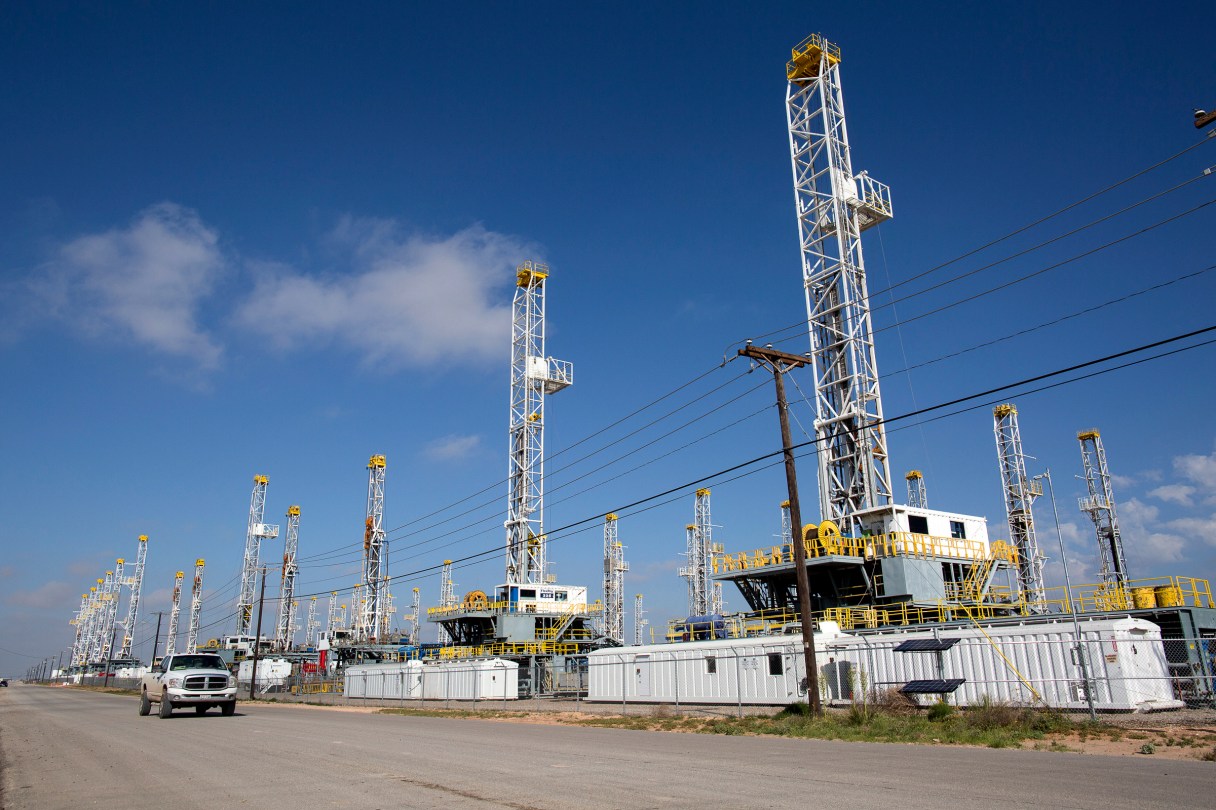
DALLAS (AP) – A vast field of shale rock in West Texas could yield 20 billion barrels of oil, making it the largest source of shale oil the U.S. Geological Survey has ever assessed, agency officials said.
The Wolfcamp Shale geologic formation in the Midland area also contains an estimated 16 trillion cubic feet of natural gas and 1.6 billion barrels of natural gas liquids, the agency said in a release Tuesday.
The discovery is nearly three times larger than the shale oil found in 2013 in the Bakken and Three Forks formations in the Dakotas and Montana, said Chris Schenk, a Denver-based research geologist for the agency.
Geologists explain that oil recovered from shale rock is considered unconventional compared to other oil found in the ground because extracting it requires advanced drilling or recovery methods, such as hydraulic fracturing.
The Wolfcamp Shale is part of the Permian Basin province that includes a series of basins and other geologic formations in West Texas and southern New Mexico. It’s one of the most productive oil and gas regions in the U.S.