
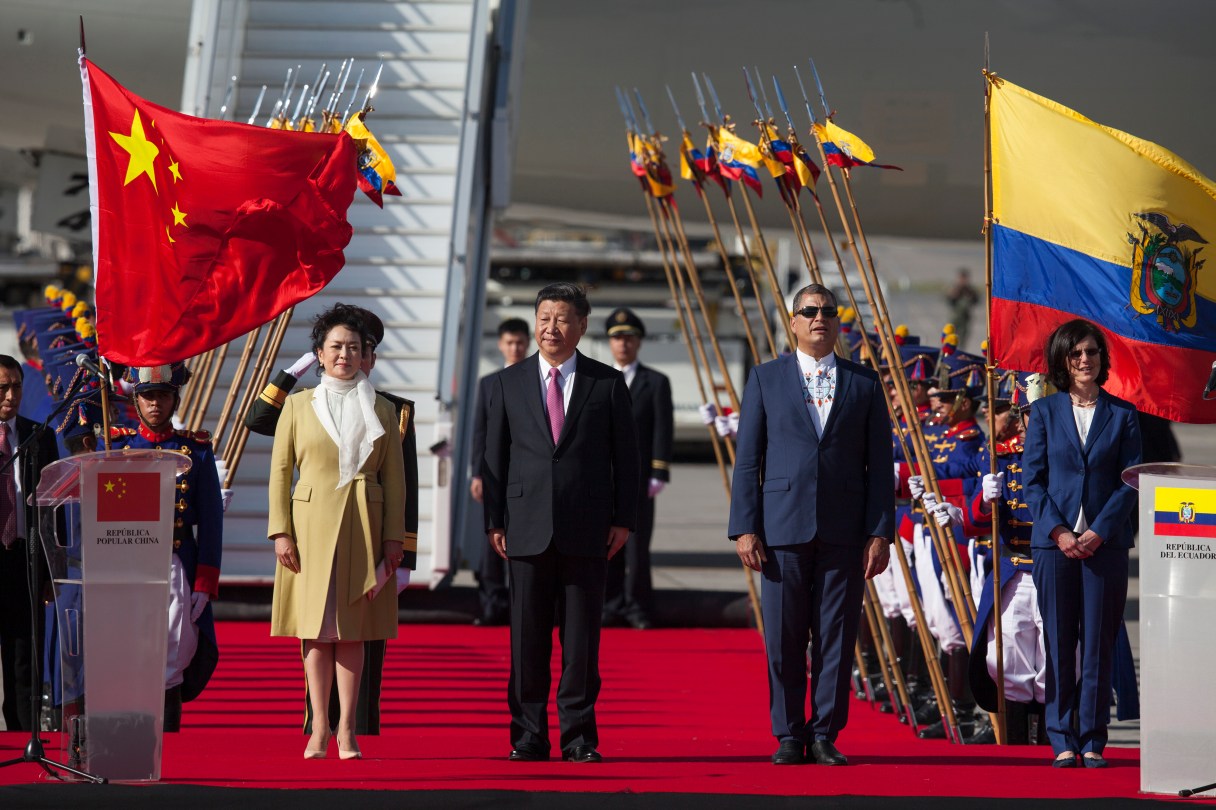
LIMA, Peru (AP) – An expected U.S. economic retreat from Latin America under Donald Trump is causing the region’s leaders to look halfway around the world, to China, for help weathering the possible financial headwinds.
They’ll have the perfect opportunity to make their appeal this week when Chinese President Xi Jinping attends a Pacific Rim summit as part of a visit to Ecuador, Peru and Chile.
This is Xi’s third time in Latin America since taking office in 2013, and when he wraps up the tour he will have visited 10 countries in the region – the same number as President Barack Obama, who has been in office twice as long.
Trump on the campaign trail pledged to break up trade deals such as the North American Free Trade Agreement, deport illegal migrants and build a wall to keep out millions from Mexico and Latin America, sending shockwaves across a region that for two centuries has looked northward for policy guidance.
Over the past decade China has displaced the U.S. as the main trading partner in country after country in Latin America as demand for the region’s soybeans, oil and iron ore have fueled the fastest growth in decades. But more recently, as China’s demand for raw materials has been slowing, the region’s economies have taken a hit, dampening the once-torrid love affair with the world’s second-biggest economy.