
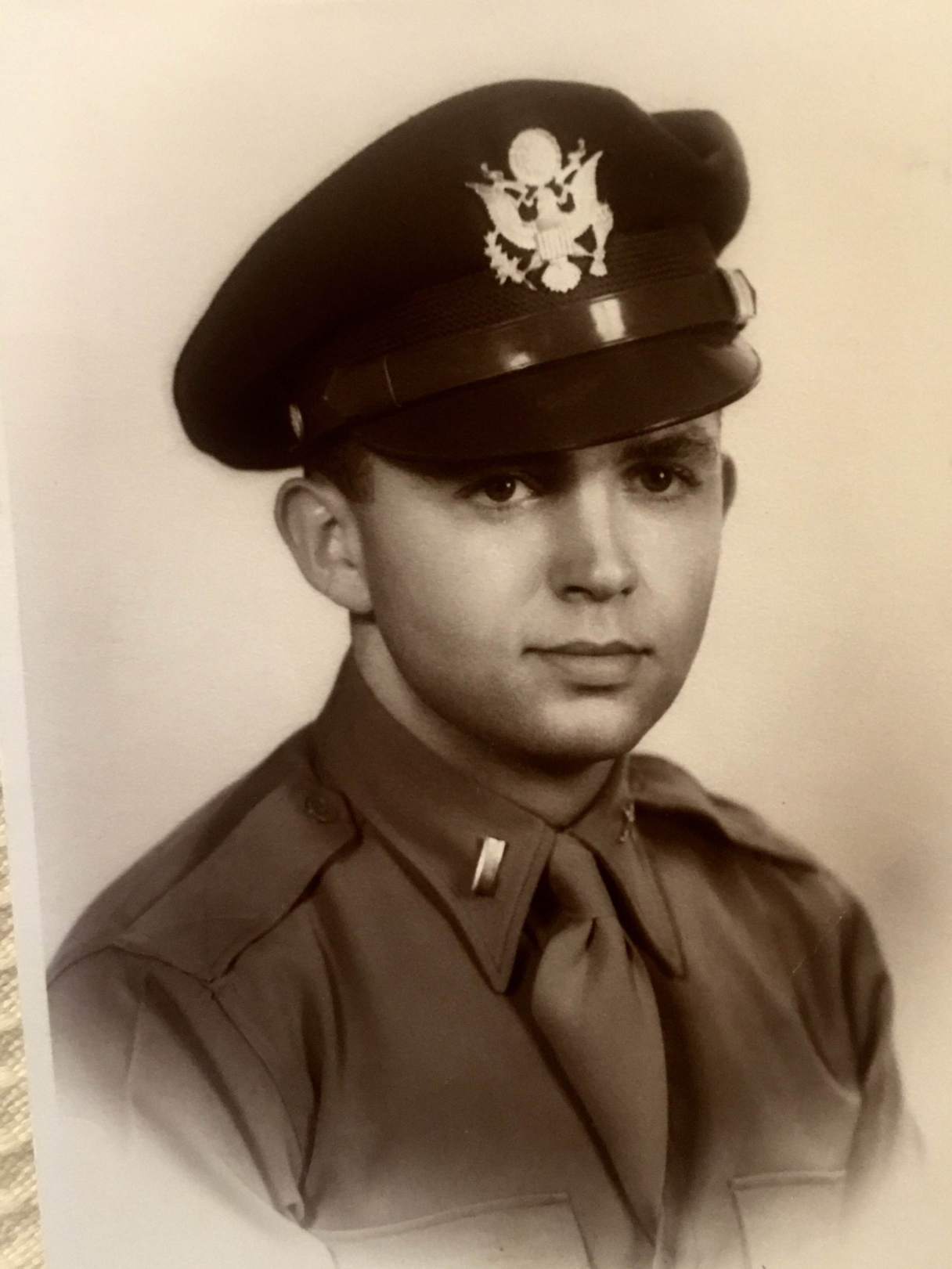
U.S. Air Force 1st Lt. John Randolph Little flew into battle as a bombardier during World War II, leaving his job in advertising at Chattanooga’s News-Free Press to serve his country.
Little flew aboard a B-29, known as the Superfortress, the single most expensive weapons project undertaken by the United States in World War II. In use in 1944 while Little was deployed, it was faster and able to fly at higher altitudes and deliver a larger payload than the B-17 “Flying Fortress” developed for the Army Air Corps in the 1930s.
On Sept. 2, 1945, as Japan surrendered to the Allies aboard the USS Missouri, Little was part of a swarm of 400 B-29’s that flew over the USS Missouri in a show of force underscoring the devastation that awaited if Japan failed to surrender.
Here is part of Little’s story as shared with Jean Huddleston of Lifetime Conversations.
“It was incredible and terrifying to sit in the nose of a B-29 screaming through the skies at more than 300 miles an hour, and faster in a dive. We could climb 900 feet a minute.
“The view was both spectacular and frightening flying over vast expanses of ocean and into adverse weather. I wore two parachutes, one on the front and one on my back, although the ocean was so vast I would have barely been a speck on the water.
“We carried 40, 500-pound bombs, with our primary targets being refineries. We struck devastating blows on the Japanese fuel supply.
“In case we got into trouble on the flight, the bombs were locked with cotter pins. Halfway to our target, it was my job to crawl on the catwalk to the bomb bay and pull the pins from the detonating fuses arming the bombs, releasing 10 at a time. When the pilot had the correct airspeed and altitude, I engaged the Norden Bombsite and control of the plane as it followed suit in any adjustments.
“Once I got the target in my crosshairs, that’s all I needed. I could feel the bomb bay doors open and the plane lift at ‘Bombs away!’
“After another B-29, the Enola Gay, flown by Paul Tibbetts Jr., had dropped the atomic bomb on Hiroshima on Aug. 6, 1945, the Japanese refused to surrender. A second atomic bomb was unleashed on Nagasaki on Aug. 9. On Aug. 15, the Japanese Emperor Hirohito cabled the United States to officially surrender. On Sept. 2, 1945, known as Victory over Japan Day, the Japanese formally surrendered aboard the battleship USS Missouri in Tokyo Bay.
“Four hundred B-29’s darkened the sky with the sound of rolling thunder as we flew in waves over the USS Missouri in a show of force, leaving no doubt that victory belonged to the Allies. The war was over!
“We listened to the surrender by shortwave radio and flew as low as we were allowed, about a quarter of a mile up. Using binoculars, we recognized General MacArthur by the insignia on his cap, and we could see the Japanese foreign minister. We were so close we could see the faces of the defeated Japanese people looking up at us.
“As for me, I went back to Hawaii, was transported to San Francisco, then took a train to St. Louis, arriving at the Chattanooga Choo Choo in Tennessee. I finally made it home to LaFayette [Ga.] by bus. I went back to work at the News-Free Press and enrolled at the University of Chattanooga, graduating in 1951 at 28 years old.”