
Sunday, November 15, 2026Nov 15

Moroccans vote amid worries about jobs, Islamic extremism

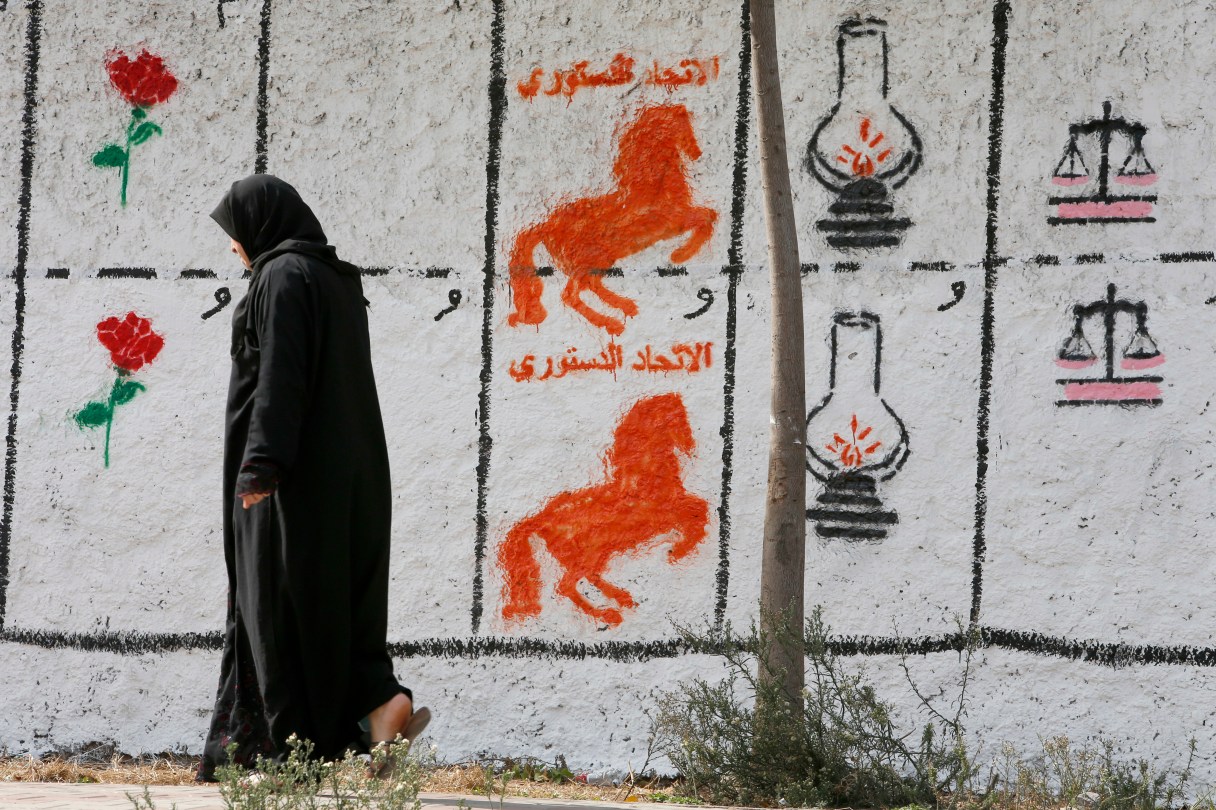
A Moroccan woman walks past electoral paintings representing a political party logos for the upcoming municipal elections in Casablanca, Morocco, Wednesday, Oct. 5, 2016. Party logos are, from left, are, "Socialist Union of the People's Forces" (Rose), Constitutional Union (horse), "Justice and Development Party" (Lamp) and Party of Istiqlal (Scale) at the Sidi Othmane district of Casablanca. To help illiterate people vote, only party logos will appear on ballot papers, and the numbers seen in the image are allocated to each party for displaying purposes only during the campaign. Elections are scheduled Friday 7. (AP Photo/Abdeljalil Bounhar)

RABAT, Morocco (AP) – Millions of Moroccans hit the voting booths on Friday, with worries about joblessness and extremism on many minds as they choose which party will lead their next government.

Adultery scandals and thwarted election-day attacks have marked the unusually venomous campaign in this country, which is allied with the U.S and seen as a model of stability and relative prosperity in the region.

Top contenders are a moderate Islamist party and an up-and-coming rival party seen as close to the royal palace. The palace pledged to loosen control over Moroccan politics after Arab Spring protests five years ago, but retains control over major policy decisions.

Since the last legislative elections in 2011, the Islamist Party of Justice and Development (PJD) has dominated parliament and led a government coalition comprised of several parties with differing ideologies.

The PJD faces tough competition from the Party of Authenticity and Modernity (PAM), widely regarded as close to the palace. It was founded in 2008 by Fouad Ali El Himma, childhood friend of King Mohammed VI and a current royal adviser.