

The certainty Democrats once had of flipping the United States Senate from Republican control is fading, and the GOP looks like at least an even bet to keep control of the upper chamber.
Tennessee has no dog in the hunt this time around with neither Senate seat up for grabs, but a Republican Senate and the expected Republican House would be a boon to a Trump presidency and a roadblock for a Clinton presidency.
Whichever of the two is elected president next month, though, is likely to have four years of congressional frustration. If Trump wins and the GOP retains control of the Senate, it will be a narrow win, and any submitted legislation will face the threat of a Democratic filibuster. If Clinton wins and the Senate flips, the Republican House will remain a stopper for the spending spree she’s already planning.
But the Senate, where Democrats once greedily assumed they’d flip seats in Ohio, Pennsylvania, Florida, Illinois, Wisconsin, North Carolina and New Hampshire and retain the seat in Nevada, and easily take control no matter who won the presidency, is up for grabs.
Illinois and Wisconsin are thought to be lost to Democrats. Illinois Republican Sen. Mark Kirk, who won by 1.6 percentage points in 2010 to succeed to the seat given up by Barack Obama when he was elected president, is trailing two-term U.S. Rep. and Iraq war veteran Tammy Duckworth, while Wisconsin Republican Ron Johnson is running behind the man he succeeded, former three-term Sen. Russ Feingold.
In Ohio, a bellwether state in almost all presidential races, Republican Sen. Rob Portman is almost certain to be re-elected. Democrats believed they had the perfect candidate in former Gov. Ted Strickland, but he has run a lackluster campaign, and the Democratic Senatorial Campaign Committee has pulled out much of the money it planned to spend there.
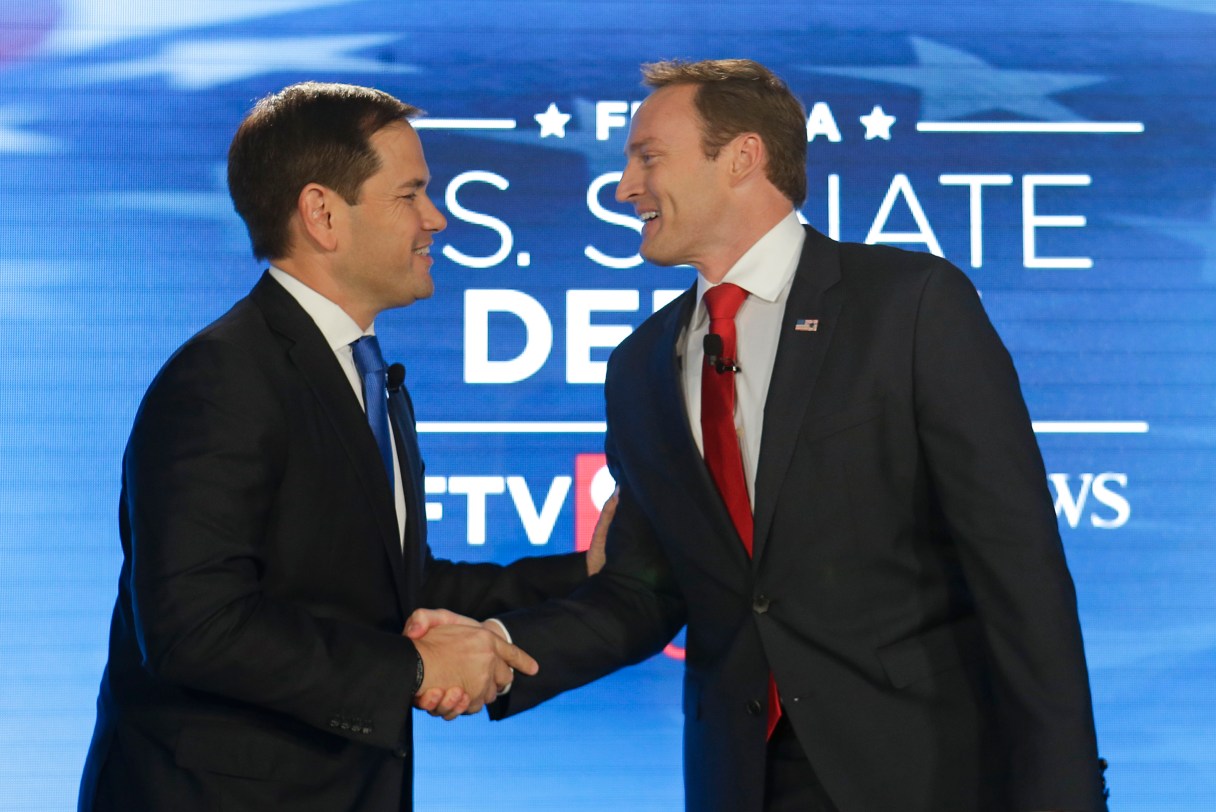
In Florida, similarly a state in which the presidential vote is always close, Republican Sen. Marco Rubio’s early decision not to pursue re-election when he dropped his presidential bid deflated GOP hopes. But since he got back in, he has remained the favorite over challenger Rep. Patrick Murphy, and reports have Senate Democrats pulling their money there, too.
Republican incumbents Pat Toomey in Pennsylvania, Kelly Ayotte in New Hampshire, Roy Blunt in Missouri and Richard Burr in North Carolina either have leads or are virtually tied with their Democratic opponents.
The GOP believed itself to be in good shape in Indiana to replace the retiring Republican, Dan Coats. But the entry of popular former Democratic Sen. Evan Bayh in the race has made it an uphill climb.
The Republicans’ best chance to pick up a Democratic seat is Nevada, where U.S. Rep. Joe Heck has led irascible retiring Democratic minority leader Harry Reid’s hand-picked candidate, Nevada Attorney General Catherine Cortez Masto.
Republicans currently hold 54 seats and must retain 50 with a Trump win and 51 with a Trump loss. Minus an unforeseen development, based on our unofficial crystal ball, we believe they’ll retain the 51 or, at worst, 50.