
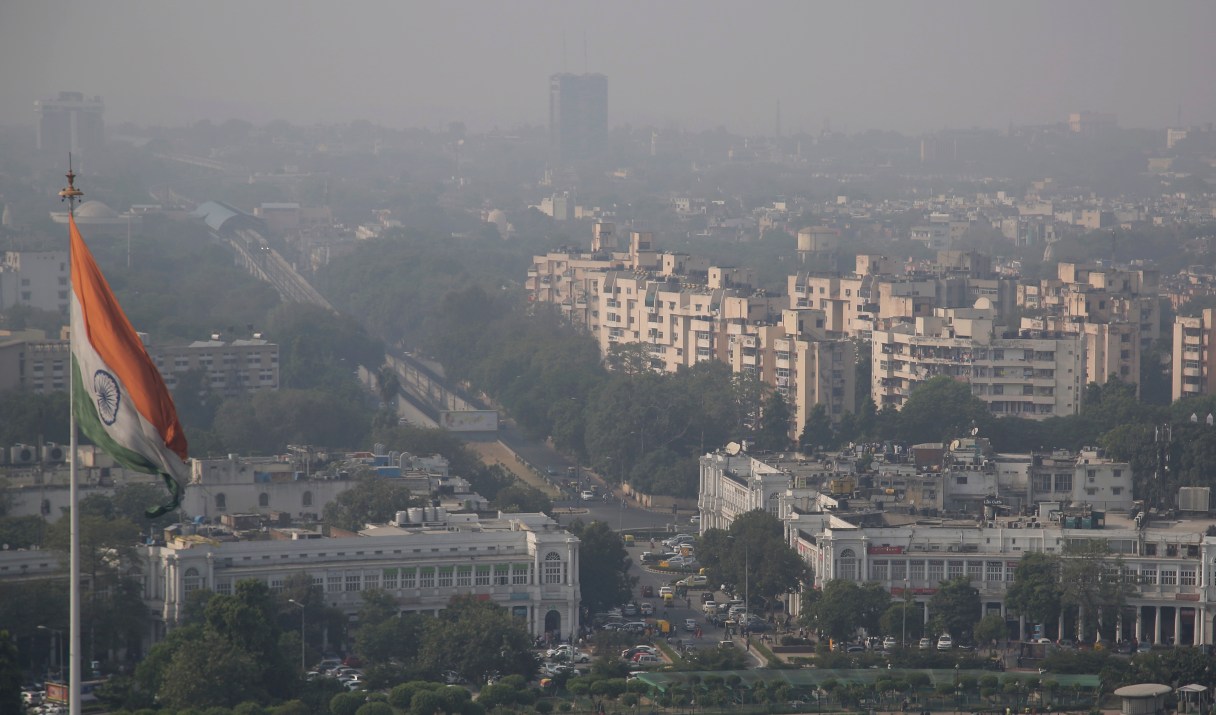
NEW DELHI (AP) – As Indians wake Monday to smoke-filled skies from a weekend of festival fireworks, New Delhi’s worst season for air pollution begins – with dire consequences.
A new report from UNICEF says most of the 2 billion children in the world who are breathing toxic air live in northern India and neighboring countries, risking serious health effects including damage to their lungs, brains and other organs. Of that global total, 300 million kids are exposed to pollution levels more than six times higher that standards set by the World Health Organization, including 220 million in South Asia.
For the Indian capital, the alarming numbers are hardly a surprise. New Delhi’s air pollution, among the world’s worst, spikes every winter because of the season’s weak winds and countless garbage fires set alight to help people stay warm.
Even days before the city erupted in annual fireworks celebrations for the Hindu holiday of Diwali, recorded levels of tiny, lung-clogging particulate matter known as PM 2.5 were considered dangerous. On Friday, PM 2.5 levels were well above 300 micrograms per cubic meter – more than 30 times higher than the WHO recommendation of no more than 10 mcg per cubic meter.
Children face much higher health risks from air pollution than adults. Children breathe twice as quickly, taking in more air in relation to their body weight, while their brains and immune systems are still developing and vulnerable.