
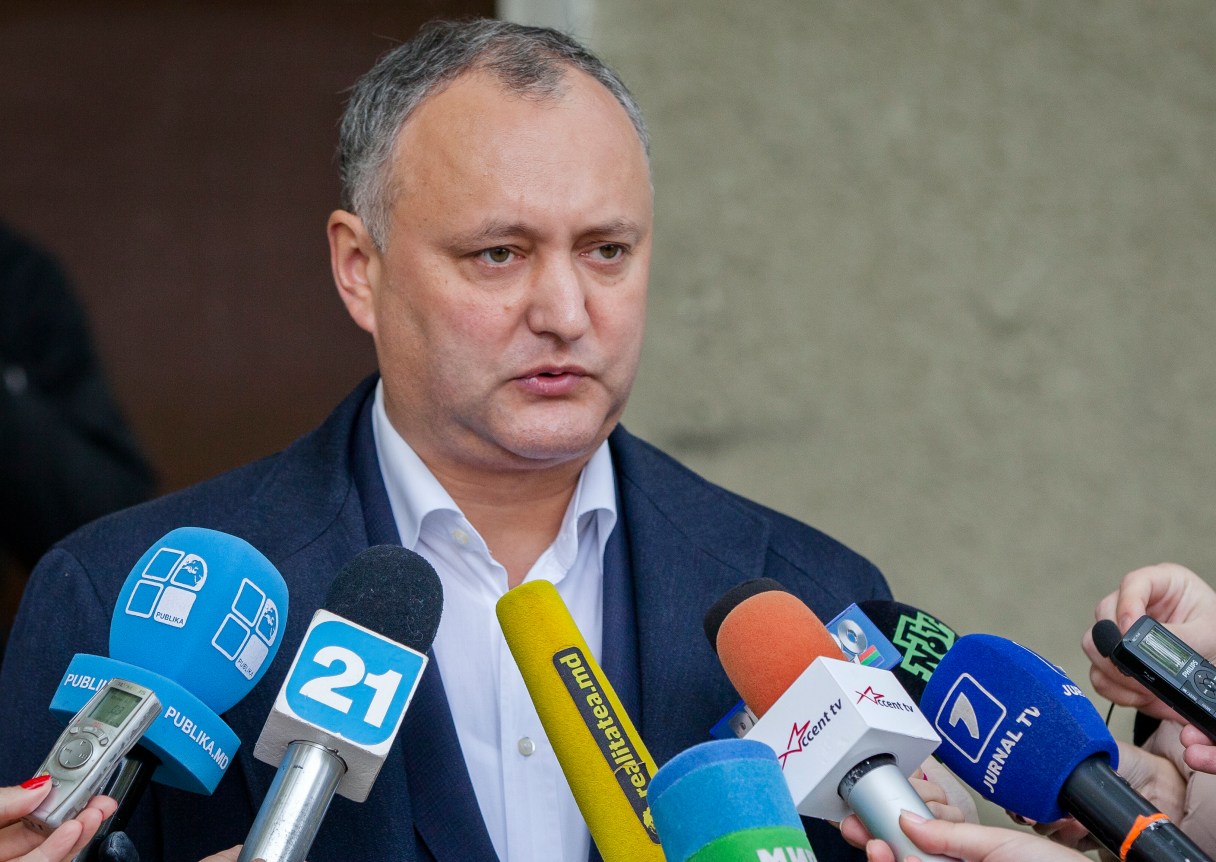
CHISINAU, Moldova (AP) – Moldovans voted for a president Sunday in an election that could move the former Soviet republic closer to Europe or push it back into Russia’s orbit.
It is the first time in 20 years citizens have directly voted for their president in a country where many are angry about high-level corruption.
Both the European Union together with the U.S. and Russia seek to have more influence over the impoverished agricultural landlocked nation of 3.5 million, located between EU member Romania and Ukraine.
In the afternoon, election authorities declared the ballot valid after voter turnout reached 33.34 percent, exceeding the necessary minimum threshold of one-third of the eligible electorate. The first results are expected within hours after polls close at 1900 GMT (3 p.m. EDT).
The favorite of the nine candidates running for the post is Igor Dodon, a 41-year-old pro-Moscow avuncular figure who heads the Socialists’ Party and who has tapped into widespread dissatisfaction with the pro-European government, which has been in office since 2009.
Moldova was thrown into political turmoil in 2014 with the disappearance of more than $1 billion from the banking system. Weeks of street protests followed and six prime ministers took office in one year.
“This day is important for Moldova. It will be a new beginning. I voted against those who have been in power for seven years, against the oligarchs and the looting of the banking system,” Dodon said.
Andrei Boico, a 53-year-old worker, said he thought that if Dodon was elected, Moscow would lift a trade embargo on fruit, vegetables and wine that it placed on Moldova in 2014 in retaliation after it signed an association agreement with the EU.
“I think we need to revise our relations with Russia,” Boico said. “Without good relations…. we can’t have economic growth.”
Ex-World Bank economist Maia Sandu is the preferred option for those who want Moldova to join the European mainstream. If no candidate wins a majority, there will be a runoff on Nov. 13.
“I voted for an honest president who can unite us, not divide us and have good relations with all countries, large or small, based on mutual respect,” she said.
Valentina Cretu, a 41-year-old businesswoman, said she supported Sandu because she had pledged to fight corruption and move closer to the EU. “Without the EU, Moldova can’t get rid of poverty and corruption.”
The president appoints judges and sets out foreign policy but other major decisions need the approval of Parliament. The popular election, however, could bring the post more influence and authority.
Since then, Parliament has passed anti-corruption laws, forcing public officials to disclose their assets and making the misuse of EU funds a criminal offense.
___
Alison Mutler in Bucharest, Romania, contributed to this report.