
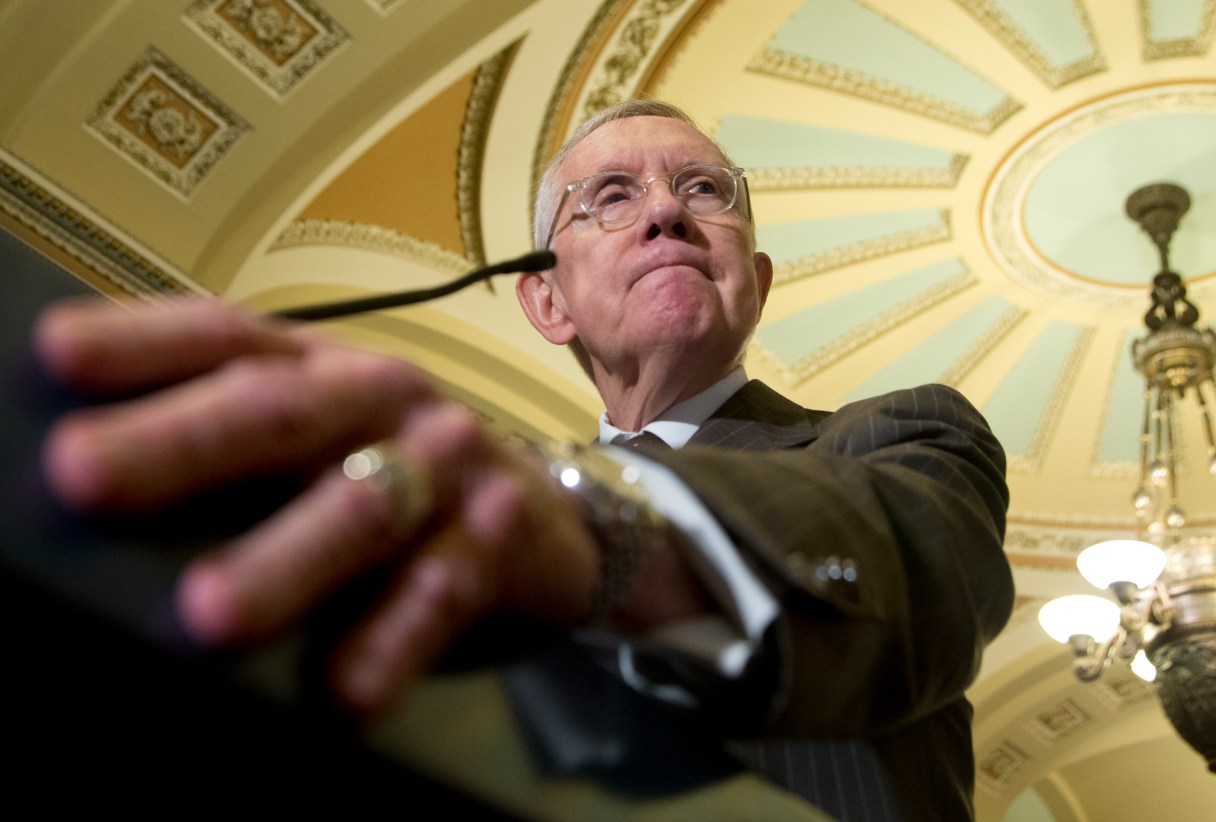
WASHINGTON (AP) – The Senate’s top Democrat said Thursday that he and President Barack Obama will not permit a stopgap spending bill this month that kicks Washington’s unfinished budget business into next year, as some tea party conservatives are demanding.
The message from Harry Reid, in a conference call with reporters, is in line with the private plans of House and Senate GOP leaders. For them, a short-term spending bill, required to prevent a government shutdown, is the main order of business in September’s pre-election congressional session, along with paying for the government’s battle against the Zika virus.
The stopgap bill would buy time for Washington sort out legislation funding the annual operating budgets of federal agencies.
Senate Majority Leader Mitch McConnell, R-Ky., and House Speaker Paul Ryan, R-Wis., had hoped to get the budget process back on track and avoid a catch-all omnibus spending bill, as has happened in the past several years. A Ryan spokesman said the speaker told Republicans in a conference call last week there won’t be any such spending bill this year, and the unfinished business could carry over into the next administration.
Conservatives have revolted over these year-end bills, which often include unrelated measures. And to get Obama’s signature, those bills have been stripped of agenda items earlier sought by Republicans.