
Monday, November 16, 2026Nov 16

Obama’s Asian pivot leaves closer ties, new challenges

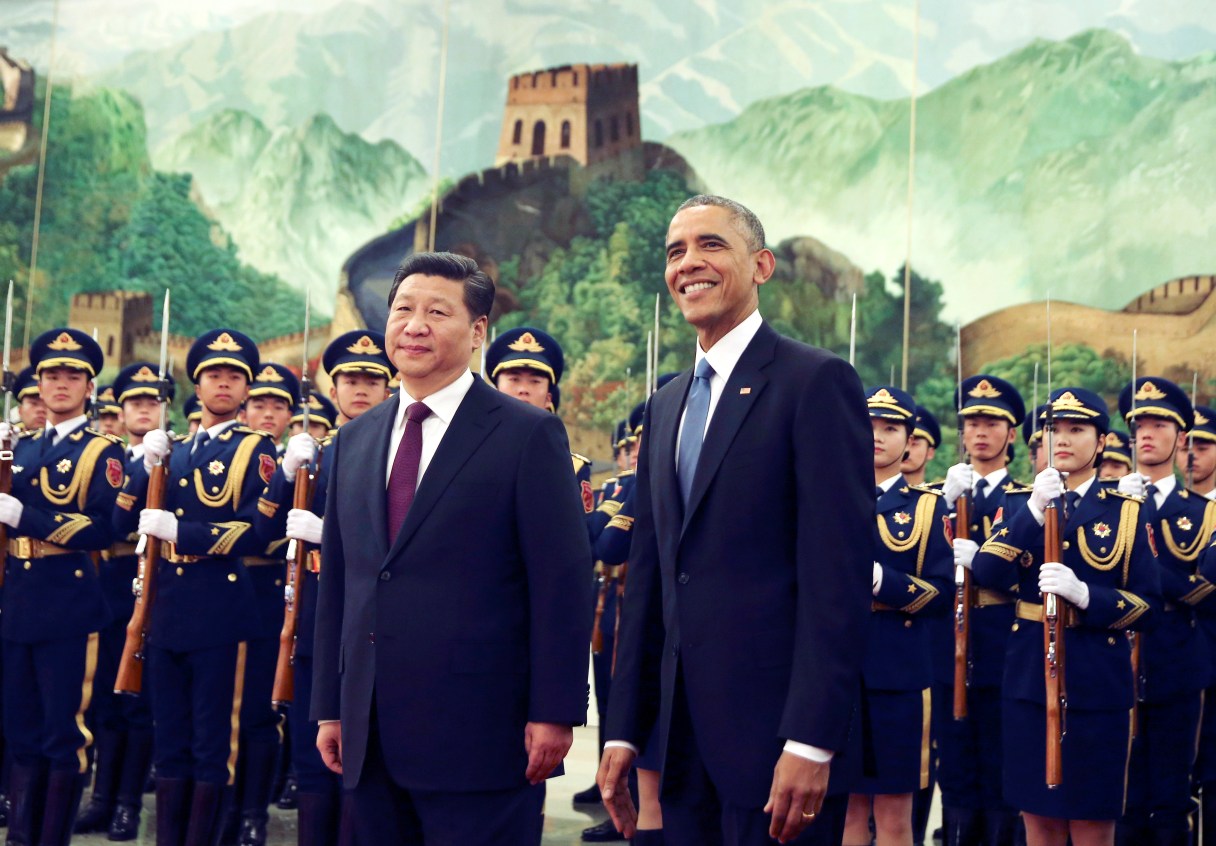
FILE - In this Nov. 12, 2014 file photo, U.S. President Barack Obama, right, smiles after a group of children waved flags and flowers to cheer him during a welcome ceremony with Chinese President Xi Jinping at the Great Hall of the People in Beijing, China. As Barack Obama embarks on what is likely to be his final trip to Asia as president, attention is returning to what is known as the U.S. "pivot" to the continent launched during his first term. The policy adjustment aimed to reinforce alliances and shift military assets to a region that has grown in importance alongside the rise of China as a global economic and political power. (AP Photo/Andy Wong, File)

BEIJING (AP) – As Barack Obama embarks on what is likely to be his final trip to Asia as president, attention is returning to what is known as the U.S. “pivot” to the continent launched during his first term.

The policy adjustment aimed to reinforce alliances and shift military assets to a region that has grown in importance alongside the rise of China as a global economic and political power. A look at some of the impacts on different countries in the Asia-Pacific region:

___

CHINA: KEY ECONOMIC PARTNERSHIP MEETS REGIONAL RIVALRY

The U.S. shift of focus to Asia has been driven by China’s emergence as a global force and America’s rival in the region. Such frictions have persisted despite an economic relationship that has seen the world’s largest economies and biggest military spenders amass two-way trade of more than $600 billion in 2015.