
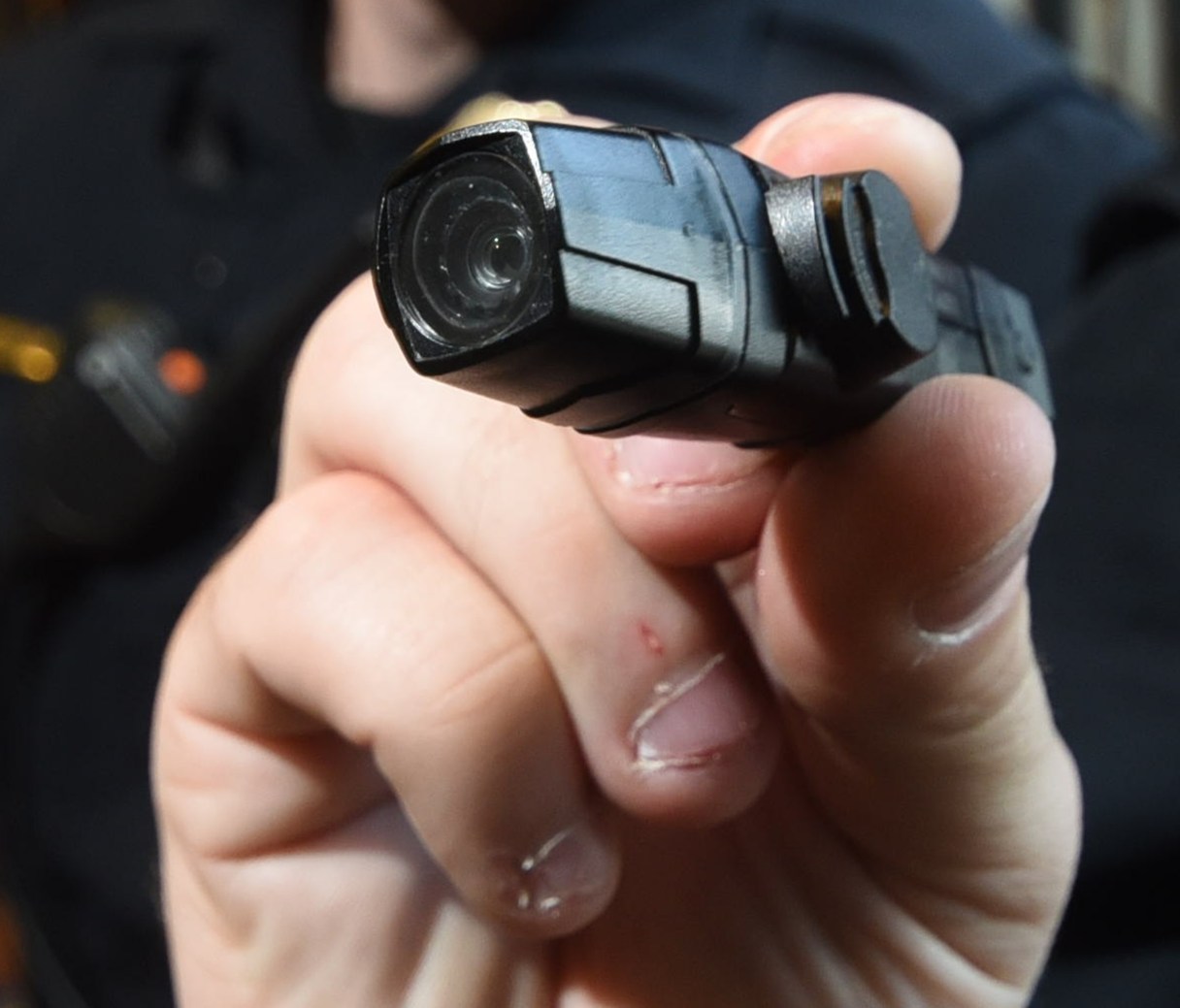
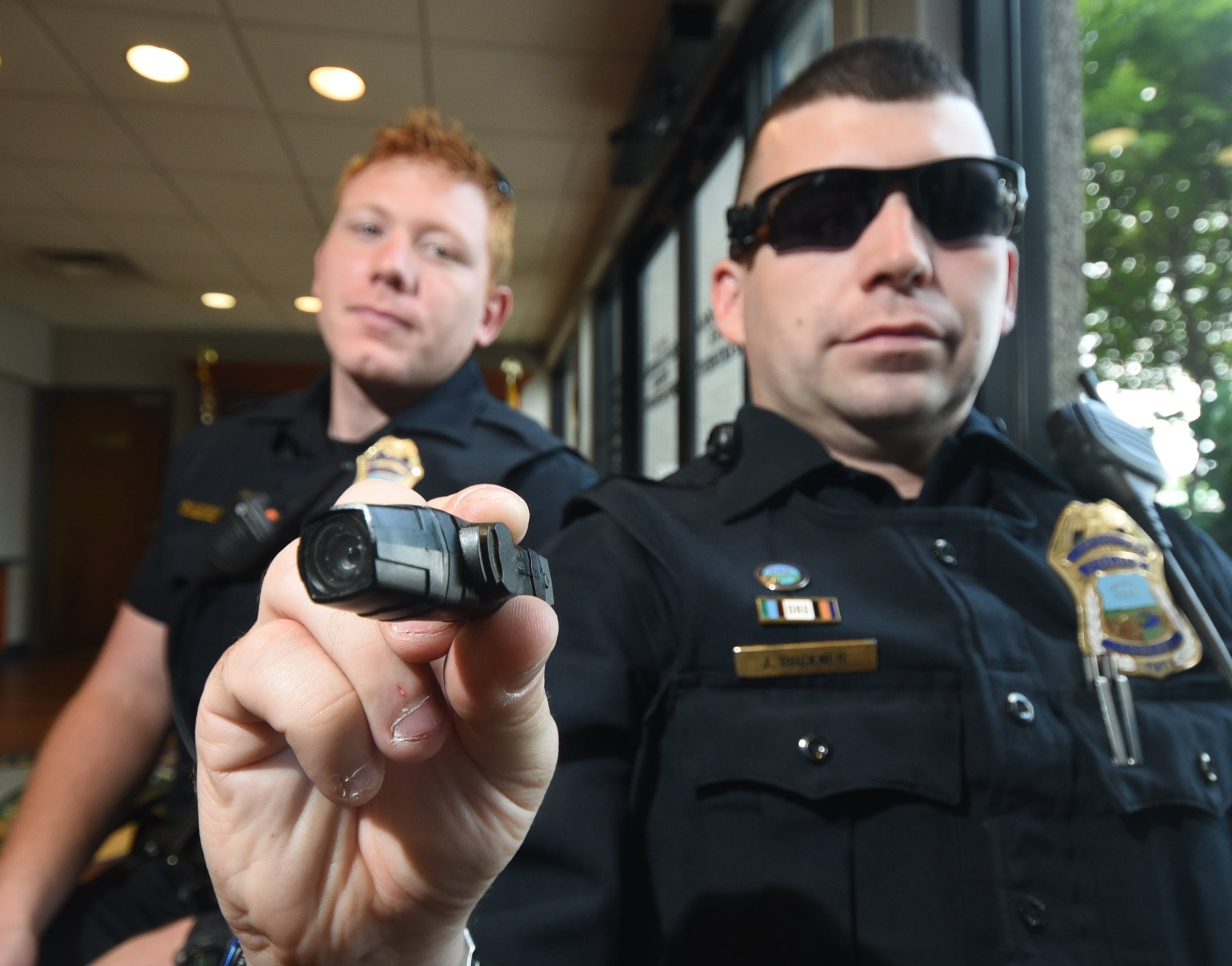
 Chattanooga Police Officer Jeff Buckner holds is AXON FLEX personal body camera that he is testing for the department on Thursday in the lobby of the Police Service Center on Amnicola. Buckner’s camera mounts to the pair of sunglasses he is wearing. Officer Hunter Morgan, left, is testing a chest mounted body cam.
By early next year, every Chattanooga police officer will be wearing a body camera, but in the meantime police officials must navigate complicated issues of privacy, transparency and public records as they craft policies to guide the use of the cameras.
Officials must decide when officers should turn cameras on and off, what types of incidents should be recorded, how long video should be kept on file, under what circumstances administrators review that footage, how videos should be released to the public and a slew of similar matters.
Should police record inside someone’s home? Should officers capture video of interviews with victims? What about a conversation between officers over coffee? What happens to video of officer-involved shootings?
“If body cameras are going to be used, there has to be very clear policy that balances accountability versus privacy,” said Hedy Weinberg, executive director of the American Civil Liberties Union of Tennessee. “And that’s really the central question.”
The police department’s body camera policy is not yet written, but Chief Fred Fletcher said leaders are giving careful consideration to the policy’s scope.