
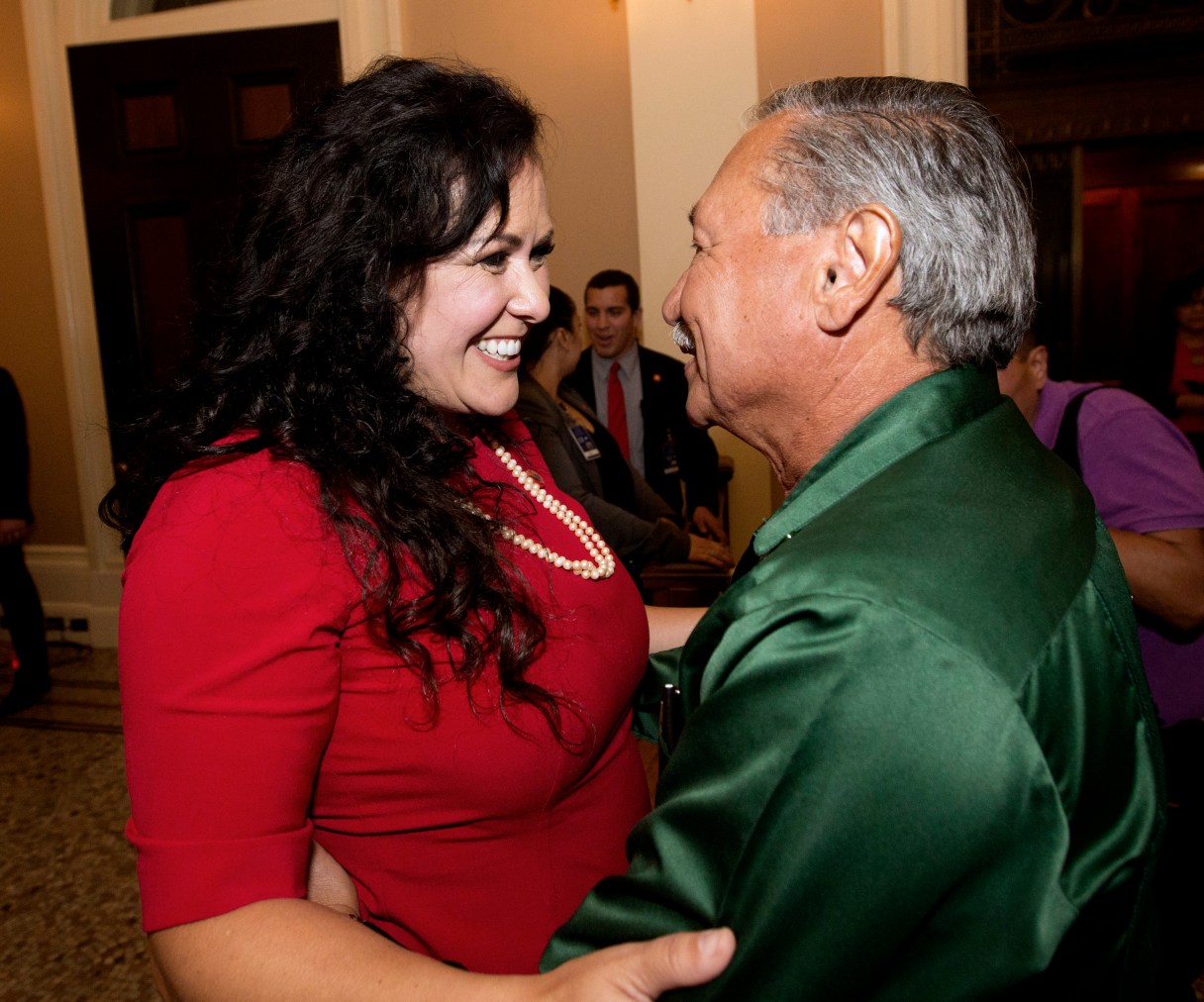
SACRAMENTO, Calif. (AP) – For the first time, farmworkers in California will soon be entitled to the same pay as other hourly workers after California’s governor signed an expansion of a labor policy.
Gov. Jerry Brown’s announcement came decades after labor leader Cesar Chavez and the thousands of farmworkers he organized pushed officials to recognize the union of agricultural laborers.
The legislation will require that farm employers pay workers one and one-half times regular wages pay after eight hours in a day or 40 hours in a week, rather than the rate enacted in 1975 of 10 hours in one day or 60 hours in a week.
“We’ve been able to break the barrier for farmworkers here in California,” United Farm Workers President Arturo Rodriguez said. He called it precedent-setting, but declined to say when or where the UFW would seek to expand its efforts. “We were fighting hard just to get this one first.”
Even in a state with a Legislature controlled by the Democratic Party, there were no assurances the measure would pass. Farm owners and agricultural associations, as well as some outside farm groups, are overwhelmingly opposed to the change because they argue will make overtime unaffordable and lead to fewer hours for individual workers.