
Thursday, October 29, 2026Oct 29

This story is free to read.

This device can read the pages of a book without opening it

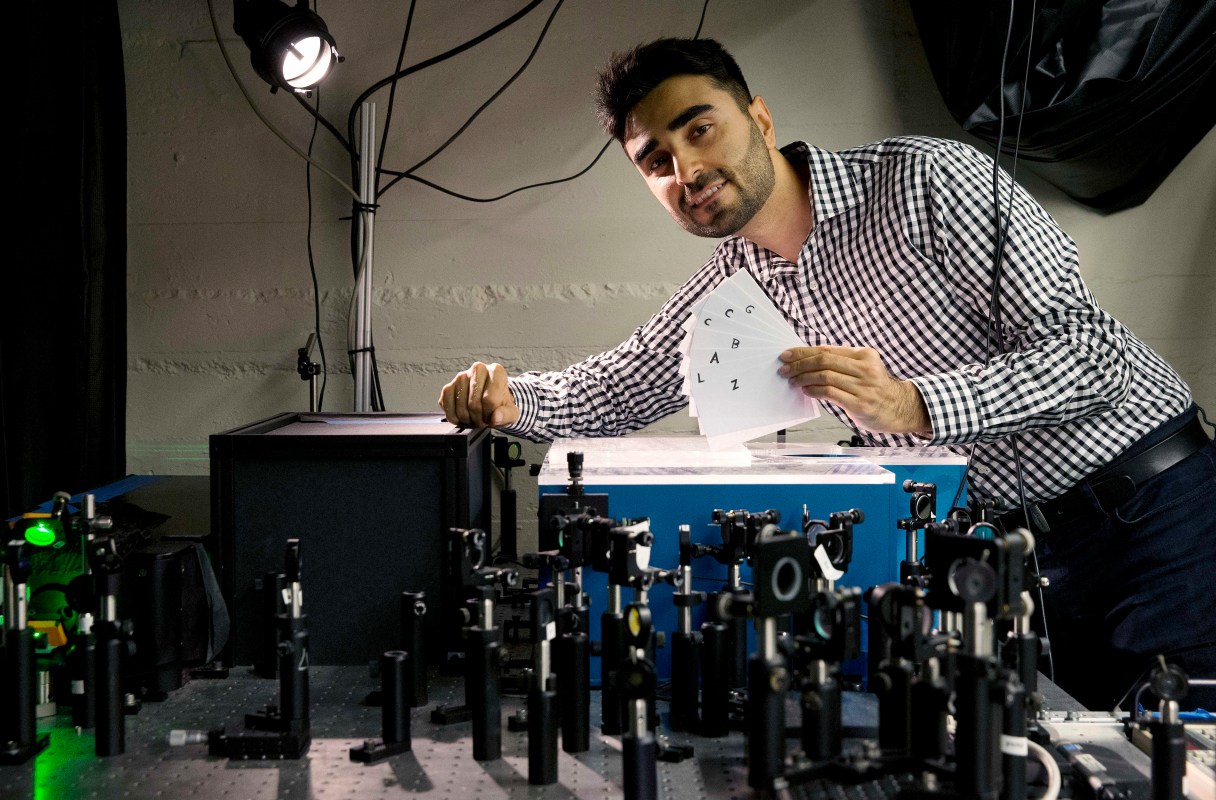
In this Monday, Sept. 12, 2016 photo, Barmak Heshmat poses with his prototype scanning device in a lab at Massachusetts Institute of Technology in Cambridge, Mass. Researchers at MIT have come up with a technology that can read the pages of a book without opening the cover, a development that could help museums better analyze antique books and ancient texts. (AP Photo/Michael Dwyer)
In this Monday, Sept. 12, 2016 photo, Barmak Heshmat poses with his prototype scanning device in a lab at Massachusetts Institute of Technology in Cambridge, Mass. Researchers at MIT have come up with a technology that can read the pages of a book without opening the cover, a development that could help museums better analyze antique books and ancient texts. (AP Photo/Michael Dwyer) In this Monday, Sept. 12, 2016 photo, Barmak Heshmat poses with his prototype scanning device in a lab at Massachusetts Institute of Technology in Cambridge, Mass. Researchers at MIT have come up with a technology that can read the pages of a book without opening the cover, a development that could help museums better analyze antique books and ancient texts. (AP Photo/Michael Dwyer)

Leave it to the great minds at MIT and Georgia Tech to figure out a way to read the pages of a book without actually opening it.

Researchers from the two institutions pulled it off with a system that looks like a cross between a camera and a microscope.

They said it could someday be used by museums to scan the contents of old volumes too fragile to handle, or to examine paintings to confirm their authenticity or understand the artist’s creative process.

The scientists employed what is known as terahertz radiation to read a stack of papers with a single letter handwritten on each page.

The device is not quite ready to plow through entire books: It managed to clearly read only nine pages.