
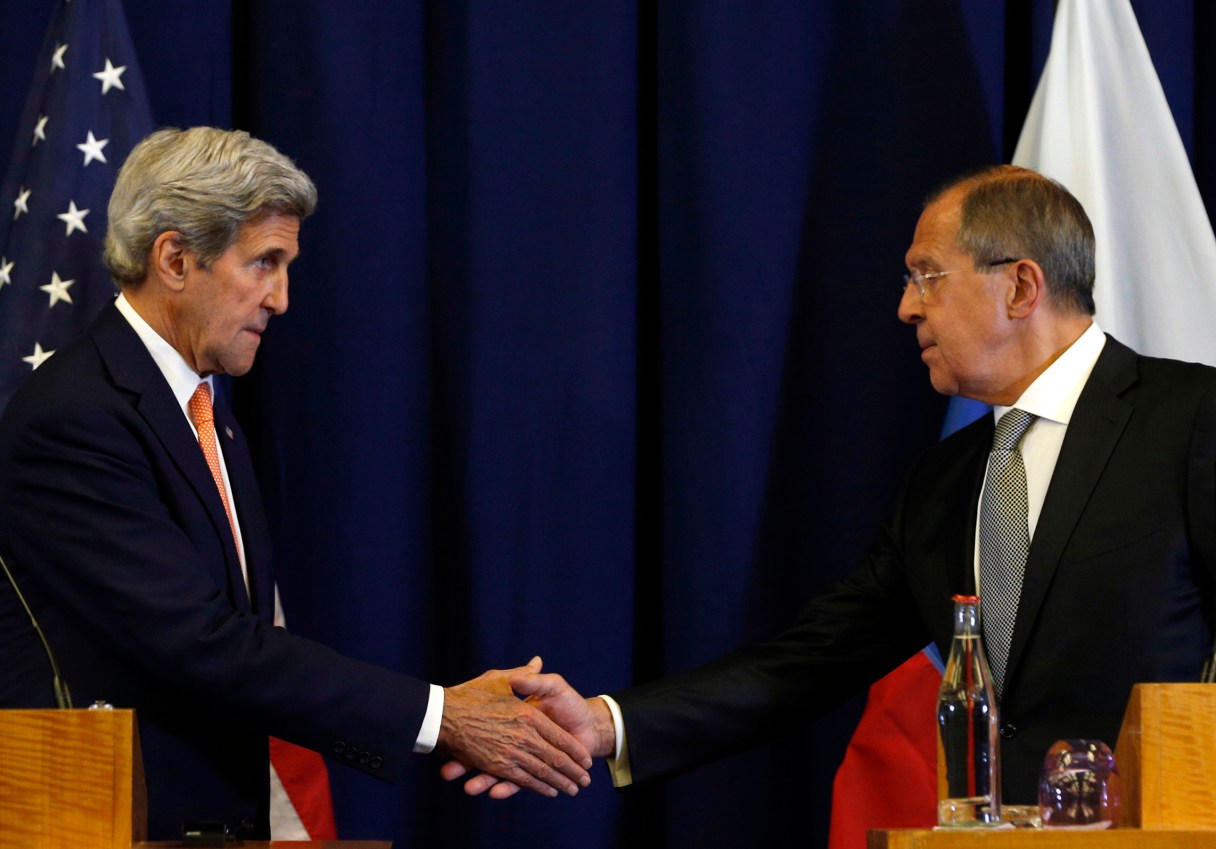
WASHINGTON (AP) – The deal crafted by the U.S. and Russia to halt the Syrian civil war and focus efforts on rooting out extremists in the country is rife with legal and liability questions that are fueling Pentagon skepticism about military cooperation between the two powers, senior U.S. officials said.
The first hurdle is that Congress has enacted a law prohibiting any military cooperation with Moscow in the wake of Russia’s annexation of the Crimea region of Ukraine. That means the deal that Secretary of State John Kerry and Russian Foreign Minister Sergey Lavrov agreed to last week in Geneva first needs a waiver from a skeptical Defense Secretary Ash Carter to be legal.
Another nagging question revolves around whether America could be held responsible if a Russian airstrike – approved by the U.S. as part of the military cooperation that is at the heart of the deal – kills civilians. Military and defense leaders question whether Russia will be able to force the Syrian government to uphold the ceasefire. And they worry that Moscow’s lack of precision targeting could result in civilian casualties, even if Russia is attempting to strike Islamic State militants in Syria.
“We conduct military operations with our allies and partners, and Russia is neither,” said Evelyn Farkas, former U.S. deputy assistant defense secretary who is now a senior fellow at the Atlantic Council in Washington. “So, it makes this very fraught with all kinds of risk for us — military and political.”
Neither U.S. nor Russian officials have released the plan, so details are sketchy. But senior U.S. officials said military and intelligence officials and other segments of the administration have serious doubts that Russia will be able to live up to its commitments in the deal, despite Moscow’s long-held desire for military cooperation with the U.S.