
Tuesday, November 17, 2026Nov 17

New party leader gives Japan troika of top women in politics

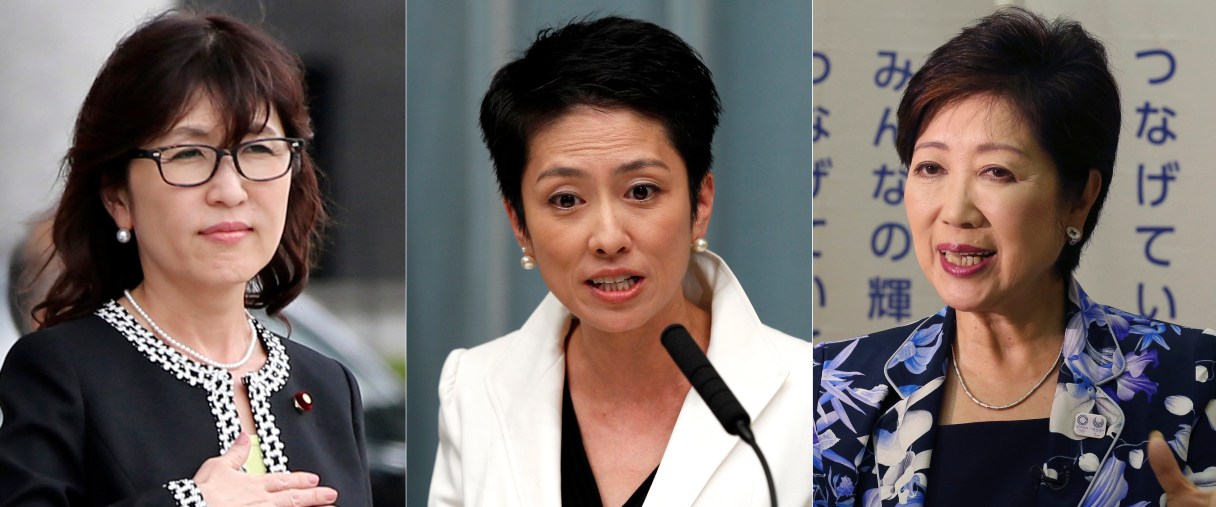
FILE - This combination of photos taken in Sept. 12, 2016, left, Sept. 2, 2011, center, and Aug. 29, 2016, shows Japanese female politicians, from left, Defense Minister Tomomi Inada, newly elected opposition Democratic Party leader Renho Murata and Tokyo Gov. Yuriko Koike. It’s too early to say whether these three are a harbinger of greater change, notwithstanding Prime Minister Shinzo Abe’s “womenomics” push to encourage women to pursue careers. Japanese women have served in high posts before - a pioneer was popular politician Takako Doi, who took the reins of the Socialist party in 1986 - but they have been more the exception than the rule. (AP Photo/Koji Sasahara, Shizuo Kambayashi, File)

TOKYO (AP) – Dressed in a white pants suit, the new head of Japan’s main opposition party stood out as she raised her hands on stage with three other dark-suited party leaders.

Renho Murata, who generally goes by only her first name, is one of three women who have assumed prominent political posts in recent weeks in a country more known for its male-dominated political and business hierarchy. Her election Thursday followed that of Tokyo’s first female governor on July 31, and the appointment of a woman as defense minister later the same week.

It’s too early to say whether they are a harbinger of greater change, notwithstanding Prime Minister Shinzo Abe’s “womenomics” push to encourage women to pursue careers. Japanese women have served in high posts before – a pioneer was popular politician Takako Doi, who took the reins of the Socialist party in 1986 – but they have been more the exception than the rule.

The latest three took varied paths to leadership:

___