
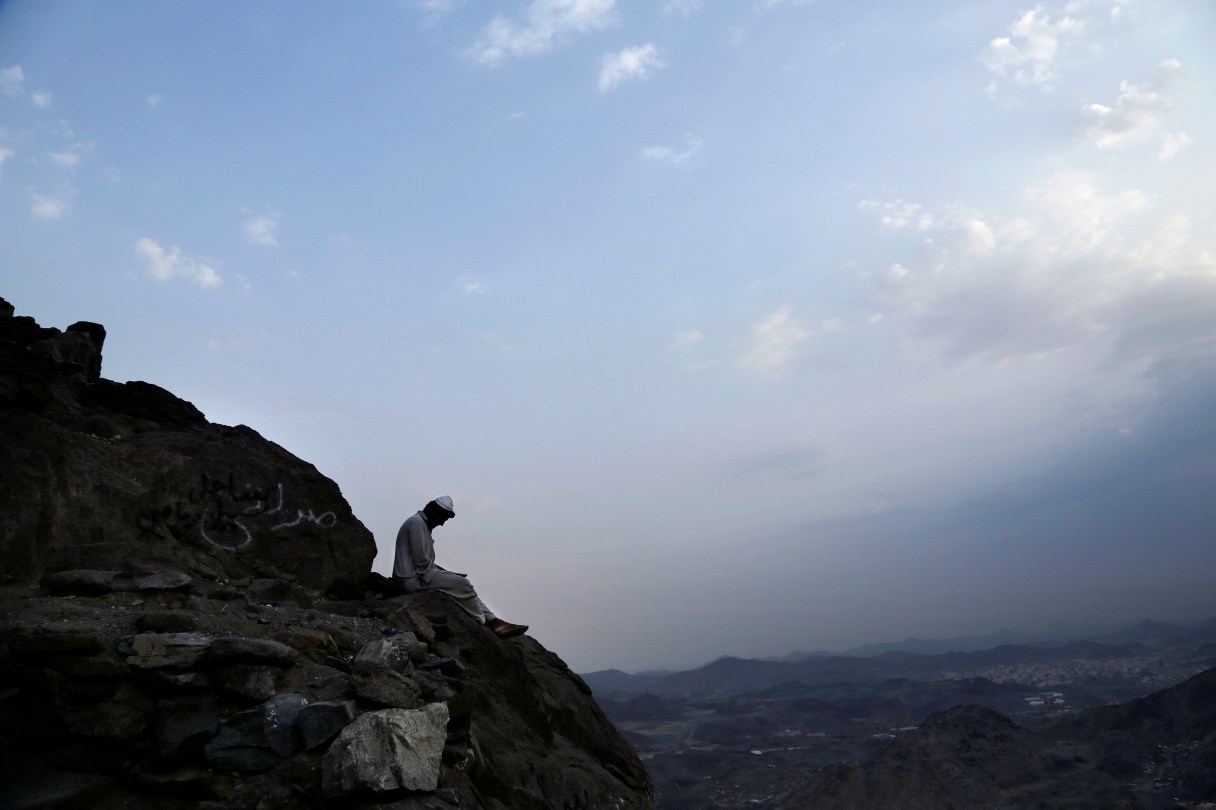
MECCA, Saudi Arabia (AP) – Just outside the city of Mecca in Saudi Arabia lies one of Islam’s most important historical sites – a cave where, according to tradition, the Prophet Muhammad spent time in seclusion, contemplation and self-reflection.
It was here, inside Hira Cave located near the top of a steep hill called Noor Mountain, where Muslims believe God revealed to the prophet the first verses of the Quran through the angel Jebril, or Gabriel as he is named in English.
Today, the site is among few still preserved from the prophet’s time – with help from Pakistani workers in the kingdom.
Each year, observant Muslims deepen their prayers and supplication in the final 10 nights of the Islamic month of Ramadan, believing that it was during this time some 1,400 years ago that the miraculous revelation took place on Noor Mountain, also known as the “Hill of Light.”
The hill itself is not part of the annual hajj pilgrimage, but its location so close to the holy city of Mecca and its significance as a place of enlightenment draws thousands of pilgrims here every year.