
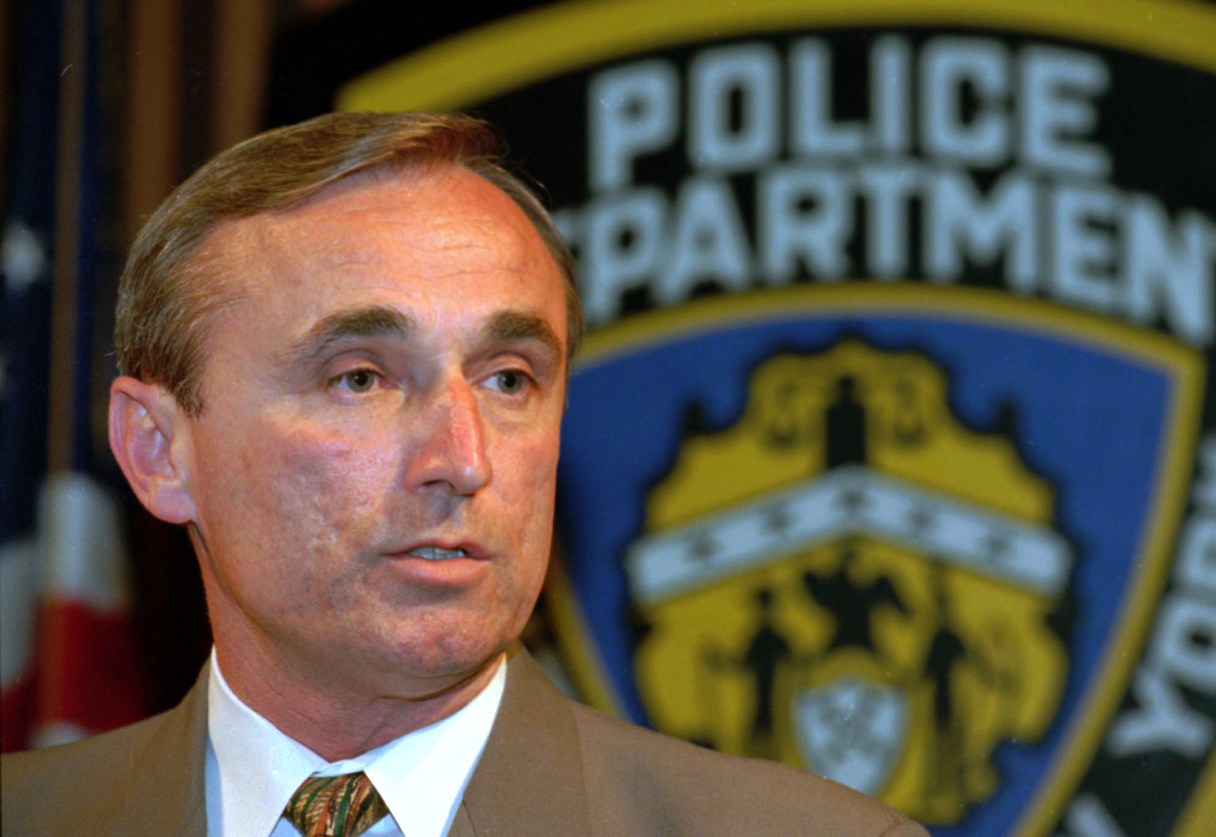
NEW YORK (AP) – William Bratton, the police commissioner who led departments in Boston, Los Angeles and New York and saw his crime fighting strategies copied across the nation, will end his unparalleled law enforcement career with a ceremonial send-off Friday in the city that was the setting of his biggest triumph.
Bratton, 68, is due to participate in a traditional “walkout” at New York Police Department headquarters, where commanders line up in formation to bid him farewell as he leaves three years into his second stint as the city’s police commissioner.
His goodbye is well timed. Violent crime in New York City remains near a modern-day low. Yet, debate is likely to continue indefinitely over how much credit Bratton should get for New York’s transformation from the bloody mess it was in the 1980s and early 1990s.
Friday’s ceremony comes just a week after Bratton fiercely defended the legitimacy of his signature “broken windows” strategy – an idea, first proposed by social scientists James Wilson and George Kelling, that you can deter violent crime by cracking down on lesser types of lawlessness, like graffiti or turnstile jumping.
Bratton earned wide acclaim for his assaults on so-called “quality of life” crimes, and for mining crime data to deploy his forces more effectively.