

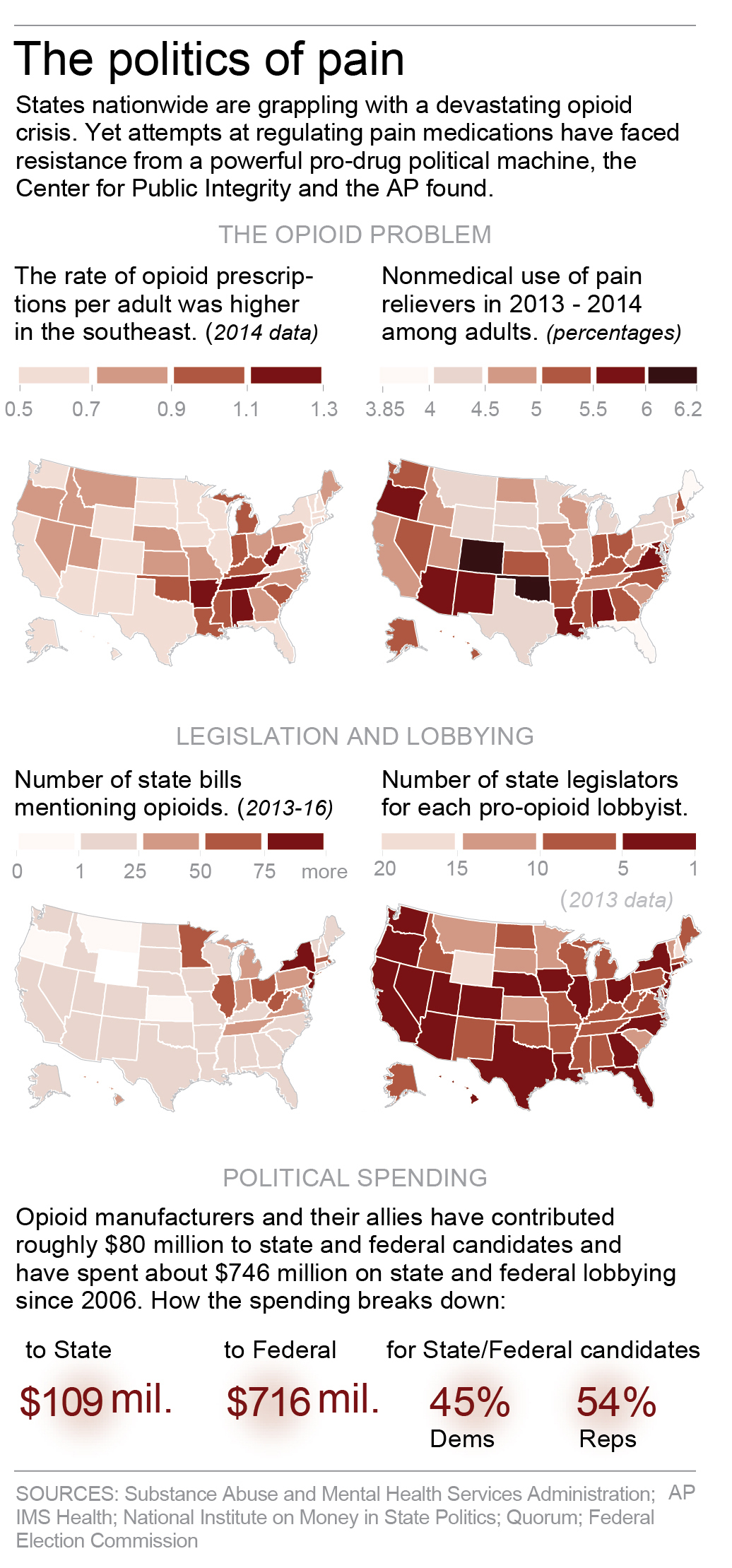
 An opioid crisis.
TENNESSEE OPIOID LAWS
In recent years, Tennessee policymakers have enacted a series of measures to combat the state’s growing opioid problem:2015: Lawmakers enact legislation tightening the requirements for medical directors and owners of pain management clinics. The new law requires medical directors or owners of pain clinics to be licensed physicians who hold required continuing medical education and sub-specialty certifications in pain medicine.2015: The Intractable Pain Treatment Act is repealed with the support of the state’s district attorneys and the Tennessee Bureau of Investigation. The 2001 measure included a “Pain Patient’s Bill of Rights,” which gave patients a great amount of responsibility to choose opiate medications as a first line of treatment and physicians were required either to provide requested opiate medication or refer patients to physicians who would.2014: Tennessee Gov. Bill Haslam announces a seven-point plan to address the state’s opioid abuse problem that includes public education, law enforcement and regulatory oversight of the medical community.2014: New guidelines issued by the Tennessee Department of Health set limits on the daily doses of opioids doctors may prescribe, and spell out protocols for giving the drugs to women of child-bearing age and establish new certification requirements for pain medication specialists.2013: Dispensing of controlled substances by pain management clinics is prohibited.2013: Tennessee begins to require health care professionals to check the Controlled Substance Monitoring Database before prescribing a controlled substance.2013: Legislation limits to 30 days prescriptions for drugs categorized as “Schedule II” and “Schedule III,” which include a range of opioid medications. The law also requires physicians to perform urine drug tests if they prescribe these medications beyond 30 days.2013: A new law to combat prescription fraud requires medical professionals to use tamper-resistant paper for all written prescriptions.2012: The Prescription Safety Act, sponsored by Sen. Ken Yager, R-Harriman, is the first sweeping legislation to address opioid abuse. It expanded the required use of the state’s prescription drug database, originally created as a research tool, requiring pharmacists to check the database before filling prescriptions, update the database once a week instead of once per month and making the database available to law enforcement. The law also allowed pharmacists and the Department of Health to share prescription information across state lines, and elevated some types of doctor-shopping to a felony.Source: The Tennessean
My cousin come up from Knoxville
And he taught me a thing or two
Now I’m headed nowhere but downhill
With the OxyContin blues