
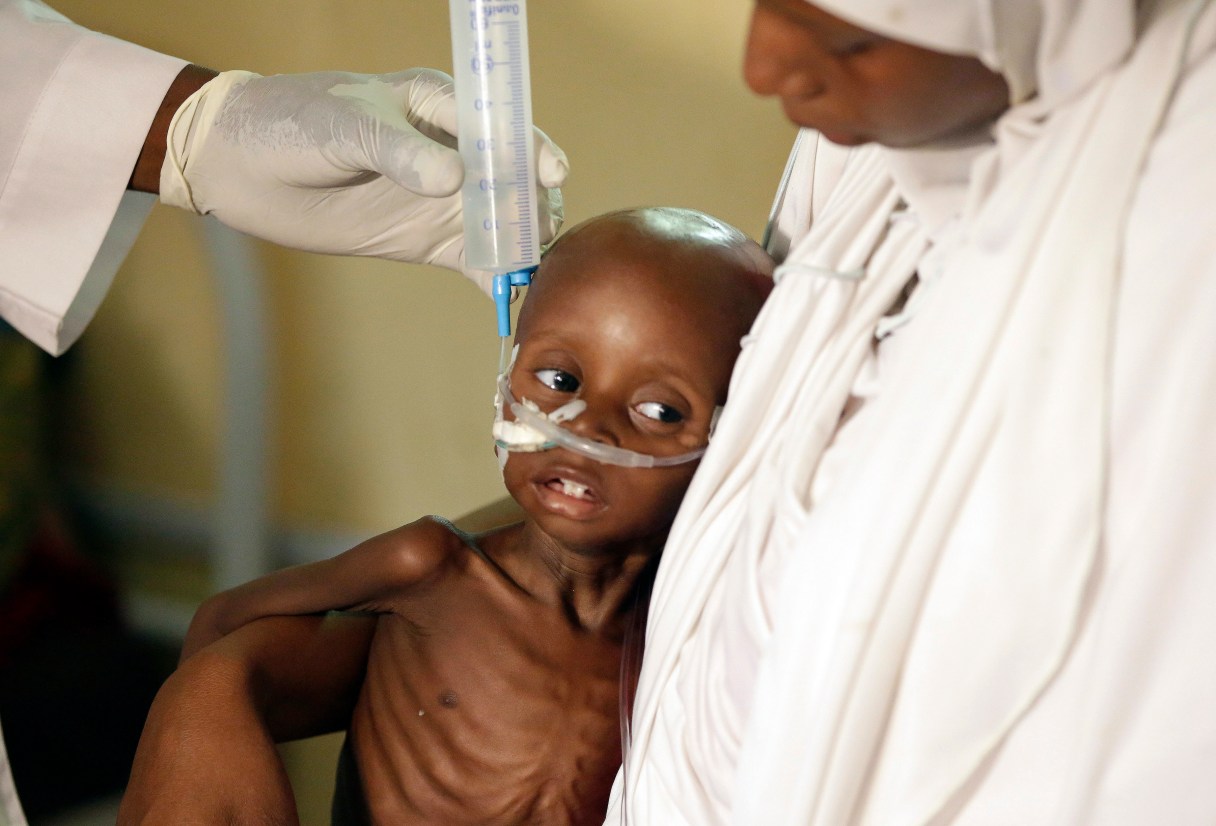
LAGOS, Nigeria (AP) – As many as 75,000 children will die over the next year in famine-like conditions created by Boko Haram if donors don’t respond quickly, the U.N. Children’s Fund is warning. That’s far more than the 20,000 people killed in the seven-year Islamic uprising.
The severity of malnutrition levels and high number of children facing death make the humanitarian crisis confronting northeastern Nigeria perhaps the worst in the world, according to Arjan de Wagt, nutrition chief for UNICEF in Nigeria. He said children already are dying but donors are not responding.
Most severely malnourished children die of secondary illnesses like diarrhea and respiratory infections, de Wagt told The Associated Press. “But with famine, you actually die of hunger,” and that is what is happening, he said.
Severe malnutrition is being found in 20, 30 and even 50 percent of children in pockets of the region, he said.
“Globally, you just don’t see this. You have to go back to places like Somalia five years ago to see these kinds of levels,” de Wagt said. Nearly 260,000 people died in Somalia between 2010 and 2012 from severe drought aggravated by war. At the time, the United Nations said aid needed to be provided more quickly.