
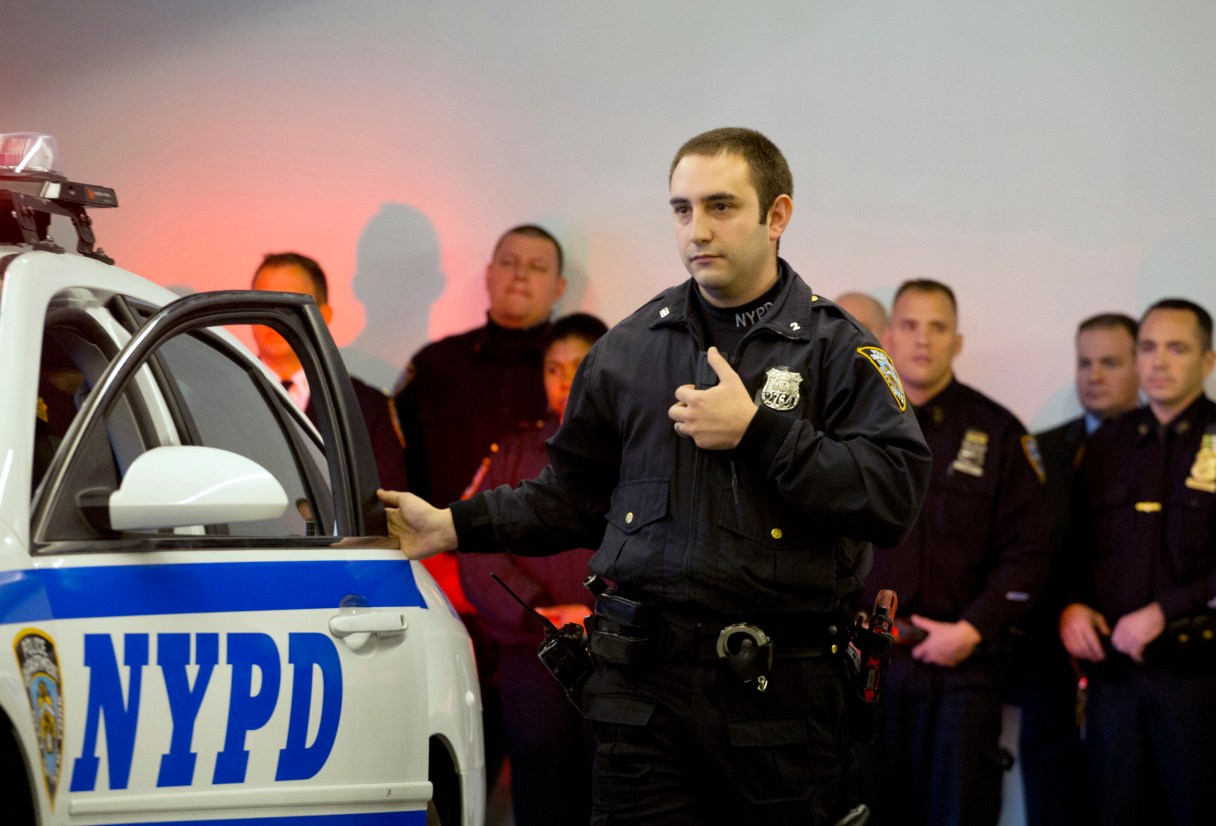
NEW YORK (AP) – The New York Police Department is set to deploy the first body cameras to officers after resolving some of the thorniest issues on when to switch on the camera, how long to keep the tape and when to tell the public they’re being recorded.
About 1,200 officers who work the evening shifts around the city will get the cameras starting at the end of the month. The pilot program was ordered by a judge following a 2013 ruling that officers were wrongly targeting black and Hispanic men with its stop-and-frisk program. At the time, few police departments used body cameras.
Their use has since exploded around the country following a string of killings of unarmed blacks by police and the ambush killings of officers in New York City, Dallas and Baton Rouge, Louisiana. Both officers and citizens have said cameras could help de-escalate situations that lead to violence.
The NYPD’s deployment had been on hold following a lengthy process to choose the camera company and storage and questions on how they would work.
The department sought public comment through a questionnaire and worked with New York University’s Policing Project to analyze the results. Some 25,000 people, plus 5,000 police officers, responded anonymously, and NYPD officials made changes based on the outcome.