
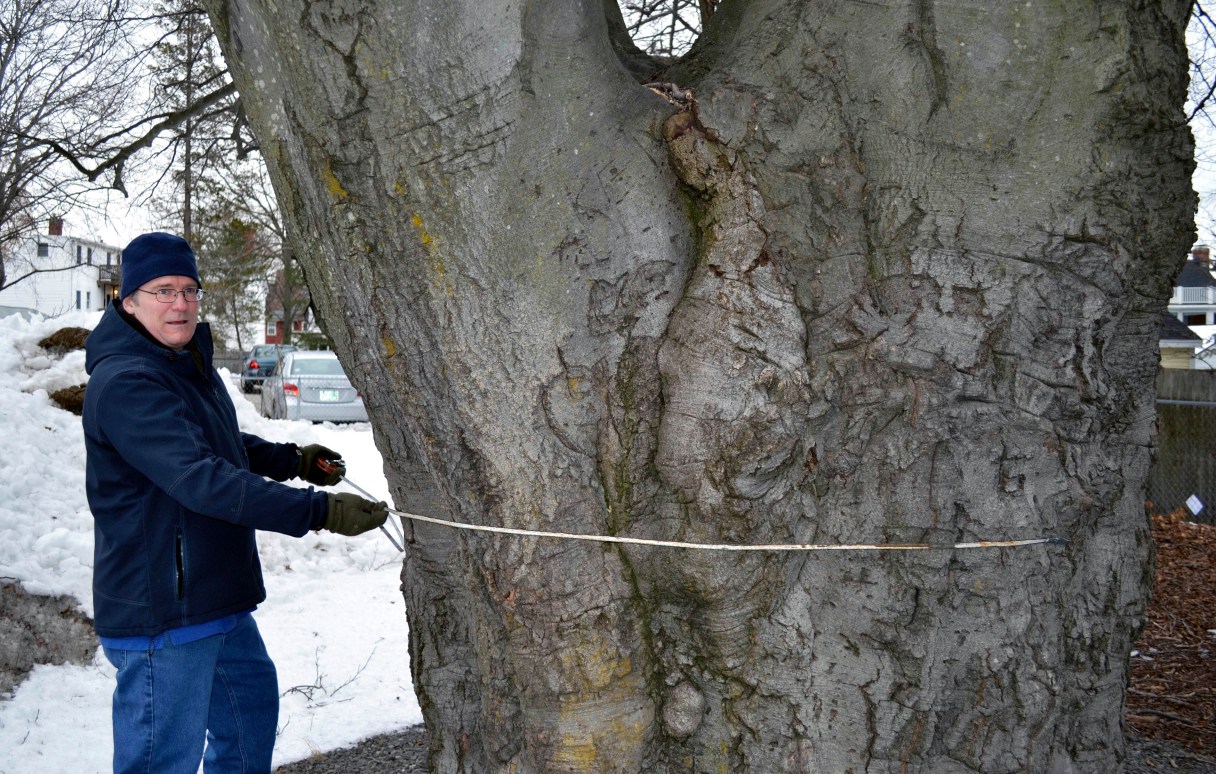
PORTSMOUTH, N.H. (AP) – A horse chestnut tree towers over a busy street in New Hampshire’s main port city. It’s known for its history more than its height; legend has it that William Whipple planted it after returning in 1776 from signing the Declaration of Independence.
But at nearly 70 feet (21 meters) tall, it is also big for a chestnut, and that is what brought Keven Martin out one rainy morning. Armed with tape to measure its circumference and a laser finder to calculate its height, Martin was here to find out whether the tree remained the state’s biggest horse chestnut, a title it has held for decades.
“It is not only the biggest, but it’s been around a long time,” said Martin, who coordinates New Hampshire’s Big Tree Program when he is not building boats. More than 700 champions in the state have been crowned. And while there may not be any redwoods out here, the state is home to 10 national champions, including the country’s biggest black spruce and American mountainash.
“People appreciate a big tree more, and they have a lot of history to them. People have a connection with them, more so,” said Martin, who has written a book on the big trees found on public lands. “They are just a lot more impressive when you see them in the woods or driving by.”
Started in 1950, the state’s Big Tree Program has been part of a nationwide network run by the conservation group American Forests that has logged some 721 champions across the country – 200 species still don’t have a title holder. Created to raise awareness about protecting forest from threats like development and forest pests, as well as a way to better understand why some species grow so large, the effort today is driven by tree lovers like Martin.