
Monday, November 16, 2026Nov 16

AP FACT CHECK: Trump again out of his lane on auto jobs

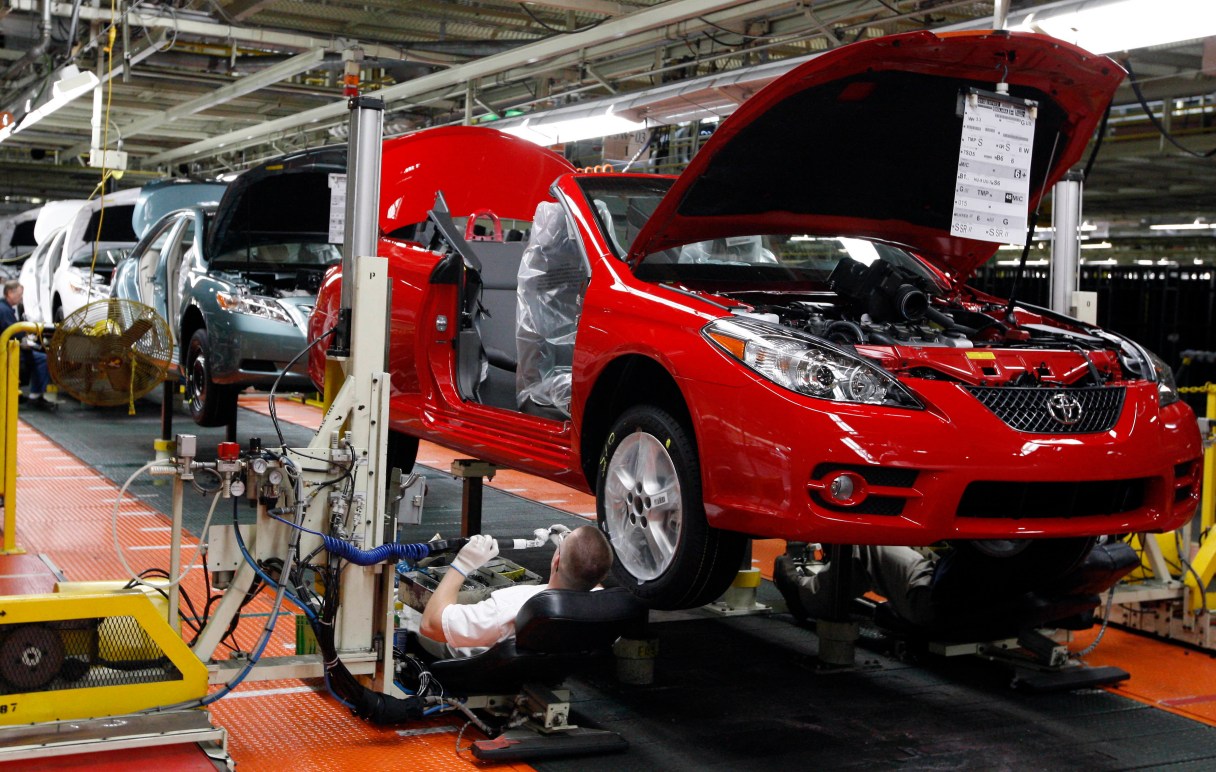
FILE - In this Nov. 10, 2008, file photo, members of a production team work on the under carriage of a Toyota Solara convertible on the assembly line at the Toyota Motor Manufacturing Kentucky plant in Georgetown, Ky.  President Donald Trump's relentless push for more manufacturing jobs has forced the auto industry into a delicate dance of contradictions. Toyota did the waltz with its long-planned announcement Monday, April 10, 2017, that it would spend $1.33 billion to retool the Kentucky factory. (AP Photo/James Crisp, File)
FILE - In this Nov. 10, 2008, file photo, members of a production team work on the under carriage of a Toyota Solara convertible on the assembly line at the Toyota Motor Manufacturing Kentucky plant in Georgetown, Ky. President Donald Trump's relentless push for more manufacturing jobs has forced the auto industry into a delicate dance of contradictions. Toyota did the waltz with its long-planned announcement Monday, April 10, 2017, that it would spend $1.33 billion to retool the Kentucky factory. (AP Photo/James Crisp, File)

DETROIT (AP) – President Donald Trump claimed direct credit for Toyota’s new investment in a Kentucky plant, calling it new evidence of economic improvement in a White House discussion with CEOs. The company says the move was planned long before Trump even announced he was running for president.

Trump’s statement Tuesday was not the first time he has veered from reality when claiming he’s produced new jobs in his 82 days in office.

TRUMP: “Already we’ve created more than almost 600,000 jobs. And yesterday Toyota just announced that it will invest more than $1.3 billion … into its Georgetown, Kentucky, plant, an investment that would not have been made if we didn’t win the election.”

THE FACTS: Trump had nothing to do with the changes that Toyota announced. The company says it’s the culmination of plans in the works for at least four years.

The investment is part of revamping the underpinnings of Toyota’s midsize Camry sedan, long the best-selling car in the United States. Such a change requires years to plan and doesn’t hinge on the economic conditions of the moment.