
Monday, November 16, 2026Nov 16

Clinic outside Mosul treats those with gravest injuries

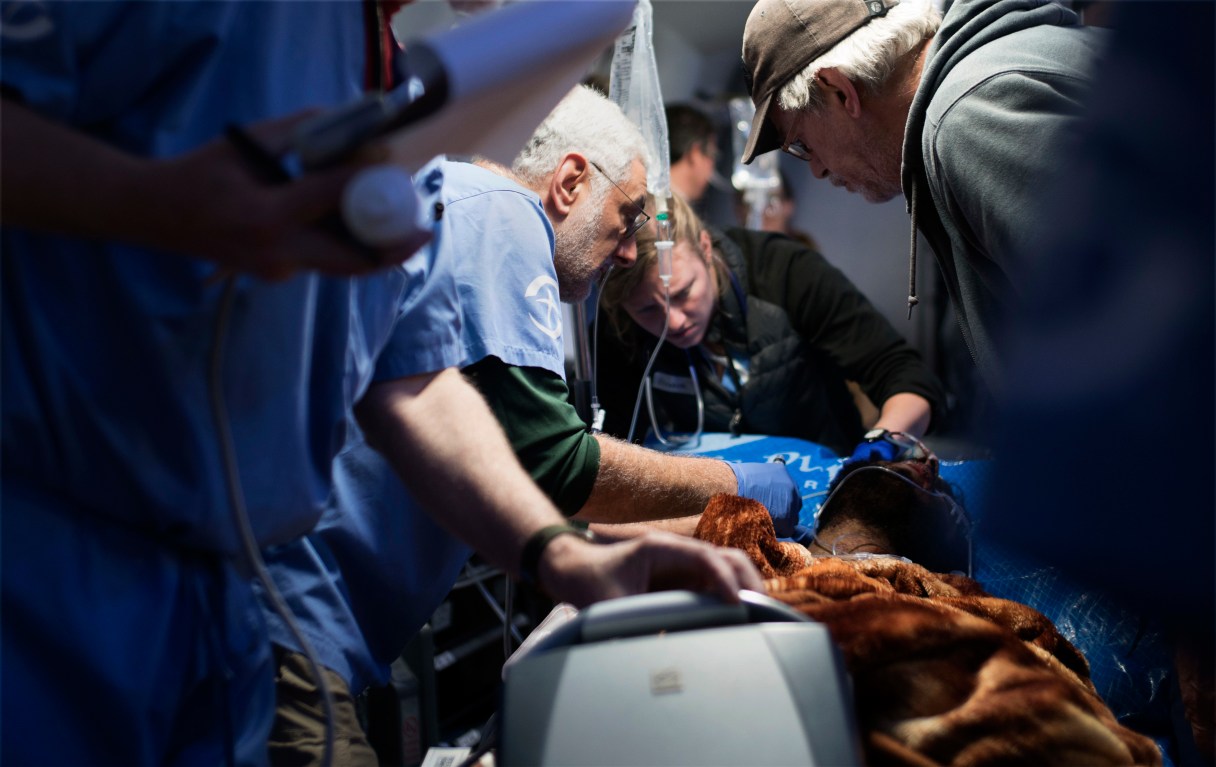
In this March 23, 2017 photo, American medical volunteers attend to a civilian casualty of the battle to retake Mosul from Islamic State militants, at the the Samaritan’s Purse field hospital, in Bartella, Iraq. Situated on the outskirts of Mosul, the state-of-the-art field clinic was set up last December by Samaritan’s Purse, a Christian aid organization based in Boone, North Carolina. Its volunteer doctors receive those with the gravest injuries from the field clinics inside or at the very edge of Mosul, where casualties are initially treated. (AP Photo/Tomislav Skaro)

BARTELLA, Iraq (AP) – A boy and a woman are delivered to the gates of the clinic by an Iraqi ambulance, bandaged and in pain. They arrive without names, ages and with only the sketchiest details of what had happened to them.

Apparently shot by accident outside their house in western Mosul, where fighting continues between Iraqi forces and Islamic State group militants, U.S. medics working in a state-of-the-art field clinic here could only assume they were mother and son.

Situated on the outskirts of Mosul, the facility was set up last December by Samaritan’s Purse, a Christian aid organization based in Boone, North Carolina. Its volunteer doctors receive those with the gravest injuries from the field clinics inside or at the very edge of Mosul, where casualties are initially treated.

“At home, it’s not nearly as critical as this,” said Medical Services Director Shelly Kelly, from Mustang, Oklahoma.

Kelly, who is on her second assignment in Iraq, said it took some effort to explain to her family why her new place of work was located behind blast walls. In the end they gave her their support, however.