
Monday, November 16, 2026Nov 16

Absences, fitness, atmosphere _ new ways to track schools

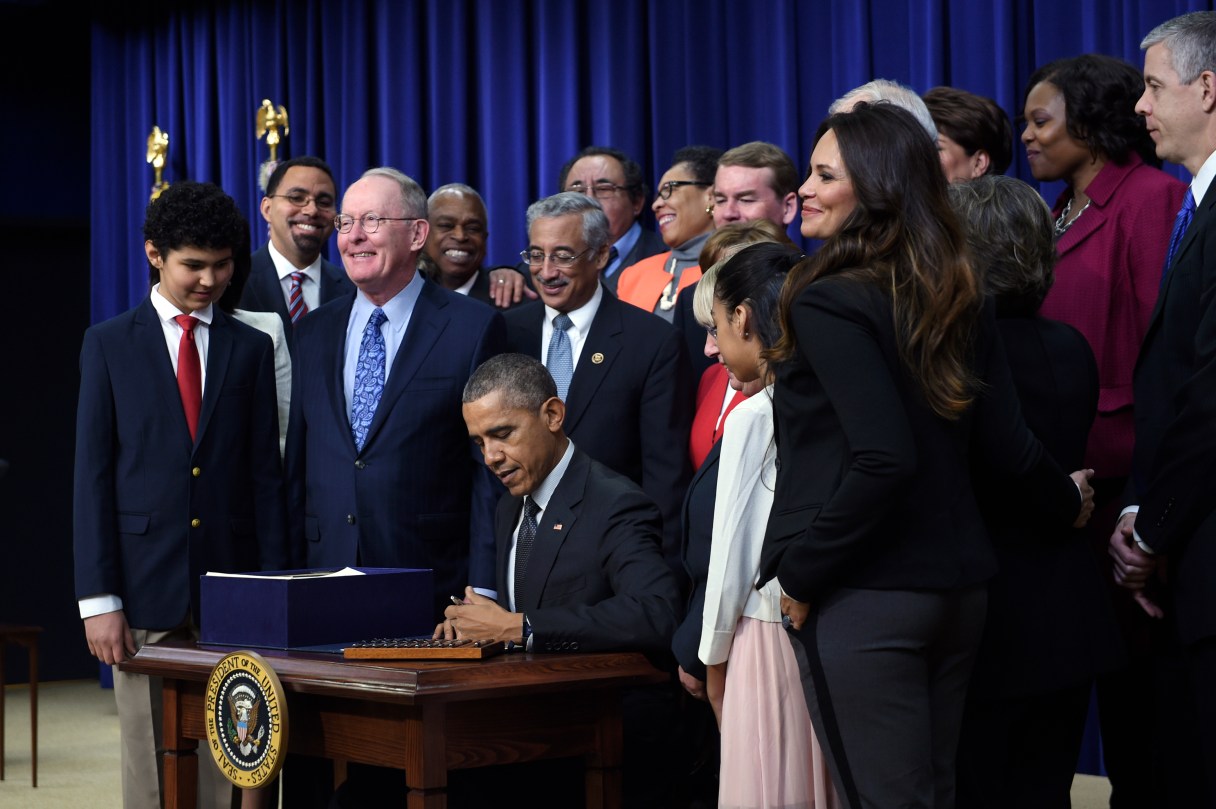
FILE - In this Dec. 10, 2015 file photo, President Barack Obama signs the "Every Student Succeeds Act," a major education law setting U.S. public schools on a new course of accountability, in Washington. States are grappling with as they are working to submit blueprints of how they will implement the Every Student Succeeds Act, or ESSA, a landmark education law meant to help struggling schools. The law allows states greater flexibility in dealing with low performing schools, but the flexibility also comes with the risk or doing too little, too much or too differently. (AP Photo/Susan Walsh, File)

WASHINGTON (AP) – How often do students miss school? Are they ready for college? Are they physically fit? Is their school a welcoming place?

States are beginning to outline new ways to evaluate their schools, rather than relying just on traditional measures such as test scores.

The plans are required under a new federal education law, the Every Student Succeeds Act, which takes effect in the coming school year.

Under the new law, states are focusing more on academic growth, meaning not just whether students have achieved a certain academic level in reading and math, but whether they have improved over time.

Mike Petrilli, president of the Thomas B. Fordham Institute, said that’s a big change from the No Child Left Behind Act, the previous version of the education law. “Schools and educators should feel good about that; that will be a fairer way to measure school quality,” he said.