
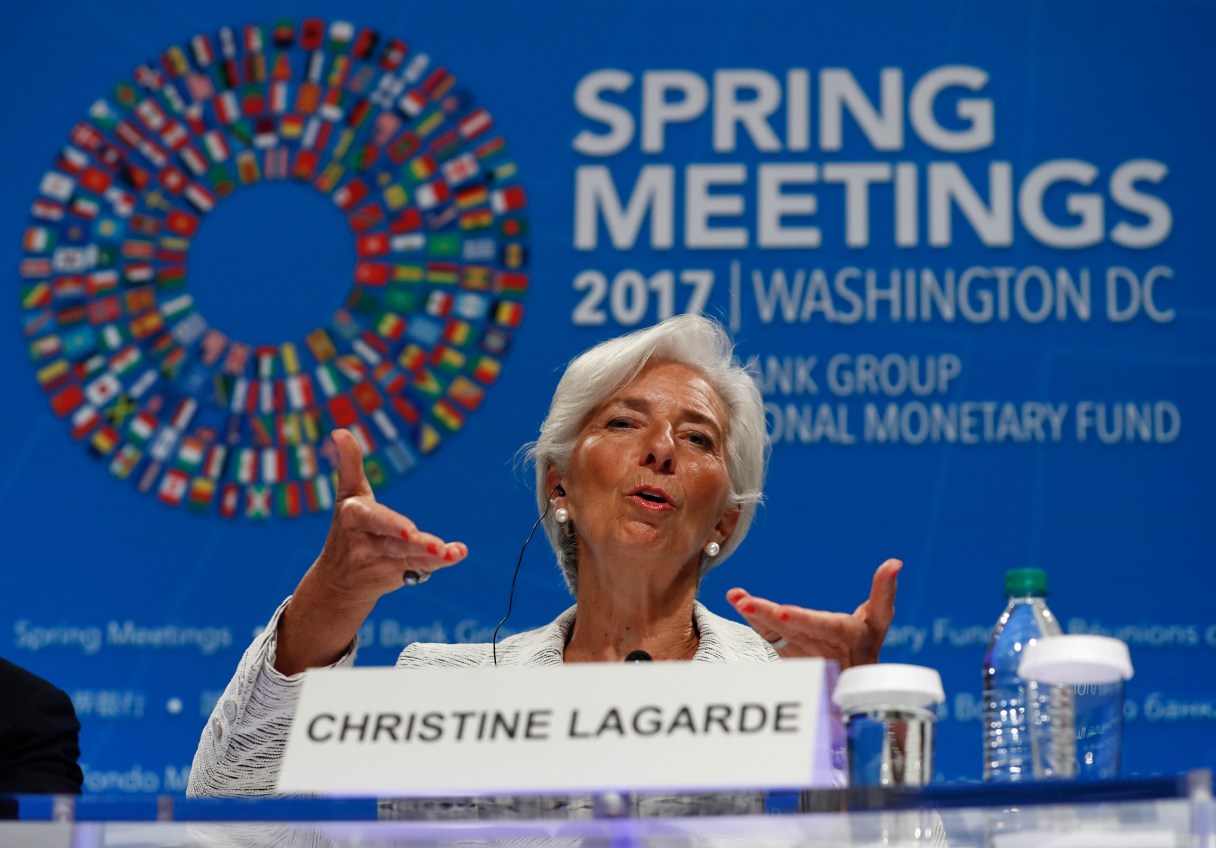
WASHINGTON (AP) – World finance leaders on Thursday defended globalization against an assault from President Donald Trump and European populists. They argued that blocking free trade would hobble economic growth instead of saving jobs from foreign competition.
World Bank President Jim Yong Kim told journalists that freer trade and more openness were “critical for the future of the world.”
Christine Lagarde, the managing director of the International Monetary Fund, said that the answer to the wave of populism gaining support in many countries was to work for “more growth and better growth” in the world economy.
Lagarde and Kim spoke at the opening of three days of discussions among global finance leaders representing the 189 countries that are members of the IMF and its sister lending organization, the World Bank.
The spring meetings, which will also include discussions Friday among finance ministers and central bank leaders from the Group of 20 major economic powers, were likely to be dominated by talk over the Trump administration’s efforts to reduce America’s huge trade deficits, which Trump during the presidential campaign blamed for the loss of millions of good-paying factory jobs.