
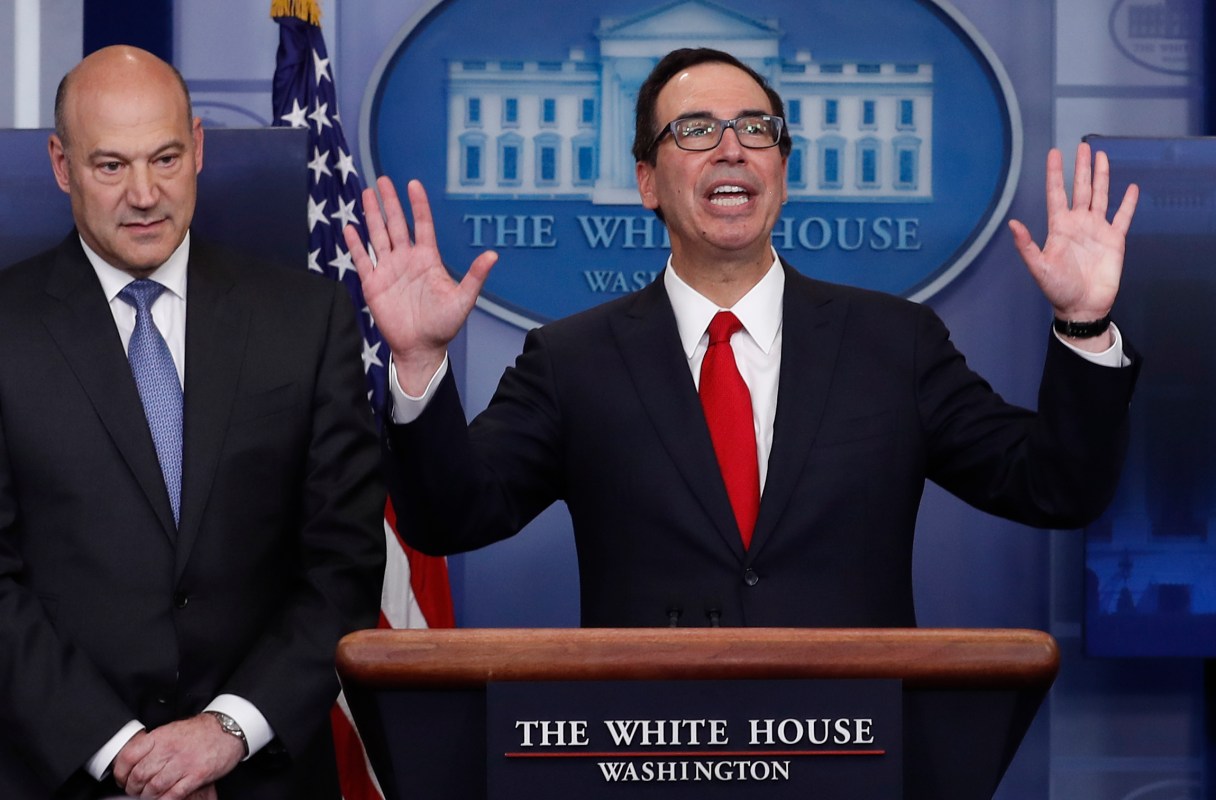
WASHINGTON (AP) – President Donald Trump’s plan to overhaul the U.S. tax code leaves much of the heavy lifting to Congress, while ignoring years of hard work by the guy who will have to do a lot of that lifting: House Speaker Paul Ryan.
The one-page proposal outlined by the Trump administration Wednesday has something for everyone – massive tax cuts for businesses and a bigger standard tax deduction for middle-income families, lower investment taxes for the wealthy, and an end to the federal estate tax for the superrich – like the president and his family.
The changes to the tax code are the most concrete guidance so far on Trump’s vision for spurring job growth and fulfilling his promise to help workers who have been left behind by an increasingly globalized economy.
“He understands that there are a lot people who work hard and feel like they’re not getting ahead,” said Gary Cohn, director of the White House National Economic Council.
But Trump’s proposal lacks the hard details about making the tax code simpler and more efficient in ways that don’t add to the federal government’s mounting debt. These are key Republican goals that would require lawmakers to eliminate or reduce precious tax breaks enjoyed by millions of Americans.