

Senior year in medical school included a 10-week rotation on surgery. In addition to taking histories, examining newly admitted patients and holding retractors during surgical procedures, each student was assigned several patients who had previously been admitted. That is how I met Susie B.
She was in her 70s, a widow from rural Maryland. Weeks earlier she had arrived at the emergency room with severe abdominal pain. In that time, prior to scans, a careful physical examination indicated that Miss B likely had peritonitis – a severe, diffuse inflammation of the abdominal cavity. Immediate surgery identified a perforation of her colon. Her surgeons removed the perforated segment of colon and fashioned a colostomy to drain her feces into a bag.
Her subsequent course was marked by recurring infections. Abscesses in her lower abdomen required drainage. Abnormal connections (fistulas) developed within her abdomen that linked loops of small bowel with her colon and colon with her stomach. This prevented any nutrition except that given intravenously.
I became one of her caregivers at that point. No one informed me that she had no prospect for recovery. I fully expected that my colleagues and I could cure her, if we were diligent enough. For the duration of my surgical rotation I visited Susie – she insisted that I use her first name – early morning and late afternoon. Her nurse and I reviewed vital signs, laboratory reports, intake and output of fluids and solids. We altered antibiotics, quite limited at that time, as the bacteria causing infection changed. Spiking fevers occurred most days.
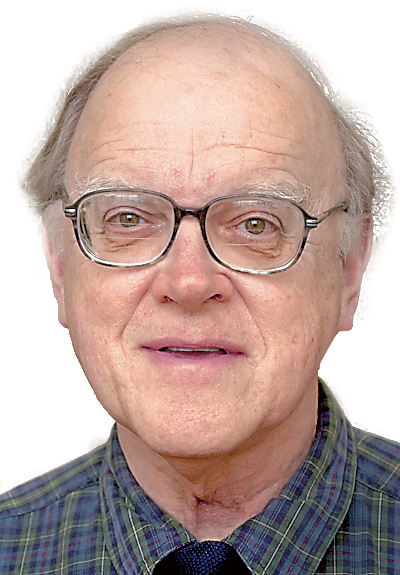 Dr. Clif Cleaveland
Infection mandated a private room. Her complicated care required the continuing attention of a private-duty nurse, who faced the continual challenge of keeping Susie cleaned. Each of us wore gown, gloves and masks in Susie’s room. Her marvelous nurse combed and braided Susie’s hair and applied lipstick and facial powder before my early morning arrivals. From this ritual, I learned the value of small comforts even in dire circumstances.
With the help of a dietitian, I learned how to push a maximum number of calories into her body via her IVs. We lacked the range of nutrients now available.
Each morning, I reviewed her clinical course, lab reports and all the measurements with my intern and resident who waved at Susie from a doorway but did not enter her room. A faculty surgeon reviewed her course with me twice weekly.
No friend or relative visited Susie during the 10 weeks of my rotation. She was lucid throughout. She seldom complained, except occasionally to request something for pain. Susie, her nurse and I chatted most days after we brought each other up-to-date on the events of the preceding day and the plans for the current day.
Each day we lost ground. Infections were ever present. We could not provide adequate calories to meet the high demands of her wounded body. Meticulous nursing care never waned.
Living wills and do-not-resuscitate orders had not yet been formulated. Susie assured me that she was not afraid of death, only of suffering at the end. I had never discussed death with a patient before. No one had ever spoken of managing a dying patient in the many lectures and seminars that preceded my time on the surgical ward. Death was an enemy to be defeated, so why discuss it?
Her nurse or I read to her from a publication called “The Upper Room,” after which she expected one of us to deliver a short prayer.
Susie reminisced about difficult times during the Great Depression and loved ones who had died during her childhood and adult years. She felt that she had had a good life. I never witnessed sadness or remorse. She inquired daily about how I felt.
On the final day of my surgical rotation, Susie, her nurse and I had a longer than usual visit. Susie thanked me, although I felt that I had somehow failed her, not helping her get well.
I found time to visit the surgical ward several days later. Susie’s room was empty. Her nurse had departed for another assignment. I learned that Susie died of pneumonia.
Susie B and her nurse taught me lessons not found in textbooks or formal lectures. I learned how to move beyond charts and data to speak honestly and openly about life and death and what happens in between to all of us.
Memories of this pair of tutors have shadowed me since.
Contact Clif Cleaveland at ccleaveland@timesfreepress.com.