
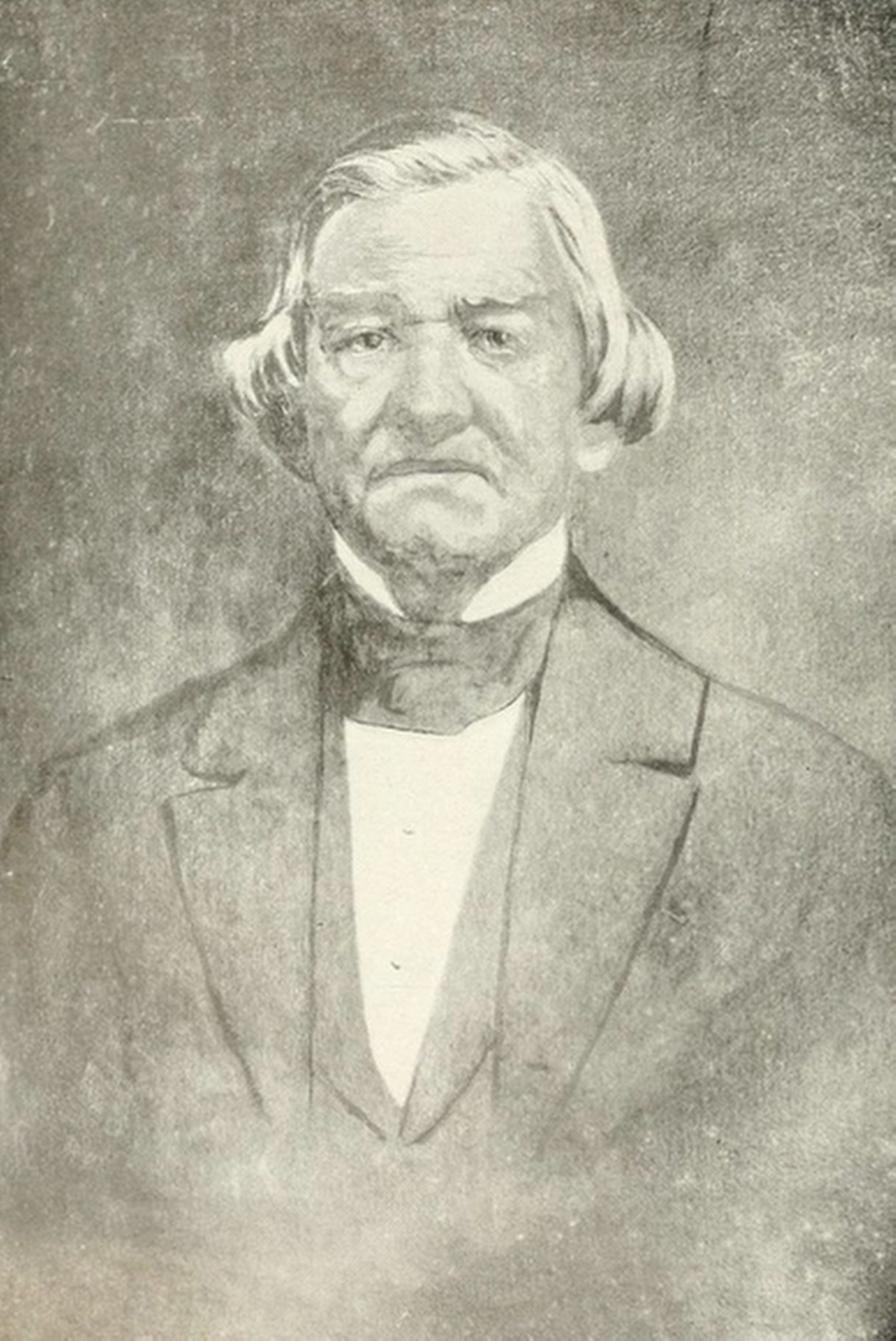
Before the Cherokee Removal in 1838, Chattanooga was known as Ross’s Landing. John Ross established this ferry landing and trading post at the current site of the Tennessee Aquarium and Market Street Bridge in 1816. Ross would later become nationally prominent as principal chief of the Cherokee Nation.
John Ross was born on Oct. 3, 1790, to Daniel and Mollie Ross in Turkey Town, what is now Etowah County, Ala. Daniel, a native of Scotland, joined the trading house of John McDonald and married his daughter Mollie in 1785. Mollie’s mother, Anna Shorey, was a daughter of William Shorey, interpreter for the British army, and his Cherokee wife.
John grew up at his father’s store on Chattanooga Creek near the foot of Lookout Mountain. His grandmother, Anna McDonald, imbued in him a deep love of the Cherokee people and their traditions. John’s formal education began at a school, the first in the Cherokee Nation, that Daniel started at his home with Rev. Gideon Blackburn, a missionary to the Cherokees. Later John studied at an academy in Kingston, Tenn., formerly Fort Southwest Point.
In 1809, Cherokee Agent Return J. Meigs sent John Ross to Arkansas to evaluate the needs of the Western Cherokee. In the War of 1812, Ross served under Andrew Jackson as an adjutant of the Cherokee Regiment. He served again in the Creek Wars of 1813-14, attaining the rank of lieutenant at the Battle of Horseshoe Bend.
In 1816, John Ross opened the trading post known as Ross’s Landing. He also established warehouses for his trading company, raised tobacco on a 170-acre farm and helped start the Brainerd Mission and School. During this period, he lived in the log house in Rossville built by his grandfather John McDonald. When a U.S. Post Office was established in Rossville in 1817, John Ross was appointed its first postmaster. That year he also was chosen a member of the National Council. Increasingly involved in Cherokee politics, he moved to Coosa near the current Rome, Ga., to be closer to the Cherokee capitol at New Echota.