
DETROIT – Courtroom 801 is nearly empty when guards bring in Bobby Hines in handcuffs.
More than 27 years ago, Hines stood before a judge to answer for his role in killing a man over a friend’s drug debt. He was 15 then. Another teen fired the shot that killed 21-year-old James Warren. But Hines had said something like, “Let him have it,” sealing his punishment: life in prison with no chance for parole.
The judgment came during an era when many states, fearing teen “superpredators,” enacted laws to punish juvenile criminals like adults, making the United States an international outlier.
But five years ago, the U.S. Supreme Court banned mandatory life without parole for juveniles in murder cases. Last year it made clear that applies equally to more than 2,000 who already were serving the sentence.
More Info
A state-by-state look at juvenile life without parole:ALABAMAInmates: At least 72 inmates were inmates sentenced to life without parole for murders committed as juveniles, including Evan Miller, one of two teens whose murder convictions resulted in the landmark 2012 U.S. Supreme Court ruling that said mandatory life without parole is unconstitutional for minors convicted of homicide.Resentenced or released: At least 20 inmates have been resentenced to parole-eligible sentences. One has gone before the parole board, but was denied release. A judge presided over a new sentencing hearing for Miller in March. A decision is pending.The law: Lawmakers in 2016 passed a measure that allows juveniles convicted of capital murder life with the possibility of parole after 30 years, but life without parole remains an option.GEORGIAInmates: 25 serving life without parole for crimes committed as minors, according to corrections officials.Resentenced or released: Experts are aware of only one resentencing case. The Georgia Supreme Court vacated the no-parole sentence of a man convicted for murder, rape, armed robbery and other charges at 17, emphasizing that such sentences should be permitted for only the “rarest of juvenile offenders.” The inmate was resentenced to two consecutive life terms but could be eligible for parole at age 77.The law: Georgia law requires that inmates given life sentences for violent felonies serve at least 30 years before becoming eligible for parole, including juveniles sentenced as adults.TENNESSEEInmates: 13 inmates serving life without parole for crimes committed as juveniles; roughly 100 other juvenile offenders who must serve a minimum of 51 years before being eligible for parole.Resentenced or released: The state so far is not offering resentencing to the 13 juvenile life-without-parole inmates. As for the others, officials with Nashville’s Juvenile Court have been pushing to reduce lengthy parole-eligible terms to 20 years for juvenile offenders. A state task force could recommend changes.The law: State lawmakers considered a bill this year that would allow juveniles to be eligible for parole after 20 years in prison. The bill was amended to make it 30 years, but the measure was pulled. The bill will be considered again next year.Source: The Associated Press
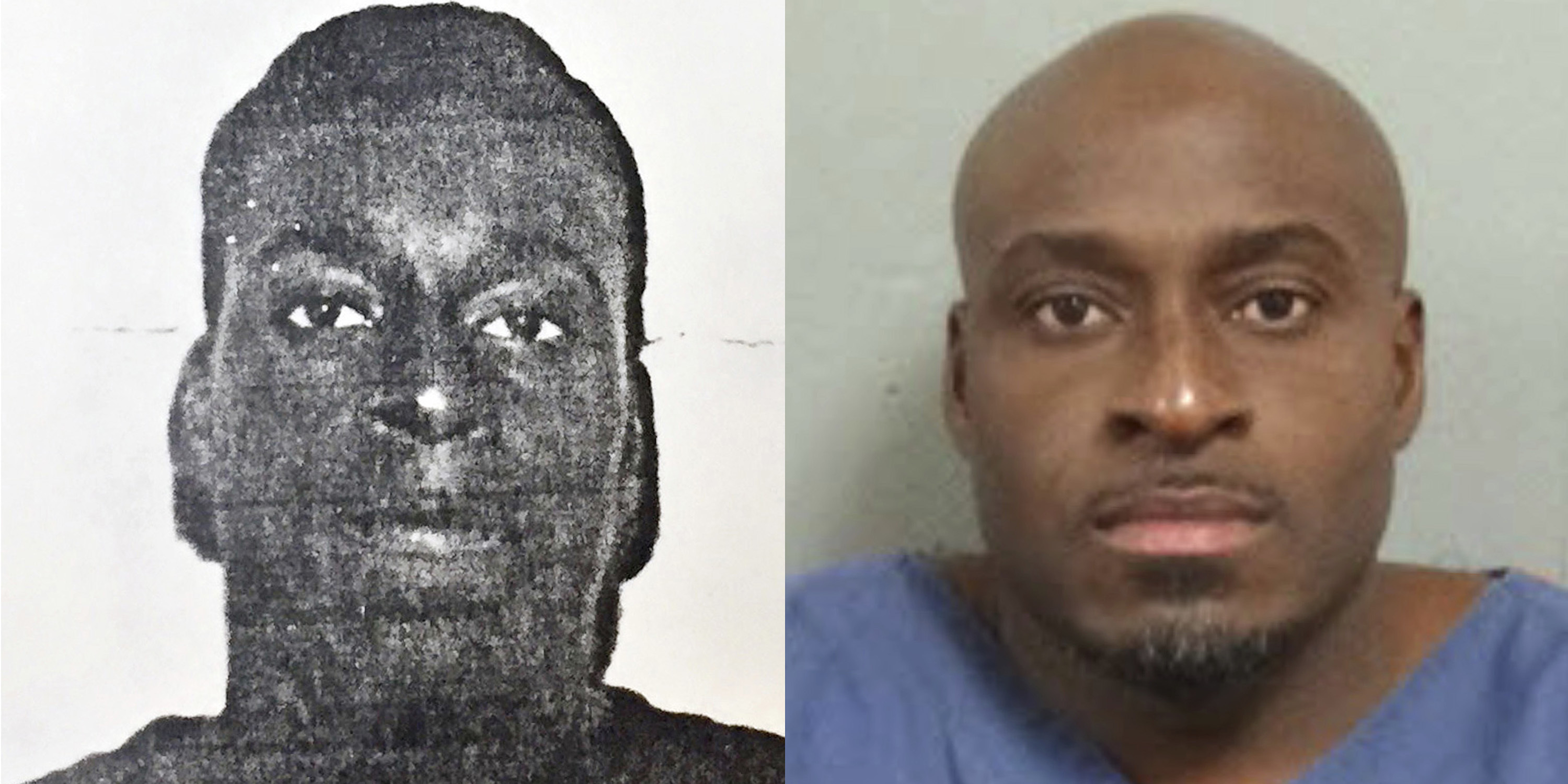 This combination of photos made available by the Michigan Department of Corrections shows a younger Bobby Hines and in November 2015. When he was 15, just out of eighth grade, he was in court answering for his role in the murder of a man over a friend’s drug debt. He did not fire the deadly shot, but when he and two others confronted 21-year-old James Warren, Hines said something like, “Let him have it,” words that sealed his conviction and punishment: mandatory life with no chance for parole. (MDOC via AP)
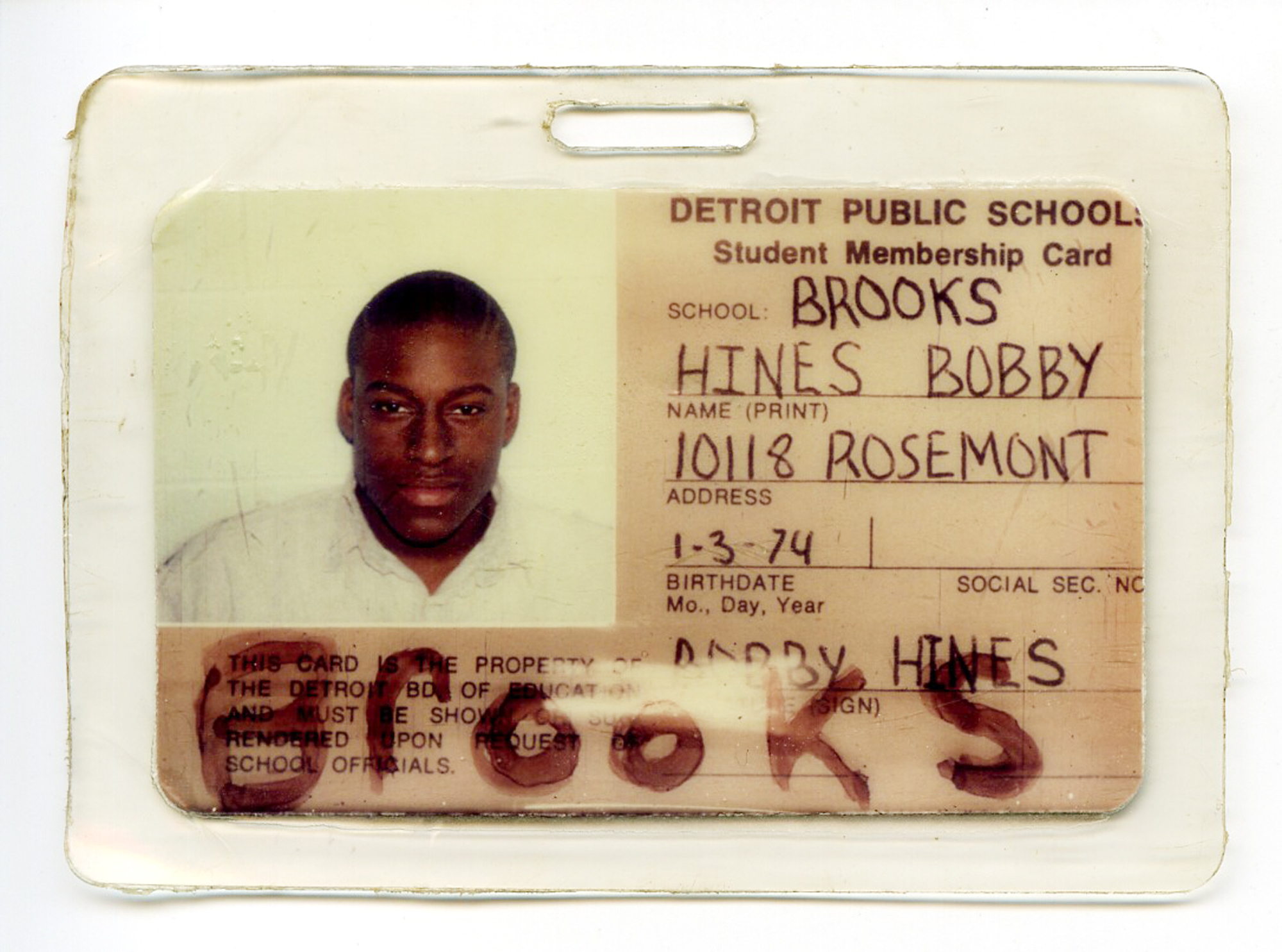 This photo provided by the American Civil Liberties Union in July 2017 shows a school identification card for Bobby Hines. When he was 15, just out of eighth grade, he was in court answering for his role in the murder of a man over a friend’s drug debt. He did not fire the deadly shot, but when he and two others confronted 21-year-old James Warren, Hines said something like, “Let him have it,” words that sealed his conviction and punishment: mandatory life with no chance for parole. At 43, he returned for a resentencing hearing this spring and is set to be paroled in September. (ACLU via AP)
Prison gates, though, don’t just swing open.
The Associated Press surveyed all 50 states and found that uncertainty and opposition stirred by the court’s rulings have resulted in an uneven patchwork, with the odds of release or continued imprisonment varying widely.
Many victims’ families are battling to keep offenders in prison. “They already had their chance, their days in court, their due process,” says Candy Cheatham, whose father was killed by 14-year-old Evan Miller, the Alabama inmate at the center of the 2012 ruling. “To bring this up and make the victims’ families relive this, that’s being cruel and unusual.”
Hines, though, is in a county whose prosecutor has shown openness to paroling some juvenile lifers. Now 43, he bows his head when the murdered man’s sister, Valencia Warren Gibbs, stands to address the judge.
“I want him to be out,” she says. “I want him to give himself a chance that he didn’t give himself … that day.”
The Supreme Court’s decision last year was the fourth to find the harshest punishments are unconstitutionally cruel and unusual when imposed on teens. Justices cited research showing adolescents’ brains are still developing, making them susceptible to peer pressure and likelier to act recklessly without considering consequences.
Officials in states with the most juvenile life cases long argued the ban on mandatory life without parole did not apply retroactively. Now, the AP found, states are heading in decidedly different directions. Some have resentenced and released these inmates. Others are pushing back, denying any real opportunity for a reduced term or possible parole.
“It’s taking far too long to get … judges and prosecutors to understand that the mandates of the Supreme Court are not optional,” says John O’Hair, who saw more than 90 juveniles sentenced to life when he was prosecutor in Wayne County, Mich., but has since criticized how some in his state are responding.
Pennsylvania has resentenced more than 100 of its 517 juvenile lifers, and released 58. Attorneys there talk about working through all the cases in three years. Since the Supreme Court’s ruling last year, two Pennsylvania inmates have been resentenced to life without parole, which the justices said should be reserved for the rare offender who “exhibits such irretrievable depravity that rehabilitation is impossible.”
In Michigan, prosecutors want new no-parole terms for some 236 of 363 juvenile lifers, prompting lawsuits. And most of the cases are on hold until Michigan’s Supreme Court decides whether judges or juries should hear them.
“These are young Hannibal Lecters,” says Sheriff Michael Bouchard of Oakland County, where officials want no-parole sentences in 44 of 49 juvenile-lifer cases.
Elizabeth Calvin of Human Rights Watch says: “I don’t think anybody who is being honest about what is happening in American courtrooms can walk away and say, ‘Yes, the system has carefully culled out the worst of the worst.'”
Louisiana lawmakers spent two sessions debating what to do with 303 juvenile lifers, with district attorneys lobbying against eliminating no-parole terms. In June, the Legislature made juvenile homicide offenders eligible for release after 25 years, but prosecutors can still petition a judge for no-parole sentences.
Thirteen other states have passed legislation prohibiting life without parole for juveniles since 2012.
While many states have taken steps to make juvenile offenders eligible for parole, officials regularly deny release. In Missouri, the parole board turned down 20 of 23 juvenile lifers for release, says the MacArthur Justice Center, which sued.
The AP found a number of juvenile lifers long ago rejected plea bargains that would have seen them released already. They include Kempis Songster, who was 15 when he joined in the Philadelphia drug house stabbing of a fellow gang member.
“You walk in there and see that they’re children and you say, ‘Wait a minute,'” says Jack McMahon, who as a prosecutor offered Songster a plea deal that could have meant freedom in as few as eight years. Songster was recently resentenced to 30 years to life, making him eligible for parole in September.
In many states, legal challenges are being mounted on behalf of thousands more former juvenile offenders who were sentenced to life without parole at the discretion of a judge or jury or who have parole-eligible sentences but are serving such lengthy terms they are unlikely to get out.
The Supreme Court didn’t address these cases, however, leading to different outcomes. Tennessee has refused to resentence juvenile lifers, because judges and juries there had a choice – life in prison or life with parole possible after 51 years.
In Oklahoma, juvenile life without parole isn’t mandatory, either, but offenders are getting a second look.
“On the one hand this is a mandate from the U.S. Supreme Court, and we have to comply with it,” says Scott Rowland, Oklahoma County’s first assistant district attorney. “On the other hand, you’re talking about disturbing sentences on crimes that may be three decades old, and very violent, heinous crimes. So the stakes are high.”
At Hines’ resentencing in March, the judge weighs his case before sentencing him to 27 to 60 years, making him immediately eligible for parole. He’s due to be released Sept. 12.
“I know what I’m not going to do,” he says, “and that’s get in trouble.”
Cohen reported from Detroit, and Geller from Philadelphia. Also contributing to this report were AP reporters Sheila Burke in Tennessee, Sean Murphy in Oklahoma, Juliet Linderman in Maryland, Mariah Brown in Pennsylvania and many other AP reporters across the nation.