
Thursday, November 12, 2026Nov 12

Atlanta building steeped in music history faces demolition

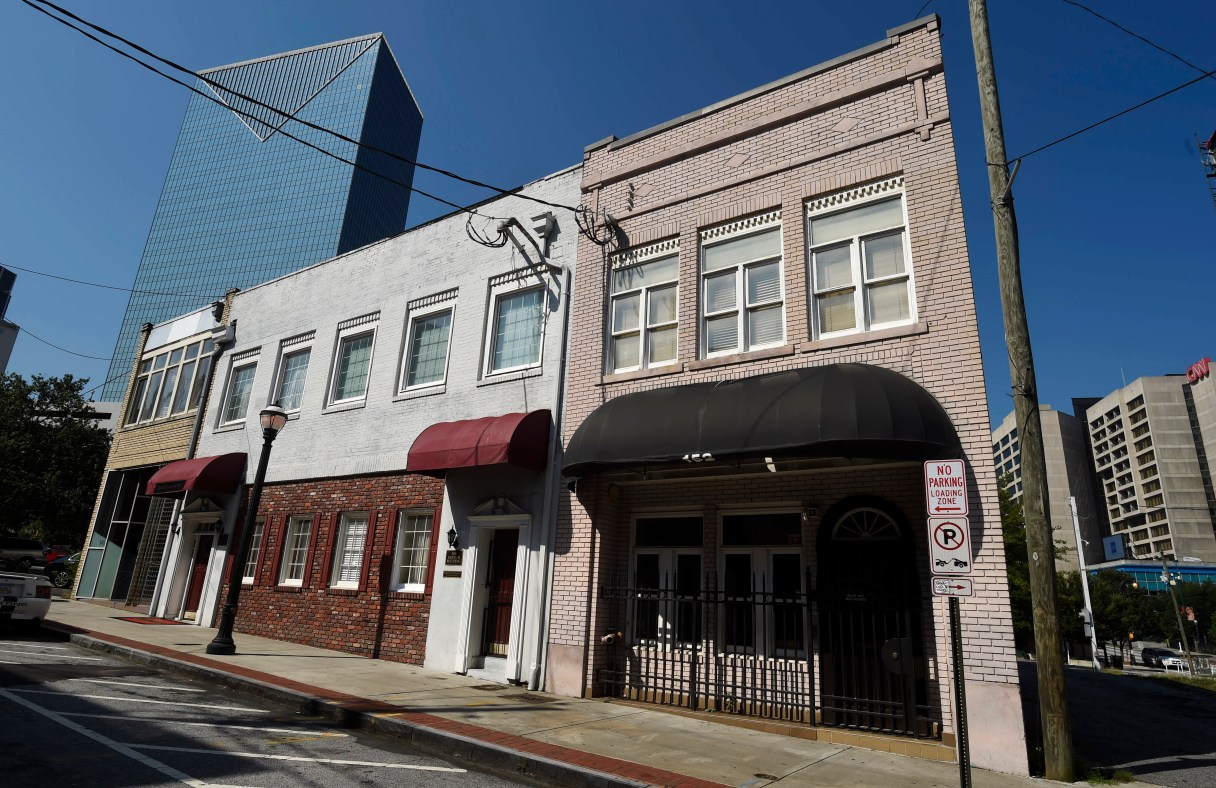
This Wednesday, July 19, 2017, photo shows a two-story brick building, right, at the northwest edge of Atlanta's old downtown. The old building is where the first country music hit was recorded in 1923 by Fiddlin' John Carson. It faces the threat of demolition to make way for a Jimmy Buffett's Margaritaville restaurant. (AP Photo/Mike Stewart)
This Wednesday, July 19, 2017, photo shows a two-story brick building, right, at the northwest edge of Atlanta's old downtown. The old building is where the first country music hit was recorded in 1923 by Fiddlin' John Carson. It faces the threat of demolition to make way for a Jimmy Buffett's Margaritaville restaurant. (AP Photo/Mike Stewart) This Wednesday, July 19, 2017, photo shows a two-story brick building, right, at the northwest edge of Atlanta's old downtown. The old building is where the first country music hit was recorded in 1923 by Fiddlin' John Carson. It faces the threat of demolition to make way for a Jimmy Buffett's Margaritaville restaurant. (AP Photo/Mike Stewart)

ATLANTA (AP) – At the edge of downtown Atlanta’s historic core, a nondescript brick building holds a little-known 94-year-old tie to music history – it’s the spot where a song that many deem the first country hit was recorded.

But that physical vestige of Fiddlin’ John Carson may be in jeopardy because a developer wants to raze it and build a restaurant linked to a more modern Southern musician: Jimmy Buffett’s Margaritaville.

Now, the city is trying to preserve the place where a groundbreaking recording engineer and talent scout captured the sound of a rough-hewn Georgia mountain fiddler on the cusp of summer in 1923.

“We were really blown away by it,” Atlanta Planning Commissioner Tim Keane said of the building’s connection to music history. His office is pushing a proposal to give it landmark status.

The briefest of encounters ties the two-story office building to a musical legacy, according to a biography of music producer Ralph Peer by author Barry Mazor.