
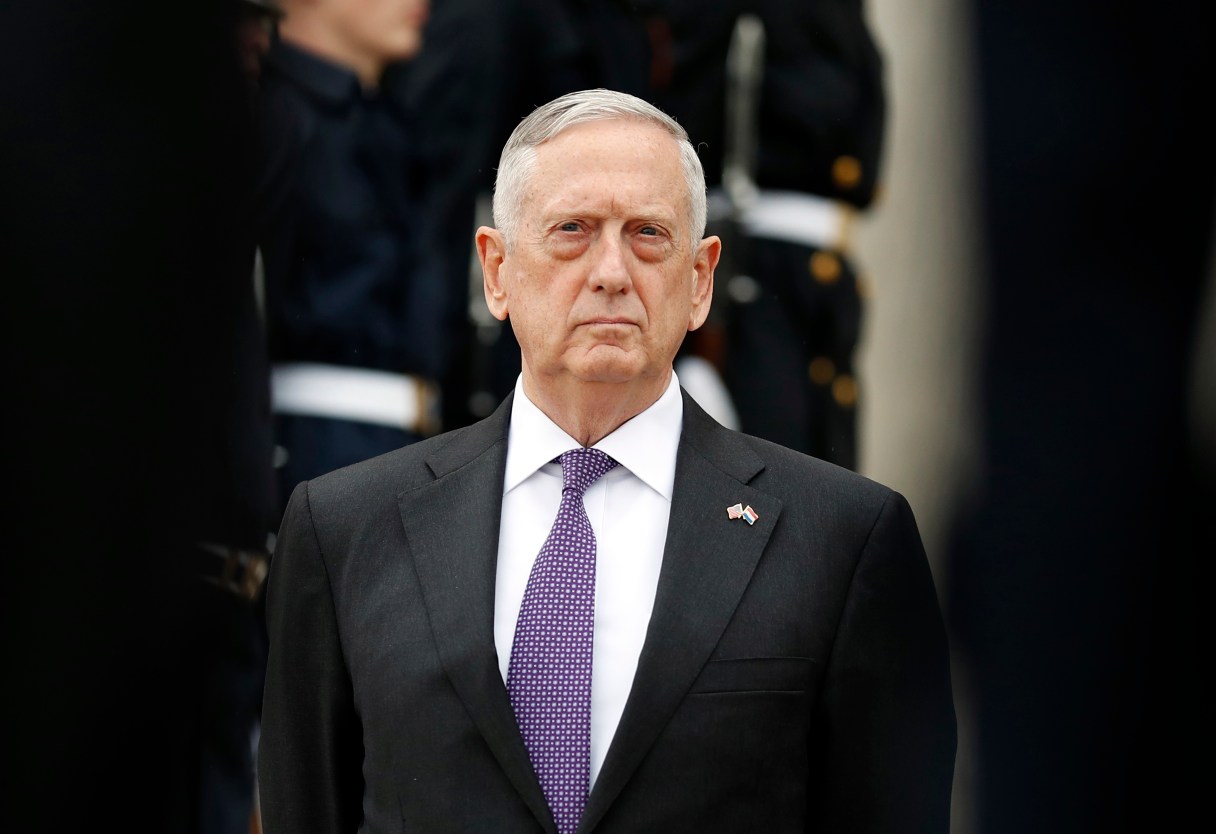
BAGHDAD (AP) – Expelled from their main stronghold in northern Iraq, Islamic State militants are now trapped in a military vise that will squeeze them on both sides of the Syria-Iraq border, U.S. Defense Secretary Jim Mattis said.
Mattis arrived in the Iraqi capital on an unannounced visit Tuesday just hours after President Donald Trump outlined a fresh approach to the stalemated war in Afghanistan. Trump also has vowed to take a more aggressive, effective approach against IS in Iraq and Syria, but he has yet to unveil a strategy for that conflict that differs greatly from his predecessor’s.
In Baghdad, Mattis was meeting with senior Iraqi government leaders and with U.S. commanders. He also planned to meet in Irbil with Massoud Barzani, leader of the semi-autonomous Kurdish region that has helped fight IS. Mattis told reporters before departing from neighboring Jordan that the so-called Middle Euphrates River Valley — roughly from the western Iraqi city of al-Qaim to the eastern Syrian city of Der el-Zour – will be liberated in time, as IS gets hit from both ends of the valley that bisects Iraq and Syria.
“You see, ISIS is now caught in-between converging forces,” he said, using an alternative acronym for the militant group that burst into western and northern Iraq in 2014 from Syria and held sway for more than two years. “So ISIS’s days are certainly numbered, but it’s not over yet and it’s not going to be over any time soon.”
Mattis referred to this area as “ISIS’s last stand.”