
Sunday, November 1, 2026Nov 1

This story is free to read.

Not fake news: ‘Whatever’ tops annoying word list, literally

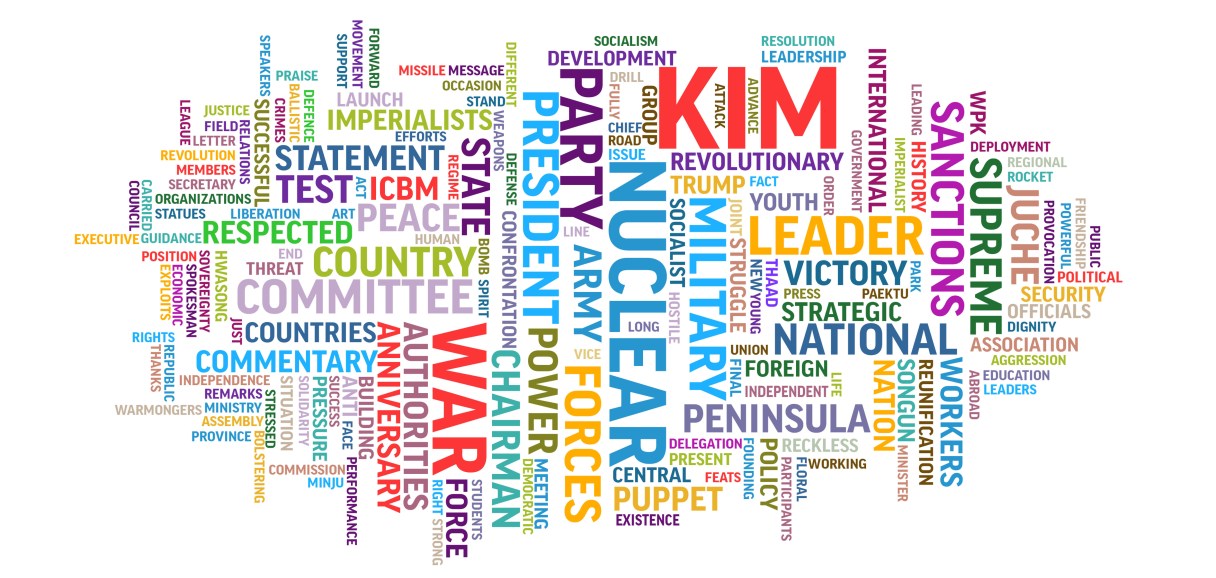
This image made on Dec. 4, 2017, shows a word cloud representing a visual display of terms used by the North Korean government's Korean Central News Agency's English-language service. The Associated Press boiled down 1,542 stories filed between July 1 and Oct. 11, 2017, by the official North Korean news agency to a list of the words that appear most frequently. The resulting word cloud reveals some of the key patterns Pyongyang employs in its rhetorical wars with Washington. (AP Photo/Penny Yi Wang)
This image made on Dec. 4, 2017, shows a word cloud representing a visual display of terms used by the North Korean government's Korean Central News Agency's English-language service. The Associated Press boiled down 1,542 stories filed between July 1 and Oct. 11, 2017, by the official North Korean news agency to a list of the words that appear most frequently. The resulting word cloud reveals some of the key patterns Pyongyang employs in its rhetorical wars with Washington. (AP Photo/Penny Yi Wang) This image made on Dec. 4, 2017, shows a word cloud representing a visual display of terms used by the North Korean government's Korean Central News Agency's English-language service. The Associated Press boiled down 1,542 stories filed between July 1 and Oct. 11, 2017, by the official North Korean news agency to a list of the words that appear most frequently. The resulting word cloud reveals some of the key patterns Pyongyang employs in its rhetorical wars with Washington. (AP Photo/Penny Yi Wang)

POUGHKEEPSIE, N.Y. (AP) – The shoulder-shrugging reply “whatever” continues to annoy Americans more than other words or phrases, but “fake news” is coming on strong.

The annual Marist College poll of most annoying words and phrases found “whatever” topping the list for the ninth straight year. It was the pick of one third of poll respondents, who were given five choices.

The recent addition “fake news” was slightly ahead of “no offense, but” for second place, 23 percent to 20 percent. About one in 10 found “literally” to be most grating, as did a similar number for “you know what I mean.”

The telephone survey of 1,074 adults conducted Nov. 6-9 has a margin of error of plus or minus 3 percentage points.